Plant profile
Desert rose
Adenium obesum
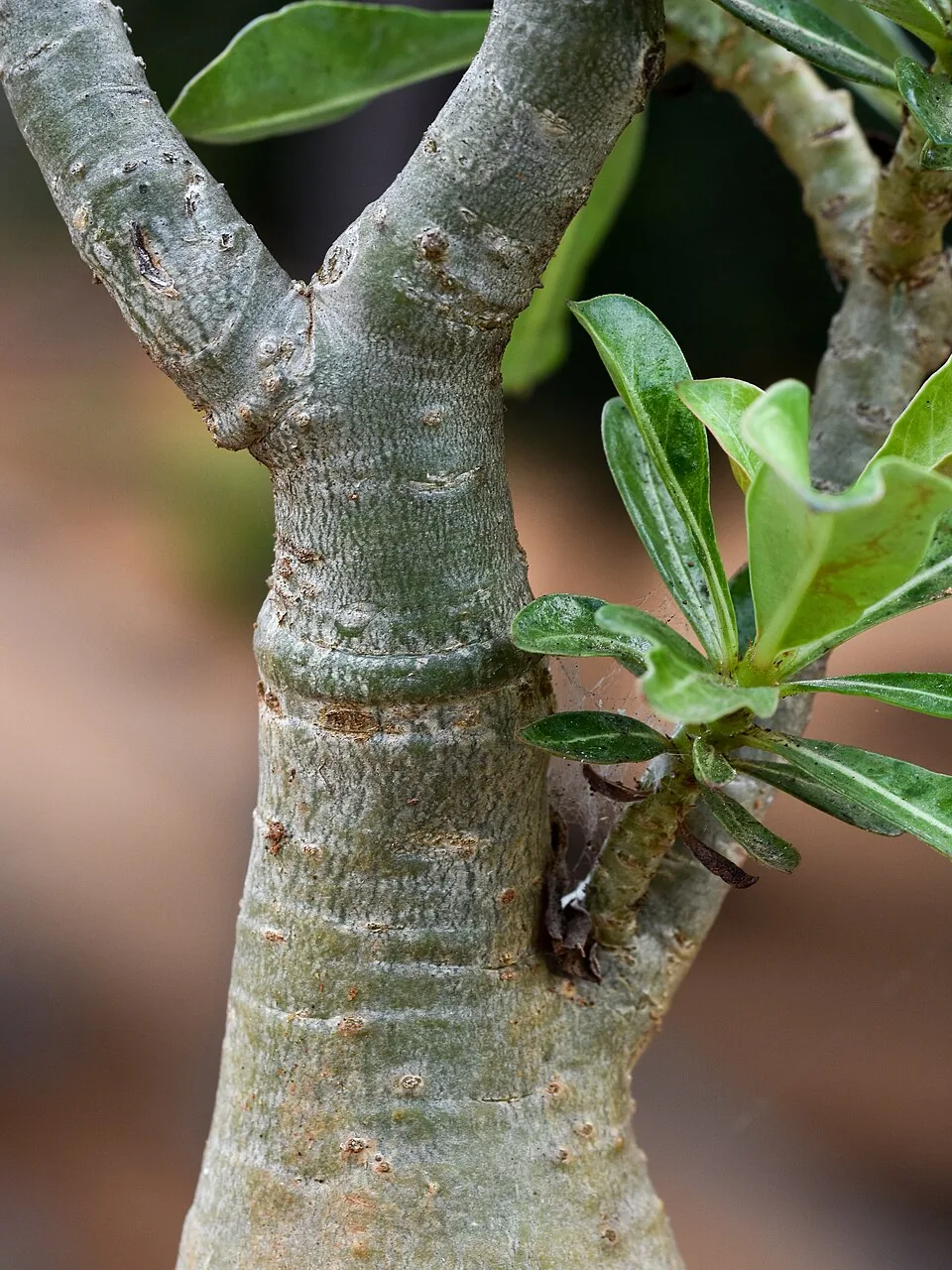
Photo : This Photo was taken by Timothy A. Gonsalves. Feel free to use my photos, but please mention me as the author. I would much appreciate if you send me an email tagooty@yahoo.com or write on my talk page, for my information. Please contact me before comm — CC BY-SA 4.0 — source

🌱 Growing conditions
☀️ Light
Very strong light; direct sun after acclimation.
💧 Watering
Water during growth, then let dry; keep almost dry during dormancy.
🌡️ Temperature
18–32 °C
💦 Humidity
Low
🪴 Potting mix
Very well-draining succulent mix
⭐ Difficulty
Moderate
🌱 Growth
Slow to moderate
📏 Mature size
60 cm–1.5 m in a pot
🌿 Habit
caudiciform and shrubby
📝 About Desert rose
Description
Caudiciform succulent with a swollen water-storing trunk and branches bearing pink, red or white trumpet flowers; warmth and sun favor flowering.
Care
Give maximum light, with direct sun after acclimation and some protection from scorching sun through glass. Use a very free-draining mix. Water during active growth, then let it dry well; reduce sharply when growth slows or leaves drop. Keep warm and frost-free.
Repotting
Repot at the start of growth in a pot with drainage holes and a very mineral mix, leaving part of the caudex visible.
Propagation
Propagate from fresh seed at about 21 °C for plants with a naturally developed caudex. Non-flowering shoot cuttings can also root in summer with bottom heat, but they often form a less pronounced caudex than seedlings.
🐱 Toxicity
Toxic sap containing cardiac compounds; keep strictly out of reach of children and animals.
🩺 Common problems
Yellow leaves
Yellow leaves with wet mix often indicate overwatering or chilled roots. Yellowing followed by leaf drop can also accompany seasonal dormancy. If the caudex becomes soft or dark, suspect rot immediately.
Brown leaves
Brown tips or patches commonly come from dry air, prolonged thirst or overly strong direct sun.
Diseases
Adenium obesum is generally disease-free when kept warm and well drained. The main container danger is caudex or root rot after excess water, especially in cool conditions. Remove affected tissue and allow to dry before resuming watering.
Pests
Watch mainly for aphids on young shoots and flower buds; scale insects and spider mites may also occur indoors. Isolate infested plants and act before new growth becomes distorted.