Plant profile
Pink Dalmatian Chinese evergreen
Aglaonema 'Pink Dalmatian'
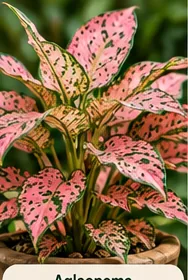
Photo : PlantMinute — Image générée
🌱 Growing conditions
☀️ Light
Bright indirect to medium light; bright light is recommended to maintain pink spotting
💧 Watering
Water when the top 3 to 5 cm of mix have dried
🌡️ Temperature
18 to 28 °C
💦 Humidity
Medium
🪴 Potting mix
Light, humus-rich and well-draining
⭐ Difficulty
Easy
🌱 Growth
Slow to moderate
📏 Mature size
40 to 70 cm
🌿 Habit
bushy and upright
📝 About Pink Dalmatian Chinese evergreen
Description
Aglaonema ‘Pink Dalmatian’ carries green leaves sprinkled with irregular pink spots, like splashes of paint. Each leaf develops a different pattern, giving the plant a less uniform look than cultivars with broad solid color zones.
It remains compact, fairly tolerant and well suited to normal indoor growing. Its main extra requirement compared with a green Aglaonema is light: a dark position often reduces both the number and intensity of pink markings.
The cultivar likes steady warmth and a potting mix that regains air between waterings.
Care
Keep ‘Pink Dalmatian’ in bright filtered light. Too little light encourages greener foliage, while intense direct sun can burn the pink spots.
Water only when the top of the pot has begun to dry. A short, mild dry spell is safer than a constantly saturated root ball.
Avoid cold drafts and sudden temperature changes. Wipe the leaves with a damp cloth and feed lightly during the growing season.
Repotting
Repot when roots clearly occupy the container. Use a pot with drainage holes that is only slightly wider and an airy mix.
Avoid oversized cachepots without drainage or containers much larger than the root system, as they keep the mix wet for too long.
Propagation
Divide offsets or the clump at repotting, or use stem cuttings with nodes. Stem pieces can be laid on a slightly moist, warm mix to produce new shoots.
🐱 Toxicity
Toxic if swallowed because of calcium oxalate crystals.
🩺 Common problems
Yellow leaves
Soft yellow leaves generally point to overwatering or chilling. Low light can worsen the problem by slowing the drying of the pot.
A few older leaves may yellow naturally at the base.
Brown leaves
Dry tips often result from dry air, very hard water or excess fertilizer. Pale then brown patches on the pink areas can be sunburn.
Diseases
Root and crown rot in saturated soil; bacterial spotting can occur if water remains on the leaves.
Pests
Watch for mealybugs, thrips and spider mites, especially on young leaves and their undersides. Isolate the plant if new growth becomes distorted, stippled or shows cottony clusters.