Plant profile
Red Valentine Chinese evergreen
Aglaonema 'Red Valentine'
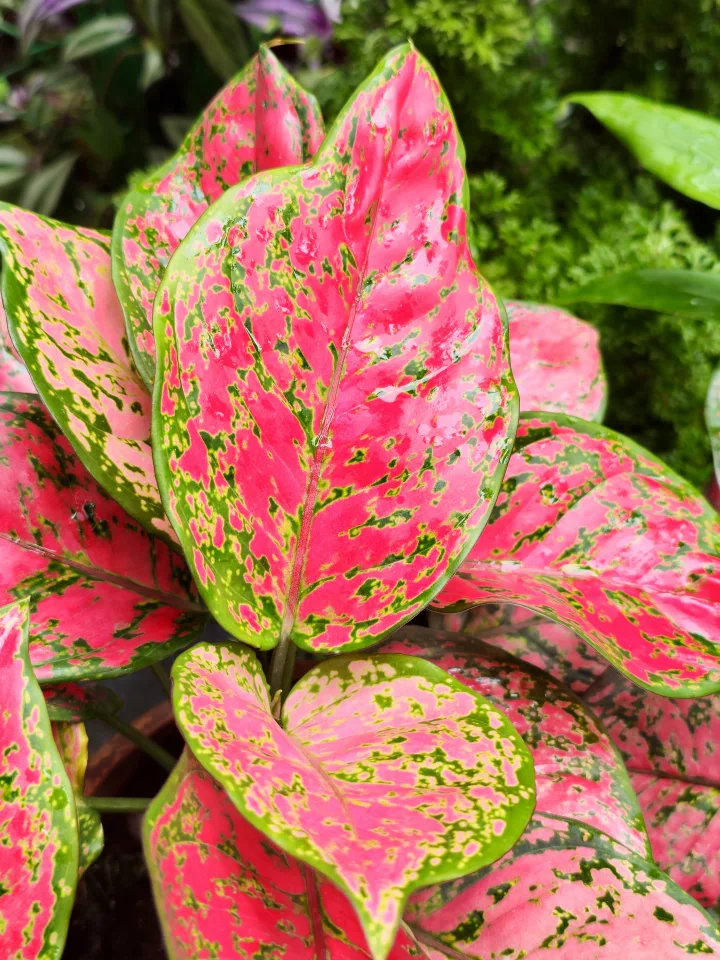
Photo : Mbigul — CC BY-SA 4.0 — source

🌱 Growing conditions
☀️ Light
Medium to bright indirect light; stronger light helps maintain red color
💧 Watering
Allow the top 3 to 5 cm of mix to dry before watering
🌡️ Temperature
18 to 28 °C; avoid temperatures below 15 °C
💦 Humidity
Medium
🪴 Potting mix
Loose, rich and well-draining
⭐ Difficulty
Easy
🌱 Growth
Slow to moderate
📏 Mature size
40 to 70 cm
🌿 Habit
bushy and upright
📝 About Red Valentine Chinese evergreen
Description
Aglaonema ‘Red Valentine’ is grown for green leaves heavily spotted or marbled with pink-red to vivid red. The amount of color varies with each leaf, plant maturity and light level.
It keeps a compact, bushy habit and tolerates normal indoor conditions fairly well. Strongly colored cultivars, however, need more light than all-green Aglaonema to preserve their pigmentation.
The plant is sensitive to cold and overwatering. A constantly wet root ball in a cool room is the riskiest combination.
Care
Place it in medium to bright indirect light. The brighter the position, the stronger the reds usually remain. Avoid several hours of intense direct sun on the leaves.
Water when the top few centimeters of the pot have dried. In winter, reduce frequency if growth slows. Use water at room temperature whenever possible.
Remove damaged leaves at the base and wipe the foliage regularly. Feed moderately in spring and summer; excess fertilizer can burn roots and leaf margins.
Repotting
Repot every 2 to 3 years or when roots fill the container. Aglaonema tolerate being slightly root-bound.
Choose a pot with drainage holes only a little larger and use a rich but airy mix with perlite, pumice or fine bark.
Propagation
Divide the clump during repotting or use stem cuttings with nodes. A bare stem section can produce new shoots if it contains viable nodes.
Keep warm and moderately humid while rooting without saturating the medium.
🐱 Toxicity
Toxic if swallowed because of calcium oxalate crystals; can irritate the mouth and mucous membranes.
🩺 Common problems
Yellow leaves
Most often caused by overwatering, cold or compact soil. If several leaves yellow while the mix stays wet, inspect the roots.
A single older lower leaf can yellow naturally and may be removed once fully spent.
Brown leaves
Brown tips may occur with dry air, hard or mineral-rich water or excess fertilizer. Strong direct sun can create beige-brown areas on the colored parts.
Soft dark spots in cool, wet conditions call for less watering and a check of the roots.
Diseases
Root and crown rot with excess water; bacterial leaf spots can occur on persistently wet foliage.
Pests
Watch for mealybugs, spider mites and thrips, especially on young leaves and their undersides. Isolate the plant if new growth becomes distorted, pale-stippled or shows cottony clusters.