Plant profile
Aglaonema Siam Aurora
Aglaonema 'Siam Aurora'
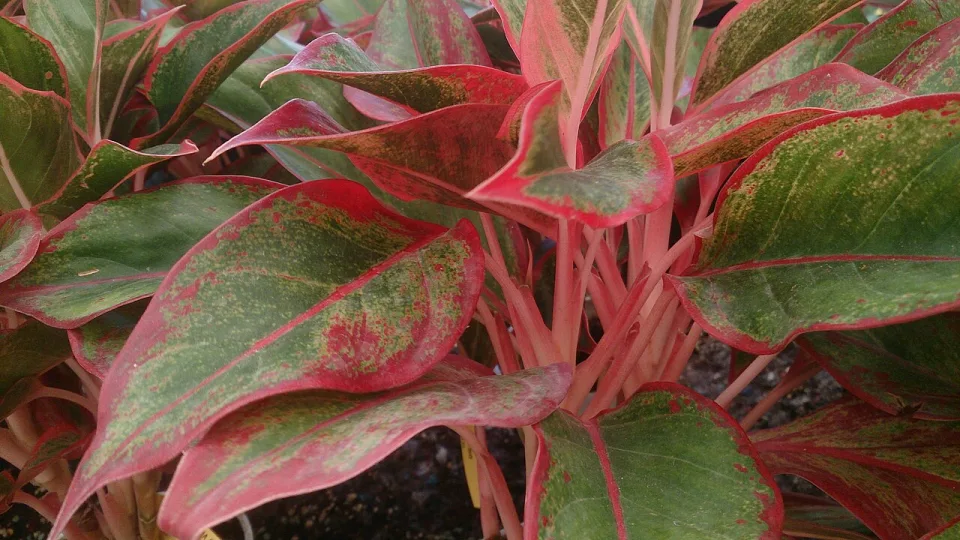
Photo : Mokkie — CC BY-SA 3.0 — source

🌱 Growing conditions
☀️ Light
Low to bright indirect light; medium light gives denser growth.
💧 Watering
Allow the top 3–5 cm to dry before watering.
🌡️ Temperature
18–28 °C; protect from cold drafts.
💦 Humidity
Medium.
🪴 Potting mix
Light, rich and well-drained.
⭐ Difficulty
Easy
🌱 Growth
Slow to moderate
📏 Mature size
about 40–80 cm
🌿 Habit
Compact and upright
📝 About Aglaonema Siam Aurora
Description
Aglaonema 'Siam Aurora' is recognized by green leaves edged and veined in strong red to pink. The petioles can also develop red tones, giving the clump vivid color even without flowers.
It tolerates moderate light, but the red markings are usually clearer when the plant receives good indirect light. In a position that is too dark, growth slows and the foliage becomes greener.
Like other Aglaonemas, it is easy to grow provided the roots are not kept continuously wet and the plant is protected from low temperatures.
Care
Place it in medium to bright indirect light, protected from strong sun. Water only after the top of the pot has dried and reduce the frequency in winter. Wipe the large leaves to remove dust. A light fertilizer during active growth is sufficient.
Repotting
Repot when the roots are well crowded into a slightly larger pot. The plant tolerates being somewhat root-bound quite well.
Propagation
Divide mature clumps or take stem cuttings. Sections of stem can produce new shoots when kept warm with moderate humidity.
🐱 Toxicity
Toxic if ingested because the tissues contain irritating calcium oxalate crystals.
🩺 Common problems
Yellow leaves
Most often caused by excess water, particularly in low light. An old lower leaf may yellow naturally.
Brown leaves
Very dry air, direct sun, highly mineralized water or irregular watering.
Diseases
Root and crown rot in constantly wet potting mix.
Pests
Scale insects, spider mites and thrips. Inspect newly unfurling leaves, petioles and leaf undersides especially: silvery scars and distortion suggest thrips, fine stippling suggests mites, and fixed clusters or scales indicate scale insects.