Plant profile
Alocasia Silver Dragon
Alocasia baginda 'Silver Dragon'
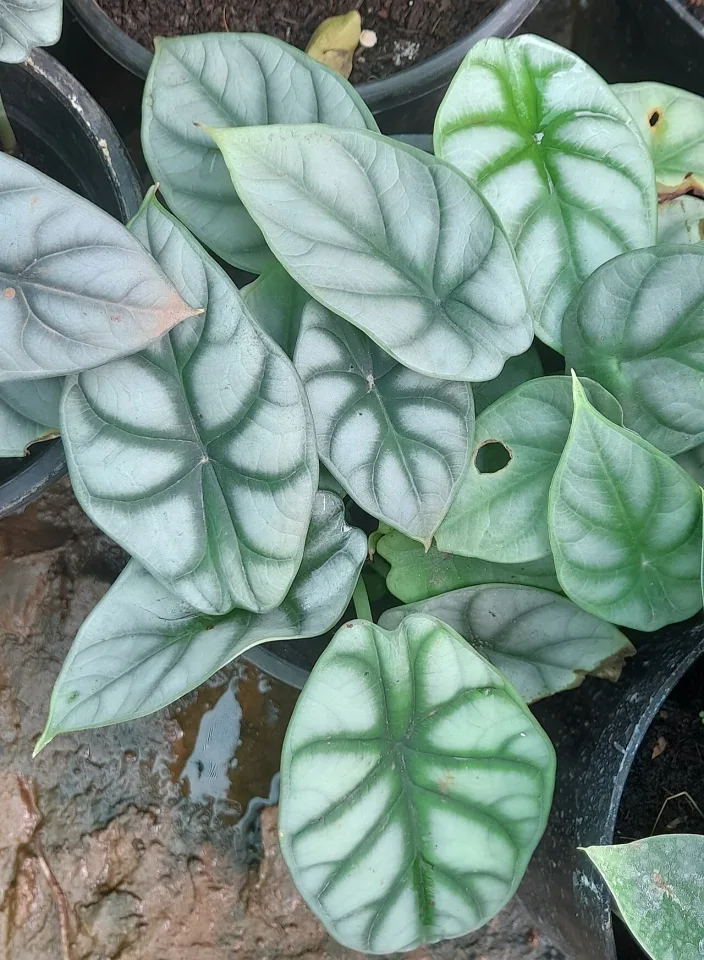
Photo : Yercaud-elango — CC BY 4.0
🌱 Growing conditions
☀️ Light
Bright indirect light; protect velvety foliage from harsh direct sun.
💧 Watering
Keep lightly moist during active growth, allowing the surface to dry between waterings.
🌡️ Temperature
20–28 °C.
💦 Humidity
High, ideally 60 % or more, with airflow.
🪴 Potting mix
Rich but very airy and well-drained.
⭐ Difficulty
Moderate to demanding
🌱 Growth
Moderate
📏 Mature size
About 40–70 cm
🌿 Habit
Upright clump
📝 About Alocasia Silver Dragon
Description
Alocasia baginda 'Silver Dragon' forms thick, textured leaves in silvery gray to pale green, crossed by darker veins that give the blade an almost sculpted appearance. It remains far more compact than large Alocasias such as the macrorrhizos types.
Its robust appearance is misleading: the roots and corm remain sensitive to excess water and cold. It prefers high atmospheric humidity, but only when the potting mix stays well aerated and air can circulate around the plant.
Growth may slow dramatically in winter. Loss of leaves does not necessarily mean that the corm is dead if it remains firm and healthy.
Care
Keep warmth and humidity relatively stable. Avoid strong direct sun, which can bleach and then scorch the silvery leaves.
During active growth, water when the surface begins to dry. If the plant noticeably slows down, space the waterings farther apart: a cold, wet corm can rot quickly.
Inspect the undersides of the leaves regularly for spider mites, which are very common on Alocasia grown indoors.
Repotting
Repot only when the roots fill the pot. Use a container with drainage holes and a coarse mix based on bark, coconut fiber or light potting soil, plus perlite or pumice.
Propagation
Separate offsets and especially the small corms produced around the mother plant. Start the corms in warmth in sphagnum moss, perlite or another very airy medium.
🐱 Toxicity
Toxic if ingested because the tissues contain irritating calcium oxalate crystals.
🩺 Common problems
Yellow leaves
An old leaf may yellow as a new one emerges. Several yellow leaves at the same time suggest excess water, cold conditions or damaged roots.
Brown leaves
Dry air, direct sun, prolonged lack of water or mechanical damage to leaves that are still tender.
Diseases
Corm and root rot can develop when the mix stays cold and wet. A soft base or unusual smell calls for checking the corm, removing affected tissue and allowing the mix to dry more between waterings.
Pests
Check the undersides of the leaves in particular: spider mites are common and cause fine stippling, sometimes followed by small webs. Thrips are more likely to leave silvery marks and distort young leaves; scale insects can be recognized as fixed clusters or plaques.