Plant profile
Alocasia cucullata
Alocasia cucullata
🌱 Growing conditions
☀️ Light
Bright, indirect light; avoid scorching summer sun through glass.
💧 Watering
Water when the top few centimetres of potting mix have dried, then empty the saucer. In winter, lengthen the interval if growth slows.
🌡️ Temperature
18–28°C; avoid temperatures below 16°C and draughts.
💦 Humidity
Moderate to high; young leaves are especially sensitive to very dry air.
🪴 Potting mix
An airy mix of potting compost, fine bark and perlite in a pot with drainage holes.
⭐ Difficulty
Moderate
🌱 Growth
Moderate to fast in warm weather
📏 Mature size
60 cm–1.5 m in a pot
🌿 Habit
Upright, clumping
📝 About Alocasia cucullata
Description
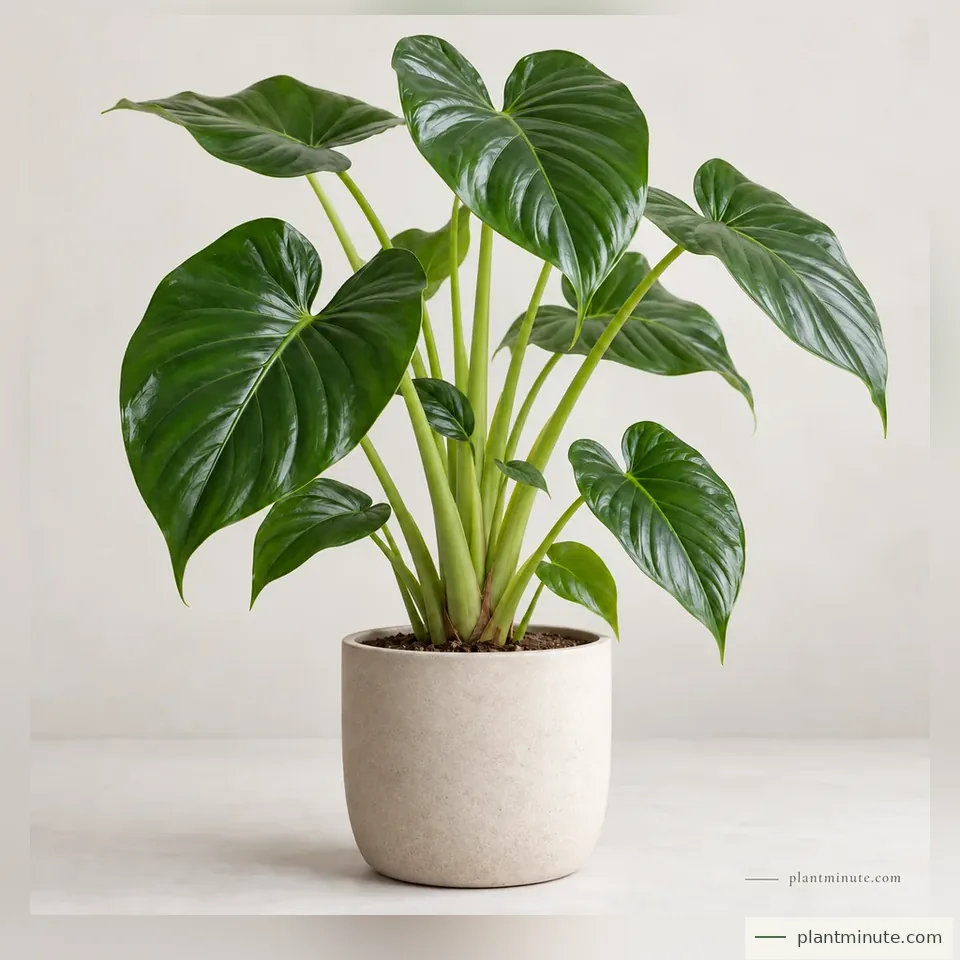
An Alocasia with glossy green foliage supported by long leaf stalks. An older leaf may yellow as a new one develops; several leaves yellowing at once are more likely to indicate a growing problem.
This aroid produces leaves from a fleshy base and may shed an old leaf as a new one grows. Several leaf stalks collapsing together are different: inspect root health.
Care
Feed lightly every 3–4 weeks during active growth, never when the root ball is bone-dry. Yellowing leaves together with soft stalks: check the roots and standing water first. Dry leaf edges: assess ambient humidity and irregular watering. Watch for spider mites. Toxic if swallowed by people or pets; keep out of reach.
Gently wipe dust from broad leaves and inspect their undersides for spider mites. Do not automatically water more whenever leaves turn yellow; first check whether the root ball is still wet deep down.
Repotting
Repot in spring if roots are crowded; keep the top of the rhizome at its original depth.
Keep the crown and upper rhizome at their previous level. Loosen only tightly circling roots; a much larger pot increases the risk of the mix staying wet too long.
Propagation
Separate offsets with roots during repotting. Plant them in an airy mix, maintain steady warmth and do not try to root a leaf lacking a piece of the plant's base.
🐱 Toxicity
Contains irritating calcium oxalate crystals if chewed; keep away from children, cats and dogs. Prevent contact with the mouth.
🩺 Common problems
Yellow leaves
An old leaf turning yellow as a new one emerges can be normal. Several yellow leaves and soft leaf stalks call for checking the roots and excess moisture; dry compost can also cause drooping.
Brown leaves
Dry edges: check irregular watering, overly dry air and direct sun. Dark brown, soft areas instead warrant checking the base and roots.
Diseases
Roots and rhizomes may rot in waterlogged compost. Carefully remove the root ball, trim already rotten parts and restore a free-draining mix.
Pests
Spider mites thrive in hot, dry air: look for pale stippling and fine webs beneath leaves. Also check new growth for thrips and mealybugs.