Plant profile
Alocasia Frydek Variegata
Alocasia micholitziana 'Frydek Variegata'
🌱 Growing conditions
☀️ Light
Very bright indirect light; white sectors scorch easily in direct sun.
💧 Watering
Keep moisture even during growth without saturating the mix.
🌡️ Temperature
20–28 °C.
💦 Humidity
High, ideally 60–75 %, with airflow.
🪴 Potting mix
Very airy, rich and well-drained.
⭐ Difficulty
Demanding
🌱 Growth
Slow to moderate
📏 Mature size
60–100 cm
🌿 Habit
Upright clump
📝 About Alocasia Frydek Variegata
Description
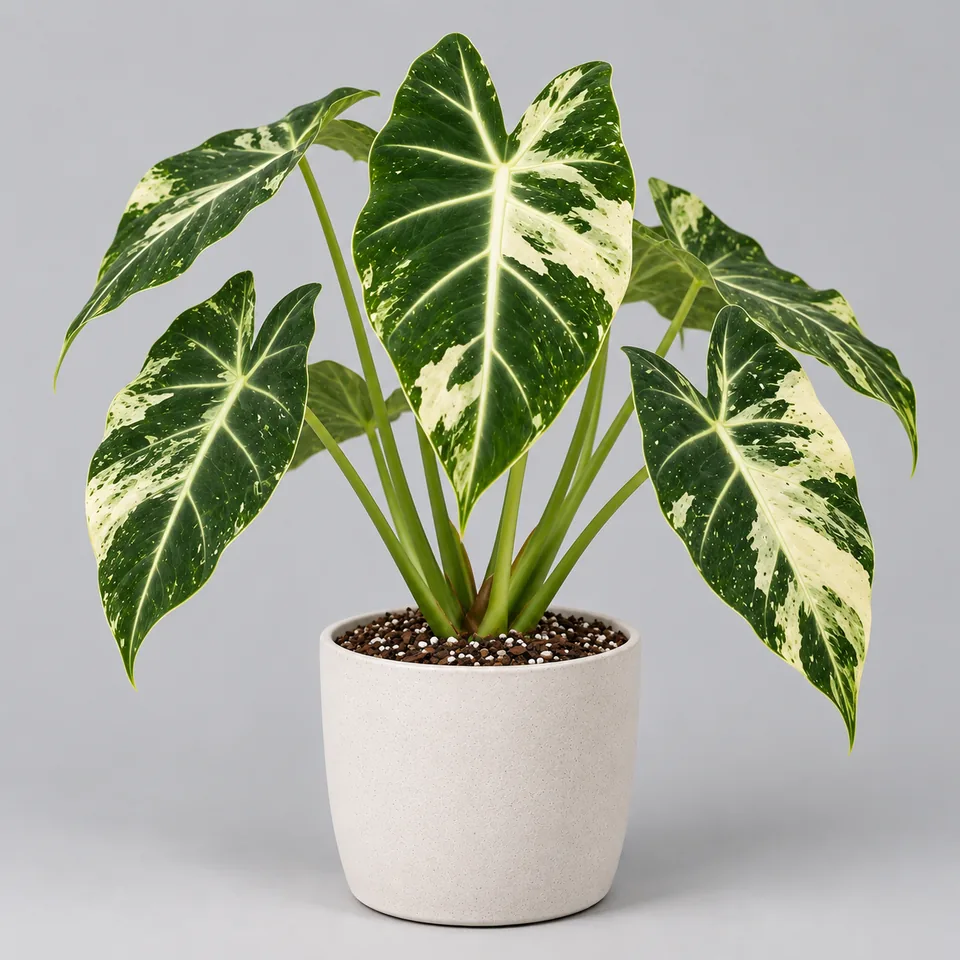
Alocasia 'Frydek Variegata' combines the velvety leaves and white veins of 'Frydek' with cream or white sectors lacking chlorophyll. Every new leaf can display a different pattern.
This variegation reduces the plant's photosynthetic capacity, making it slower and less forgiving of mistakes. The white areas burn and dry out more quickly, while insufficient light can greatly limit growth.
A balanced proportion of green and white is preferable to an almost completely white plant, which has too little photosynthetic tissue to sustain vigorous development.
Care
Provide very abundant but filtered light and stable conditions. Avoid sudden sun exposure after moving the plant.
Keep the mix lightly moist during active growth but always well aerated. Reduce watering if the plant slows down or loses leaves.
Maintain high humidity together with air circulation. New leaves are fragile: do not handle them while they are unfurling.
Repotting
Repot only when necessary, using a slightly larger container and a coarse mix. An oversized pot greatly increases the risk of the corm remaining permanently wet.
Propagation
Separate corms or offsets. Variegation in young plants can vary; wait for several leaves before judging how stable it is.
🐱 Toxicity
Toxic if ingested because the tissues contain irritating calcium oxalate crystals.
🩺 Common problems
Yellow leaves
Excess water, cold, insufficient light or normal aging of an old leaf.
Brown leaves
White areas brown easily with sun, dry air, mineral salts or irregular watering.
Diseases
Corm and root rot if the root ball remains saturated.
Pests
Spider mites, thrips and scale insects. Check the undersides of the large leaves and petioles, especially in warm dry air. Rapidly spreading fine stippling suggests spider mites; silvery streaks and distorted new leaves point to thrips.