Plant profile
Heart Balloon Alocasia
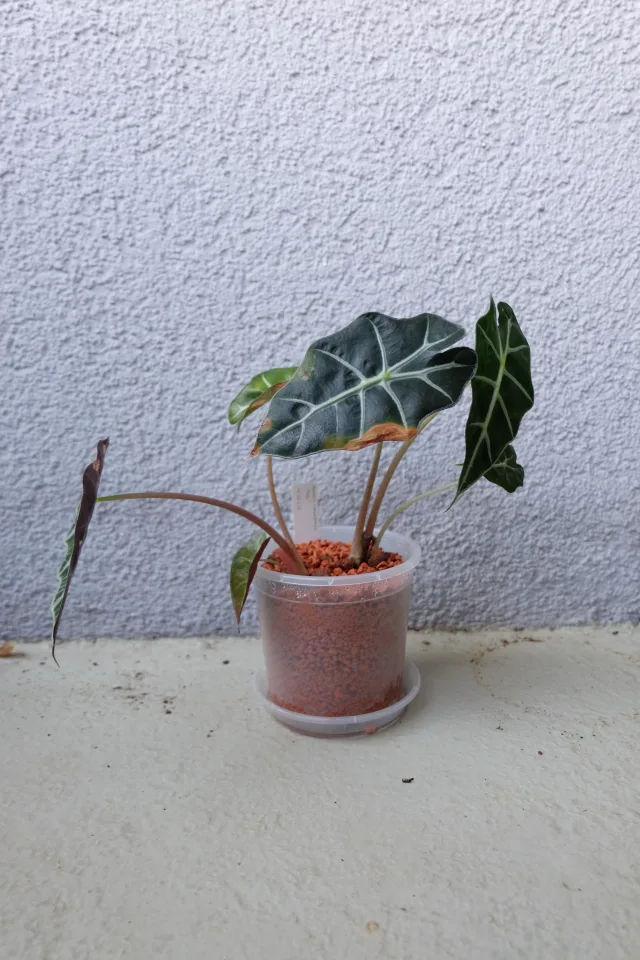
Alocasia 'Heart Balloon'
🌱 Growing conditions
☀️ Light
Bright indirect light; avoid strong direct sun.
💧 Watering
Water when the top 2–3 cm begins to dry; reduce markedly if growth slows.
🌡️ Temperature
18–28 °C; avoid prolonged temperatures below 16 °C.
💦 Humidity
Average to high, with good air circulation.
🪴 Potting mix
Very airy and free-draining: light potting mix, bark and perlite or pumice.
⭐ Difficulty
Moderate
🌱 Growth
Moderate
📏 Mature size
30–50 cm
🌿 Habit
compact upright clump
📝 About Heart Balloon Alocasia
Description
Compact 'Amazonica'-group cultivar with thick heart-shaped leaves and strongly contrasting pale veins.
It grows from a corm. Leaf loss after cold, stress or lower light does not necessarily mean death: a firm corm can regrow.
The critical point in a pot is root aeration. A large volume of constantly wet mix is more dangerous than allowing the surface to dry briefly.
Care
Keep it near a bright window without harsh direct sun. Water thoroughly when the surface starts to dry, then let the pot drain completely. In winter or after leaf loss, water less often because the plant uses less water.
Avoid cold draughts and nearby radiators. Inspect leaf undersides regularly because spider mites may establish before they are obvious from above.
Repotting
Repot when roots fill the pot well or the mix has compacted. Choose a pot with drainage holes only slightly larger and keep the corm near its previous depth.
Do not compress the mix heavily: a coarse oxygenated medium protects the roots better than a large pot of fine soil.
Propagation
Separate offsets or small corms produced around the mother plant. Start corms warm in sphagnum, perlite or another airy medium kept only lightly moist.
A leaf or petiole alone, without a piece of corm or growth point, cannot recreate the plant.
🐱 Toxicity
Toxic if ingested and sap is irritating because of calcium oxalate crystals.
🩺 Common problems
Yellow leaves
Several yellow leaves while the pot stays wet usually indicate overwatering, an oversized pot or poor root aeration. One old lower leaf may yellow naturally as foliage is renewed.
If the plant becomes pale and stretched without remaining waterlogged, also check light levels.
Brown leaves
Dry edges can result from very dry air, irregular watering or salt buildup. Pale patches that later brown on the window side point more toward excessive sun.
Soft dark-brown spots together with cool wet mix require a prompt check of roots and corm for rot.
Diseases
The main risk is root and corm rot in a cold, compact, saturated mix. A healthy corm is firm; soft, dark or foul-smelling tissue should be removed back to healthy tissue.
Leaf spots are encouraged by foliage staying wet for long periods with poor ventilation.
Pests
Spider mites, thrips and scale/mealybugs are the main pests. Look for fine stippling, silver scarring, distorted new leaves, honeydew or cottony clusters.
Isolate an affected plant quickly and inspect sheaths and young growth where pests often hide.