Plant profile
Jacklyn alocasia
Alocasia tandurusa 'Jacklyn'
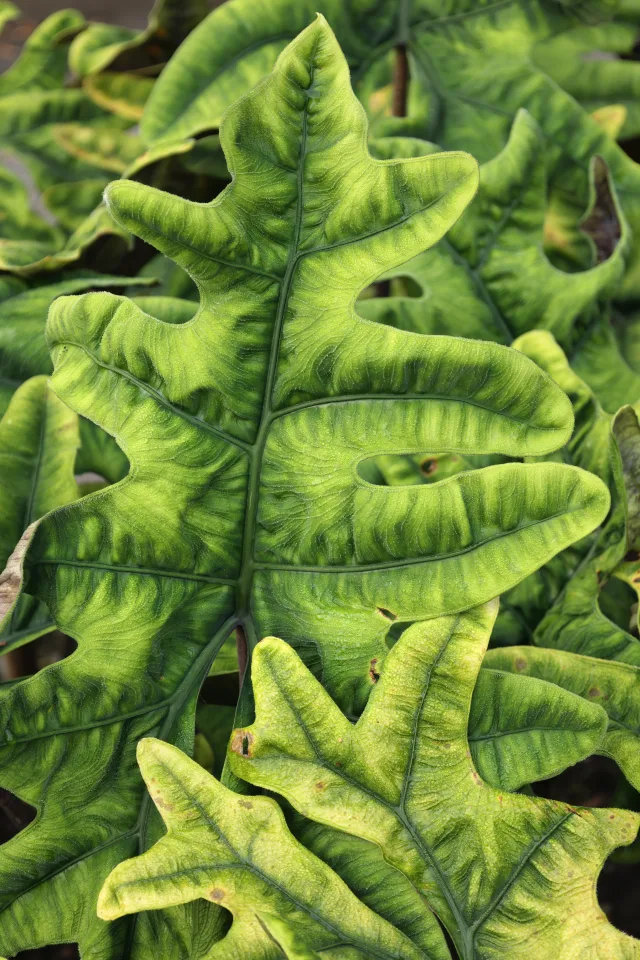
Photo : Cephas — CC BY-SA 4.0
🌱 Growing conditions
☀️ Light
Bright indirect light
💧 Watering
Keep lightly moist during growth while allowing the surface to dry; reduce watering markedly if growth slows
🌡️ Temperature
20 to 28 °C
💦 Humidity
High with good air circulation
🪴 Potting mix
Very airy, chunky and well-draining
⭐ Difficulty
Demanding
🌱 Growth
Moderate
📏 Mature size
60 cm to 1 m
🌿 Habit
upright
📝 About Jacklyn alocasia
Description
Alocasia ‘Jacklyn’ is immediately recognizable by deeply lobed, textured green leaves carried on petioles striped with dark markings. Its very graphic appearance explains its recent popularity among collectible Alocasia.
It needs more consistent conditions than a pothos: warmth, bright light without scorching, high humidity and, above all, a very airy mix. The fleshy roots and corm rot quickly if water remains around the roots for too long.
The plant can slow down or lose leaves in winter. As long as the corm remains firm and healthy, it can regrow when warmth and light increase.
Care
Place it near a bright window with filtered light. Protect the leaves from scorching sun, especially immediately after purchase.
Water when the top of the mix begins to dry, then allow the pot to drain fully. Avoid frequent small waterings that keep the area around the corm constantly wet.
Maintain high humidity together with good air movement. Spider mites proliferate quickly in hot, dry air.
Feed lightly only during active growth. In winter, if no new leaf is developing, increase the interval between waterings.
Repotting
Repot in spring or when growth resumes, using a pot with drainage holes only slightly larger. The mix should be chunky and breathable.
Handle roots gently. Do not plant the corm too deeply and do not use an oversized pot.
Propagation
Separate offsets and, above all, collect small corms produced around the mother plant. Start corms in moist perlite, sphagnum moss or a light warm mix.
Leaf or petiole cuttings do not work.
🐱 Toxicity
Toxic if swallowed because of calcium oxalate crystals.
🩺 Common problems
Yellow leaves
Overwatering, damaged roots, cold or seasonal slowdown are the main causes. An old leaf can yellow while the plant produces a new one.
Always check the mix and, if needed, the roots before watering more.
Brown leaves
Dry air, irregular watering or intense direct sun. The narrow lobe edges dry more quickly than the center of the leaf.
Soft, dark areas near the petiole or corm are more concerning and suggest rot.
Diseases
Root and corm rot; bacterial or fungal leaf spots are encouraged by heat, stagnant humidity and wet foliage.
Pests
Spider mites are particularly common, followed by thrips and scale insects. Check the undersides of the leaves and the petioles especially: fine stippling with tiny webs often indicates spider mites, while silvery streaks and distorted young leaves suggest thrips.