Plant profile
Alocasia Bambino
Alocasia longiloba 'Bambino'
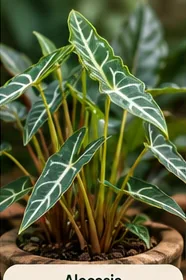
Photo : PlantMinute — Image générée
🌱 Growing conditions
☀️ Light
Bright indirect light; avoid harsh direct sun.
💧 Watering
Water when the top 2–3 cm of the mix are dry, without allowing water to stand.
🌡️ Temperature
20 to 28 °C
💦 Humidity
High, ideally 60% or more
🪴 Potting mix
Very airy and free-draining, with bark, perlite or pumice and a light organic component.
⭐ Difficulty
Moderate to demanding
🌱 Growth
Moderate
📏 Mature size
40 to 70 cm
🌿 Habit
compact and upright
📝 About Alocasia Bambino
Description
Alocasia longiloba ‘Bambino’ is a compact form valued for its narrow, arrow-shaped leaves, deep green colour and strongly contrasting pale veins. It offers the dramatic look of a larger Alocasia in a size better suited to small spaces.
Its smaller stature does not change its basic needs: steady warmth, bright light without scorching sun, adequate humidity and, above all, well-aerated roots. Like many Alocasias, it reacts quickly to overwatering in a dense potting mix.
During cooler periods or when light levels fall, growth may slow markedly. At that point, reduce watering rather than maintaining the same summer schedule.
Care
Place it near a bright window, filtered by a sheer curtain if the sun is strong. Insufficient light produces longer petioles, softer leaves and lower water use.
Water once the surface has begun to dry, then let all excess water drain away. The pot should never sit in water. High humidity is useful, but it must be paired with good air circulation.
Gently wipe the leaves with a damp cloth rather than repeatedly misting them. Feed lightly during active growth, then reduce feeding sharply in autumn and winter.
Repotting
Repot in spring if the roots have filled the pot or the mix has become compacted. Choose a pot with drainage holes that is only slightly larger.
A very airy aroid mix is best: fine to medium bark, perlite or pumice, coco fibre and a little light potting mix. Do not bury the corm too deeply.
Propagation
Separate offsets or collect the small corms produced around the mother plant when repotting. They can be started in sphagnum, moist perlite or a very light mix kept warm.
Leaf or petiole cuttings cannot be used to propagate an Alocasia.
🐱 Toxicity
Toxic if ingested because of calcium oxalate crystals; may irritate the mouth and mucous membranes.
🩺 Common problems
Yellow leaves
Several yellow leaves often point to overwatering, an overly compact mix or chilling. An older leaf may also yellow naturally as a new one develops.
Check the moisture level and the condition of the roots before increasing watering.
Brown leaves
Dry edges can result from low humidity, irregular watering or very mineral-rich water. Pale areas that turn brown on the window side are more suggestive of sunburn.
A dark, soft area near the base is more concerning and may indicate the beginning of rot.
Diseases
Root or corm rot in saturated mix; bacterial or fungal leaf spots if foliage stays wet without ventilation.
Pests
Watch especially for spider mites, followed by thrips and scale insects. Inspect the undersides of the leaves frequently; fine stippling, small webs or distorted growth indicate an infestation.