Plant profile
Alocasia Frydek
Alocasia micholitziana 'Frydek'
🌱 Growing conditions
☀️ Light
Bright indirect light; protect velvety foliage from harsh direct sun.
💧 Watering
Keep lightly moist during active growth, allowing the surface to dry between waterings.
🌡️ Temperature
20–28 °C.
💦 Humidity
High, ideally 60 % or more, with airflow.
🪴 Potting mix
Rich but very airy and well-drained.
⭐ Difficulty
Moderate to demanding
🌱 Growth
Moderate
📏 Mature size
60–100 cm
🌿 Habit
Upright clump
📝 About Alocasia Frydek
Description
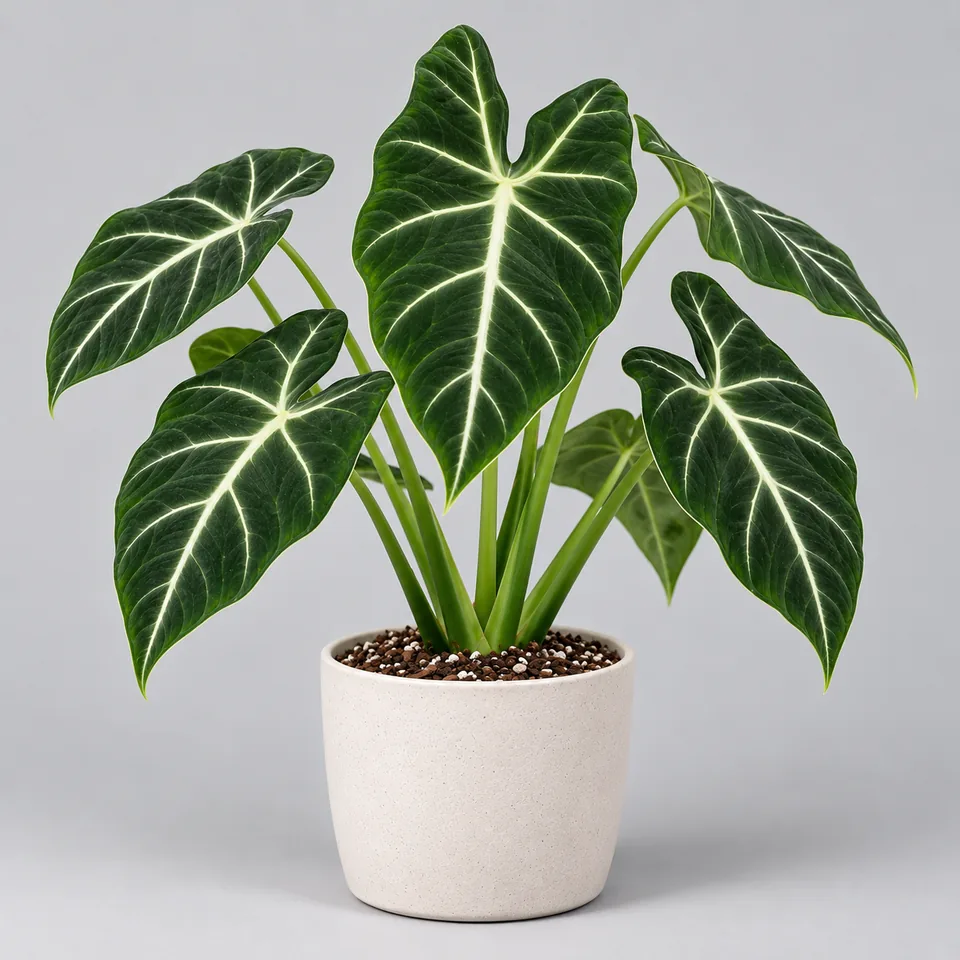
Alocasia 'Frydek' is the best-known horticultural form of Alocasia micholitziana. Its velvety dark green leaves carry strongly contrasting white veins and rise on long petioles.
It appreciates warmth, strong filtered light and humid air, but its roots remain highly sensitive to a lack of oxygen. The main challenge is therefore to maintain even moisture without keeping the potting mix saturated.
In winter or after stress, the plant may slow down sharply and lose part of its foliage without the underground corm necessarily being dead.
Care
Place it in bright, filtered light away from cold drafts. Keep the temperature stable.
During active growth, water as soon as the surface begins to dry, then let the pot drain. If the plant slows markedly and loses leaves, reduce the amount and frequency of water rather than keeping the same schedule.
High humidity helps new leaves unfurl properly, but good ventilation remains essential.
Repotting
Repot during active growth when the roots fill the pot. Use a coarse aroid mix, but one that retains slightly more moisture than a typical Monstera mix.
Propagation
Separate offsets or small corms produced around the mother plant. Corms can be placed in sphagnum moss, perlite or a light medium, kept warm and under strong indirect light.
🐱 Toxicity
Toxic if ingested because the tissues contain irritating calcium oxalate crystals.
🩺 Common problems
Yellow leaves
An old leaf may yellow as a new one emerges. Several yellow leaves at once mainly suggest excess water, cold conditions or damaged roots.
Brown leaves
Dry air, direct sun, irregular watering or damage while the leaf is unfurling. Dry crisp margins mainly suggest dry air, irregular watering or salts; pale dry patches on the window side suggest sunburn. Soft brown areas point more toward excess water.
Diseases
Root and corm rot in overly wet potting mix, especially at low temperatures.
Pests
Spider mites are very common; thrips and scale insects can also occur.