Plant profile
Green velvet alocasia
Alocasia micholitziana
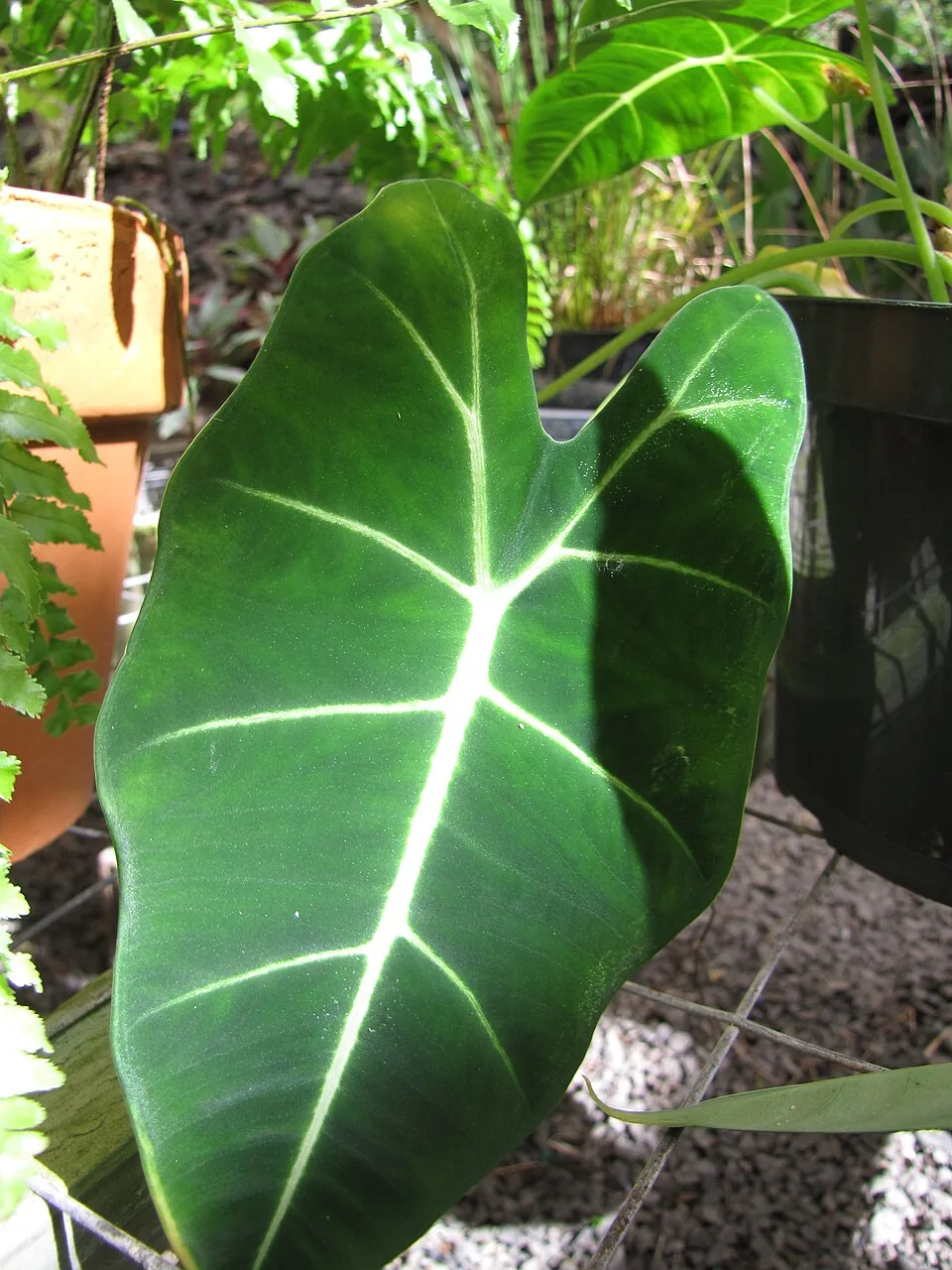
Photo : Forest and Kim Starr — CC BY 3.0 us
🌱 Growing conditions
☀️ Light
Bright indirect light; protect from scorching sun.
💧 Watering
Water when the first few centimeters of potting mix begin to dry, without leaving standing water.
🌡️ Temperature
18 to 27 °C
💦 Humidity
Medium to high
🪴 Potting mix
Rich, airy and well-draining.
⭐ Difficulty
Moderate
🌱 Growth
Moderate to fast
📏 Mature size
60 to 100 cm
🌿 Habit
clumping and upright
📝 About Green velvet alocasia
Description
Alocasia micholitziana has deep green, velvety, arrow-shaped leaves crossed by strongly contrasting white veins. The species is native to Luzon in the Philippines, and its matte foliage is more prone to rubbing and marking than the smooth leaves of many Alocasias. A stable position helps keep the leaves in good condition.
Care
Bright indirect light; protect from scorching sun. Water when the first few centimeters of potting mix begin to dry, without leaving standing water. Above all, avoid abrupt changes in conditions and check the root ball before watering again.
Avoid repeatedly wetting the velvety foliage; water droplets and rubbing can leave lasting marks on new leaves.
Repotting
Repot when the roots truly fill the container or the potting mix has degraded. Choose a pot with drainage holes only slightly larger and use a rich, airy, well-draining mix. An unnecessarily large pot keeps moisture around the roots for longer.
When repotting Alocasia micholitziana, keep the top of the corm and the petiole bases at their previous depth; a corm buried too deeply stays wet and rots more easily.
Propagation
Propagate by separating offsets, dividing the rhizome, or using small corms formed around the mother plant.
To propagate Alocasia micholitziana, separate an established offset or small corm during repotting; wait until it has a clear growth point rather than unnecessarily cutting up the main corm.
🐱 Toxicity
Toxic to dogs and cats if chewed or ingested. Like many aroids, this plant contains calcium oxalate crystals that irritate the mouth and digestive tract.
🩺 Common problems
Yellow leaves
Several yellow leaves on Alocasia micholitziana should first prompt you to check whether the potting mix stays wet too long. Also check the light: a plant in low light uses less water and becomes more sensitive to overwatering.
Brown leaves
Brown edges on Alocasia micholitziana may follow dry air, irregular watering or salt buildup. A dry patch on the window side points instead to overly intense direct sun.
Diseases
Root rot is the most serious problem when Alocasia micholitziana remains in a compact, wet mix. A soft base or unusual smell justifies checking the roots and removing damaged tissue.
Pests
On Alocasia micholitziana, inspect young leaves and their undersides in particular: thrips, spider mites and scale insects can settle there. Deformed or marked new growth is a useful warning sign.