Plant profile
Ninja alocasia
Alocasia reginula 'Ninja'
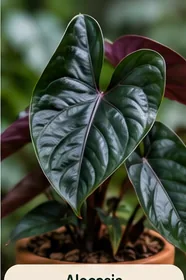
Photo : PlantMinute — Image générée
🌱 Growing conditions
☀️ Light
Bright indirect light
💧 Watering
Keep lightly moist during growth but never waterlogged
🌡️ Temperature
20 to 28 °C
💦 Humidity
High
🪴 Potting mix
Very airy, well-draining and chunky
⭐ Difficulty
Moderate to demanding
🌱 Growth
Slow to moderate
📏 Mature size
30 to 50 cm
🌿 Habit
compact and upright
📝 About Ninja alocasia
Description
Alocasia reginula ‘Ninja’ is a compact selection related to the famous ‘Black Velvet’. Its dark, thick, velvety leaves carry strongly contrasting pale veins. The habit is dense and generally more compact than that of larger Alocasia × amazonica types.
The velvety foliage marks easily: water droplets, rubbing and mineral deposits can all leave visible traces. It is therefore better to raise ambient humidity without repeatedly misting the leaves.
Its roots and corm are sensitive to excess moisture, especially in winter.
Care
Give it bright but filtered light. Avoid hot direct rays that can scorch the dark velvet surface.
Water when the top of the mix has begun to dry. The substrate should become evenly moist after watering and then drain well and become aerated again.
Maintain warmth and humidity, but ensure good air movement. Avoid keeping the foliage wet.
Feed lightly only while new leaves are actively developing.
Repotting
Repot when roots fill the small container or the mix has broken down. Choose a slightly wider pot with excellent drainage.
A chunky aroid mix rich in perlite or pumice and bark reduces the risk of rot.
Propagation
Separate offsets or small corms produced around the mother plant. Corms can be started in a warm, humid but airy medium.
A leaf or petiole by itself cannot propagate an Alocasia.
🐱 Toxicity
Toxic if swallowed because of calcium oxalate crystals.
🩺 Common problems
Yellow leaves
Overwatering, cold or seasonal slowdown are the most common causes. A single older leaf yellowing while a new one opens can be normal.
Brown leaves
Dry air, direct sun or irregular watering. Velvety leaves can also show mechanical marks that are not signs of disease.
Soft dark tissue at the base is more concerning and can indicate rot.
Diseases
Root and corm rot; leaf spots can develop when foliage remains wet in stagnant air.
Pests
Watch especially for spider mites, followed by thrips and scale insects. Inspect the undersides of the leaves frequently; fine stippling, small webs or distorted growth indicate an infestation.