Plant profile
Alocasia Scalprum
Alocasia scalprum
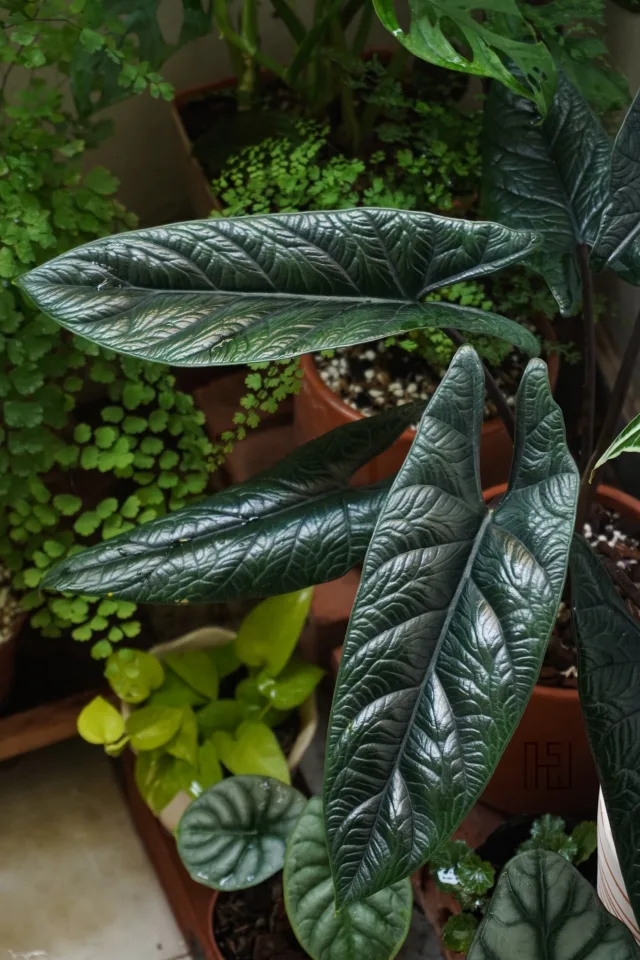
Photo : NKSTTSSHNVN — CC BY-SA 4.0
🌱 Growing conditions
☀️ Light
Bright indirect light.
💧 Watering
Keep lightly moist during active growth, allowing the surface to dry between waterings.
🌡️ Temperature
20 to 28 °C
💦 Humidity
High
🪴 Potting mix
Very airy, coarse and free-draining.
⭐ Difficulty
Demanding
🌱 Growth
Slow to moderate
📏 Mature size
30 to 60 cm
🌿 Habit
compact and upright
📝 About Alocasia Scalprum
Description
Alocasia scalprum is a compact species prized for its narrow, thick and strongly textured leaves, which range from dark green to almost black depending on the light. Their leathery, glossy surface gives the plant a strikingly graphic appearance.
It stays smaller than many Alocasias, but it is not more forgiving of watering mistakes. Its roots need air, and its corm can rot quickly if the mix remains heavy and wet.
Growth is generally slower than in species such as A. zebrina. A healthy plant may carry only a small number of leaves at one time without this being a cause for concern.
Care
Give it bright light without harsh sun. Too little light slows growth even further and lengthens the time the pot takes to dry.
Water once the surface has dried, without waiting for the entire root ball to become dry. High humidity supports good foliage, but air must circulate to reduce leaf problems.
Feed very lightly during active growth. In winter, reduce watering if the plant is no longer producing new leaves.
Repotting
Repot only when the roots occupy the container well or the mix has broken down. A pot only slightly larger is enough.
Use a very coarse, breathable aroid mix. Avoid oversized pots, which keep moisture around the roots for too long.
Propagation
Propagation is mainly by offsets and small corms separated from the mother plant.
Start the corms warm in a moist but very airy medium. Leaves alone cannot reproduce the plant.
🐱 Toxicity
Toxic if ingested because of calcium oxalates.
🩺 Common problems
Yellow leaves
Yellowing is often linked to overwatering, weakened roots or a drop in temperature. An older leaf may also yellow while a new one is emerging.
Brown leaves
Dry edges appear with low humidity or irregular watering. Clearly defined dry patches may be caused by overly strong direct sun.
A soft, dark-brown base is more suggestive of rot.
Diseases
Corm and root rot; bacterial or fungal spotting in overly humid, stagnant conditions.
Pests
Watch especially for spider mites, then thrips and scale insects. Inspect leaf undersides and young growth; isolate the plant if fine stippling, distortion or silvery scarring appears.