Plant profile
Flamingo flower
Anthurium andraeanum
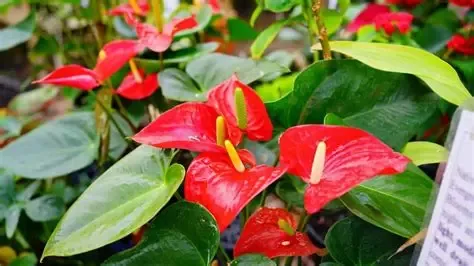
Photo : Das Mousumi — CC BY-SA 4.0 — source

🌱 Growing conditions
☀️ Light
Bright light without direct sun
💧 Watering
Regular, without leaving standing water in the potting mix
🌡️ Temperature
18 to 27 °C
💦 Humidity
Prefers high humidity
🪴 Potting mix
Airy and very well-draining mix
⭐ Difficulty
Intermediate
🌱 Growth
Moderate
📏 Mature size
40 to 70 cm
🌿 Habit
clumping
📝 About Flamingo flower
Description
Anthurium andraeanum is a tropical plant valued for its glossy green foliage and especially its decorative inflorescences. The large colored part commonly mistaken for a flower is a spathe, a modified leaf surrounding a spike called a spadix. Depending on the variety, spathes may be red, pink, white or other shades. Native to tropical America, Anthurium prefers warmth, humid air and abundant but filtered light. Good indoor light encourages both growth and flowering. Its roots require an airy mix and tolerate compact, waterlogged substrates poorly.
Care
Provide bright light without intense direct sun. Water when the top of the mix begins to dry, without leaving the root ball completely dry for long periods. Let excess water drain after each watering and never leave the pot standing in water. Fairly high humidity is beneficial. Remove damaged leaves and faded inflorescences at their base and wipe foliage occasionally.
Repotting
Repot preferably in spring when roots clearly fill the pot. Use a container with drainage holes only slightly larger than the previous one. Choose a very airy, well-draining mix that retains some moisture while allowing air around the roots. Do not compress the mix heavily or bury the base of the plant too deeply.
Propagation
The simplest method is to divide a mature plant with several shoots or root groups. Divide during repotting, retaining enough roots on each section. Stem sections with nodes can also be propagated. Seed is possible but much slower, and seedlings may not reproduce a cultivar exactly.
🐱 Toxicity
Toxic if ingested because the tissues contain irritating calcium oxalate crystals. Keep it away from young children and pets that chew plants.
🩺 Common problems
Yellow leaves
An occasional old yellow leaf may simply be reaching the end of its life. If several leaves yellow at once, first check substrate moisture. Overwatering, compact mix or standing water around the roots can suffocate them. Prolonged low light, cold or severe repotting stress can also cause yellowing.
Brown leaves
Brown tips or edges may be associated with dry air, irregular watering or salt buildup. Dry, bleached patches on exposed areas can indicate excessive direct sun. If spots are dark, soft or spread quickly, check substrate moisture and root condition.
Diseases
Constantly waterlogged mix can cause root and crown rot. Healthy roots are firm; affected parts usually become brown, soft and deteriorate. Leaf diseases may also be encouraged by excessive moisture on foliage combined with poor air circulation. Remove badly affected parts, improve airflow and correct watering.
Pests
Mealybugs, scale insects, spider mites and thrips may attack Anthurium. Thrips can damage young leaves and inflorescences. Regularly inspect leaf undersides, petioles, new growth and spathes. Isolate infested plants promptly to limit spread.