Plant profile
Anthurium Silver Blush
Anthurium crystallinum 'Silver Blush'
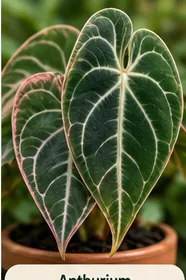
Photo : PlantMinute — Image générée
🌱 Growing conditions
☀️ Light
Bright indirect light.
💧 Watering
Water when the surface begins to dry, without allowing the mix to become saturated.
🌡️ Temperature
20 to 28 °C
💦 Humidity
High
🪴 Potting mix
Very airy, humus-rich and free-draining.
⭐ Difficulty
Moderate to demanding
🌱 Growth
Slow to moderate
📏 Mature size
40 to 70 cm
🌿 Habit
upright rosette
📝 About Anthurium Silver Blush
Description
Anthurium crystallinum ‘Silver Blush’ is a particularly silver form of the crystallinum group. Its heart-shaped young leaves have unusually broad silver veins and silvered areas, sometimes giving the blade an almost powdered appearance.
Like other velvet-leaved Anthuriums, it appreciates high ambient humidity but needs an airy root mix. It does poorly both with prolonged drought and with stagnant excess water.
The foliage increases in size with age when light, warmth and humidity remain steady.
Care
Place it in bright, filtered light. Insufficient light produces smaller leaves and slows growth considerably.
Water when the surface begins to dry. The mix should stay lightly moist without remaining waterlogged. Keep humidity high, but avoid wetting the velvet leaves every day.
Gentle air movement and low-mineral water help keep the leaf margins clean. Feed lightly during active growth.
Repotting
Repot when the roots have colonised the pot or the mix has broken down. A pot with drainage holes only slightly larger is suitable.
Use a coarse aroid mix: bark, perlite or pumice, coco fibre and light organic matter.
Propagation
Dividing offsets or sections of stem with a viable growth point is the safest method.
Each piece must retain a node or active growth area. A leaf by itself will not produce a new plant.
🐱 Toxicity
Toxic if ingested because of calcium oxalates.
🩺 Common problems
Yellow leaves
Several yellow leaves often indicate overwatering or poorly aerated roots. A lower, older leaf may yellow naturally.
Brown leaves
Silvered areas and margins brown in dry air, with highly mineralised water or irregular watering. Direct sun can scorch the velvety surface.
Diseases
Root rot is favoured by persistently wet mix, while bacterial spotting is more likely when foliage stays wet in stagnant air. Improve drainage, airflow and leaf drying before treating.
Pests
Watch especially for thrips, spider mites and scale insects. Inspect young leaves, their undersides and petioles; isolate the plant if new growth becomes distorted, stippled or silvery.