Plant profile
Crystal anthurium
Anthurium crystallinum
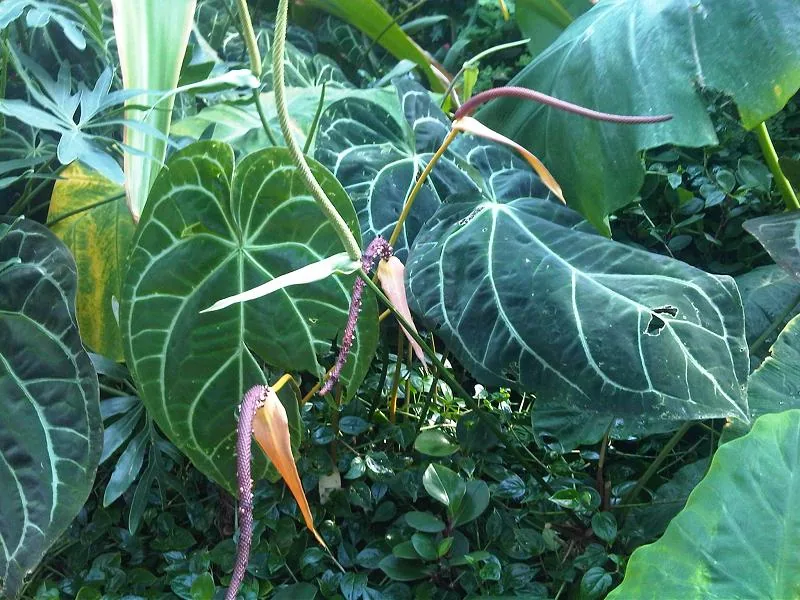
Photo : Emőke Dénes — CC BY-SA 4.0 — source

🌱 Growing conditions
☀️ Light
Bright indirect light; protect from scorching sun.
💧 Watering
Water when the first few centimeters of potting mix begin to dry, without leaving standing water.
🌡️ Temperature
18 to 27 °C
💦 Humidity
Medium to high
🪴 Potting mix
Rich, airy and well-draining.
⭐ Difficulty
Moderate
🌱 Growth
Moderate to fast
📏 Mature size
50 to 100 cm spread
🌿 Habit
clumping
📝 About Crystal anthurium
Description
Spectacular Anthurium with large heart-shaped, velvety, deep-green leaves marked by very prominent silver veins. Native to Panama and Colombia, it naturally grows as an epiphyte or semi-epiphyte in humid tropical forest.
Care
Place in bright filtered light, with high atmospheric humidity and good air circulation. Water when the upper layer of the mix begins to dry, using low-mineral water if possible. Avoid direct sun, cold and compact potting mix.
Repotting
Repot when roots have thoroughly colonized the container, preferably in spring. Use a very airy mix based on bark, coconut fiber or light potting soil with draining mineral components; a pot only slightly larger is enough.
Propagation
Dividing a plant with several growth points is the simplest method. A stem section with a viable node can also be rooted in warm, humid conditions.
🐱 Toxicity
Like other Anthuriums, it contains irritating calcium oxalate crystals. Ingestion can strongly irritate the mouth; keep out of reach of children, cats and dogs.
🩺 Common problems
Yellow leaves
Yellow leaves can indicate overly wet mix, oxygen-starved roots, prolonged cold or, more rarely, natural aging of an old leaf.
Brown leaves
Brown tips or margins often appear when the air is too dry, the water is highly mineralized, or the roots undergo marked alternations between drought and excess water.
Diseases
Root rot is the main risk if the mix stays saturated. A coarse, airy mix and a pot with good drainage greatly reduce this problem.
Pests
Watch especially for thrips, spider mites and scale insects, particularly on the undersides of the large velvety leaves and on new growth.