Plant profile
Anthurium luxurians
Anthurium luxurians
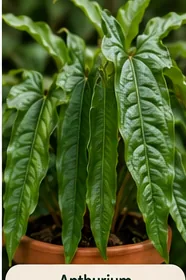
Photo : PlantMinute — Image générée
🌱 Growing conditions
☀️ Light
Bright indirect to medium light.
💧 Watering
Keep lightly moist, allowing the surface to dry between waterings.
🌡️ Temperature
20 to 28 °C
💦 Humidity
High
🪴 Potting mix
Humus-rich, very airy and free-draining.
⭐ Difficulty
Demanding
🌱 Growth
Slow
📏 Mature size
40 to 80 cm
🌿 Habit
compact and upright
📝 About Anthurium luxurians
Description
Anthurium luxurians is prized for its thick, glossy and deeply quilted leaves, whose texture can look almost reptilian. New leaves are often paler before darkening as they mature.
The plant remains relatively compact but needs a warm, humid environment. It is less tolerant of abrupt changes than common flowering Anthuriums.
Its thick roots appreciate oxygen. A fine, constantly wet potting mix is one of the quickest ways to weaken it.
Care
Give it bright but filtered light. Medium light is tolerated, although it slows an already slow growth rate.
Water when the surface begins to dry, then let the pot drain completely. Maintain high air humidity without allowing persistent condensation on the leaves.
Avoid rubbing the textured foliage hard. Feed very lightly during active growth.
Repotting
Repot only when the roots fill the pot. Choose a container only slightly larger.
A very airy mix of bark, coco fibre, perlite or pumice and a small amount of potting mix works well.
Propagation
Propagate by dividing an offset or a stem section with an active growth point. Seed propagation is possible but impractical in most homes.
🐱 Toxicity
Toxic if ingested because of calcium oxalate crystals.
🩺 Common problems
Yellow leaves
Yellowing of several leaves usually indicates roots that are too wet or a mix lacking air. One old leaf may yellow naturally.
Brown leaves
Dry margins are common with low humidity, highly mineralised water or irregular watering.
Diseases
Root rot in saturated mix; bacterial spotting can occur if leaves remain wet.
Pests
Watch especially for thrips, spider mites and scale insects. Inspect young leaves, their undersides and petioles; isolate the plant if new growth becomes distorted, stippled or silvery.