Plant profile
Anthurium pendulifolium
Anthurium pendulifolium
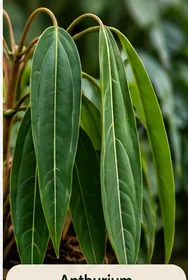
Photo : PlantMinute — Image générée
🌱 Growing conditions
☀️ Light
Bright indirect light.
💧 Watering
Water when the surface begins to dry, without prolonged saturation.
🌡️ Temperature
20 to 28 °C
💦 Humidity
High
🪴 Potting mix
Very airy, humus-rich and free-draining.
⭐ Difficulty
Moderate
🌱 Growth
Moderate
📏 Mature size
Leaves can exceed 1 m in length
🌿 Habit
trailing
📝 About Anthurium pendulifolium
Description
Anthurium pendulifolium is a dramatic species with long, strap-like, hanging leaves. Mature leaves can become very long, giving the plant an inverted vertical silhouette that works especially well in a hanging pot or placed high up.
Like other epiphytic Anthuriums, it develops thick roots that value air as much as moisture. Heavy, compact potting soil should therefore be avoided.
With warmth, bright light and steady humidity, each new leaf can gradually become longer.
Care
Place it high enough for the leaves to hang freely. Bright filtered light supports stronger growth.
Water when the surface has started to dry, then let the water drain completely. Maintain high ambient humidity while keeping air moving around the foliage.
Feed at low strength during active growth.
Repotting
Repot when the roots fill the container well. An open basket or a small pot with drainage holes can work very well. Use a very airy mix of bark, coco fibre, perlite or pumice and a little organic matter.
Propagation
Divide offsets or stem sections with a viable growth point and, if possible, some roots. A leaf alone cannot be used for propagation.
🐱 Toxicity
Toxic if ingested because of calcium oxalate crystals.
🩺 Common problems
Yellow leaves
General yellowing often indicates excess water or poorly aerated roots. An older leaf may yellow naturally.
Brown leaves
Brown tips are common in dry air, with very hard water or after irregular watering. Direct sun can scorch the leaf.
Diseases
Root rot if roots stay wet continuously; bacterial spotting can occur on wet foliage.
Pests
Watch for thrips, scale insects and spider mites, especially under the long leaves and near petioles. Isolate the plant if stippling, distortion or sticky deposits appear.