Plant profile
King anthurium
Anthurium veitchii
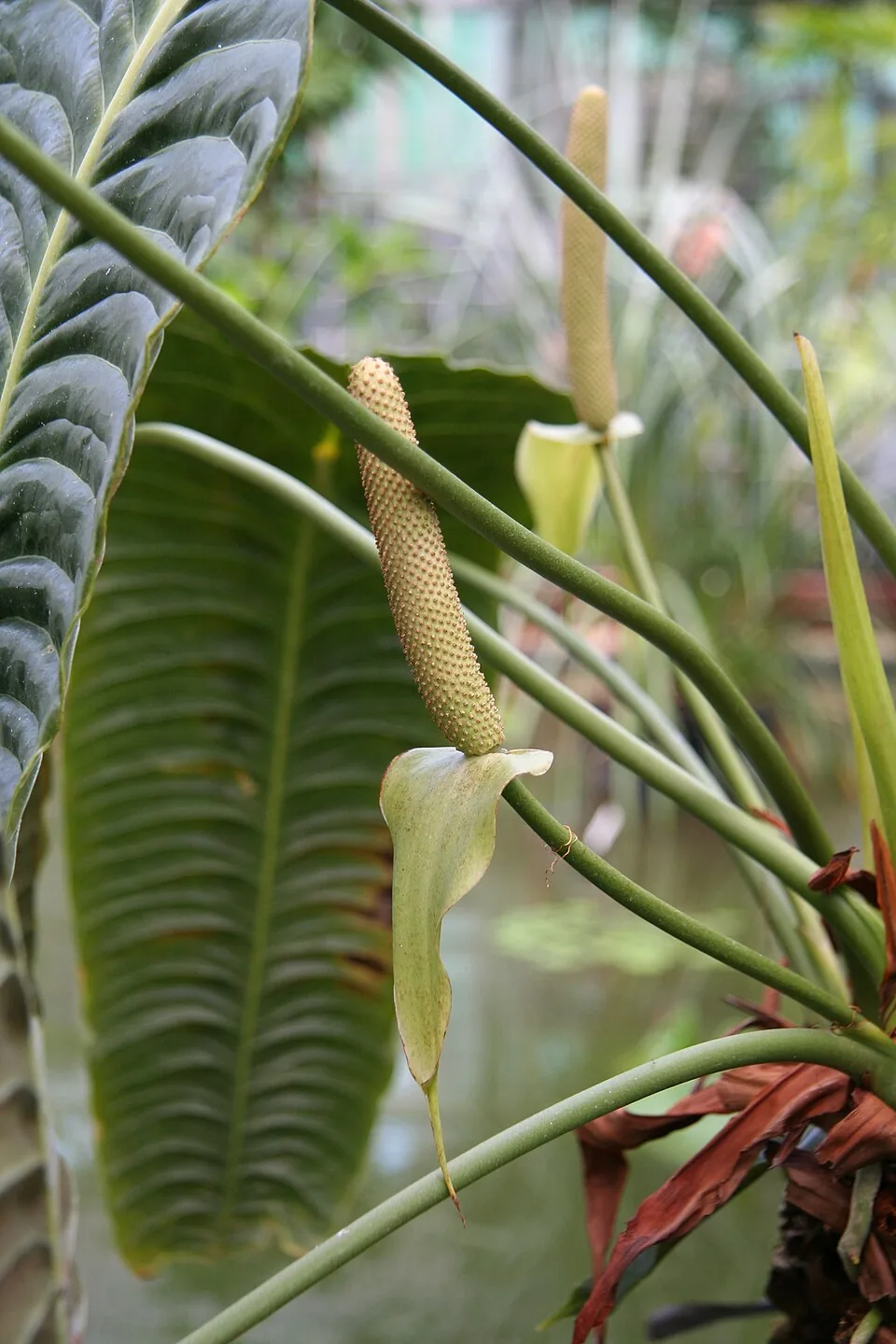
Photo : Michael Wolf — CC BY-SA 3.0 — source

🌱 Growing conditions
☀️ Light
Bright indirect light, abundant but filtered.
💧 Watering
Water when the top few centimeters of the potting mix dry, then allow excess water to drain.
🌡️ Temperature
18 to 28 °C
💦 Humidity
Medium to high
🪴 Potting mix
Airy, well-draining mix rich in organic matter.
⭐ Difficulty
Moderate
🌱 Growth
Moderate to fast
📏 Mature size
60 to 120 cm across, leaves approaching 1 m
🌿 Habit
epiphytic rosette
📝 About King anthurium
Description
Anthurium veitchii, often called the “King Anthurium”, develops very long hanging leaves with a deeply corrugated surface between the veins. The pleated texture becomes more dramatic as each leaf matures. The plant benefits from being raised or given enough room so the blades do not rub against the floor or furniture.
Care
Grow in a very airy mix with warmth and high humidity. Water regularly without saturating the roots and give the long hanging leaves enough space.
Repotting
Repot when roots truly fill the container or the potting mix has degraded. Choose a pot with drainage holes only slightly larger and use an airy, well-draining mix rich in organic matter. An unnecessarily large pot retains moisture around the roots for longer.
For Anthurium veitchii, keep part of the root system well aerated near the surface and avoid packing the mix down; the fleshy roots cope poorly with fine, compact, constantly saturated compost.
Propagation
Propagate by dividing a mature plant with several growth points, keeping healthy roots on each division. Stem sections with a viable node can also be rooted warm in an airy medium.
With Anthurium veitchii, favour separating a rooted basal offset or a stem section that carries a growth point and roots; a leaf on its own will not regenerate a complete plant.
🐱 Toxicity
Contains or may contain irritating calcium oxalate crystals; keep out of reach of children and animals.
🩺 Common problems
Yellow leaves
Several yellow leaves on Anthurium veitchii should first prompt a check that the potting mix is not staying wet for too long. Also check light: a plant in low light uses less water and becomes more sensitive to overwatering.
Brown leaves
Brown edges on Anthurium veitchii can follow dry air, irregular watering or salt buildup. A dry patch on the window side suggests overly intense direct sun.
Diseases
Root rot is the most serious problem when Anthurium veitchii remains in a compact, wet mix. A soft base or abnormal smell warrants checking the roots and removing degraded tissue.
Pests
On Anthurium veitchii, inspect young leaves and their undersides especially: thrips, spider mites and scale insects can settle there. Deformed or marked new growth is a useful warning sign.