Plant profile
Anthurium vittarifolium
Anthurium vittarifolium
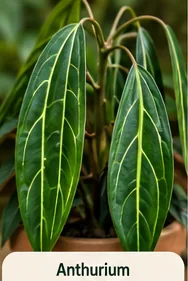
Photo : PlantMinute — Image générée
🌱 Growing conditions
☀️ Light
Bright indirect light.
💧 Watering
Water once the surface has started to dry; avoid prolonged saturation.
🌡️ Temperature
20 to 28 °C
💦 Humidity
High
🪴 Potting mix
Very airy, epiphytic-type mix.
⭐ Difficulty
Moderate
🌱 Growth
Moderate
📏 Mature size
Leaves can exceed 1 m in length
🌿 Habit
trailing
📝 About Anthurium vittarifolium
Description
Anthurium vittarifolium stands out for its very long, narrow, strap-like leaves that cascade from the centre of the plant. It is especially well suited to a hanging pot or a high shelf.
It is an epiphytic Anthurium: its roots prefer a very airy medium, closer to an enriched orchid mix than to dense potting soil.
With good humidity and enough light, the leaves gradually gain length and create a dramatic silhouette.
Care
Grow it high up or in a hanging pot so the long leaves do not rub against the floor. Bright filtered light encourages longer, stronger foliage.
Water when the surface has begun to dry, then let all excess water drain. The mix should remain airy at all times.
High humidity is beneficial, especially for limiting dry tips. Feed at low strength during active growth.
Repotting
Repot when the roots have filled the container. Use a small pot with drainage holes, or even an open basket, with a very airy epiphytic mix.
Bark, coco fibre, perlite or pumice and a small amount of organic matter work well.
Propagation
Divide offsets or stem sections carrying a growth point and roots. A leaf without a node cannot produce a new plant.
🐱 Toxicity
Toxic if ingested because of calcium oxalates.
🩺 Common problems
Yellow leaves
Several yellow leaves often indicate too much water or a mix that has become too compact. An old leaf may yellow naturally before dropping.
Brown leaves
Tips dry readily in low humidity, with hard water or after prolonged missed waterings. Direct sun can cause localised burns.
Diseases
Root rot if roots remain constantly wet; leaf spotting can occur if foliage stays wet.
Pests
Watch for thrips, scale insects and spider mites, especially under the long leaves and near petioles. Isolate the plant if stippling, distortion or sticky deposits appear.