Plant profile
Norfolk Island pine
Araucaria heterophylla
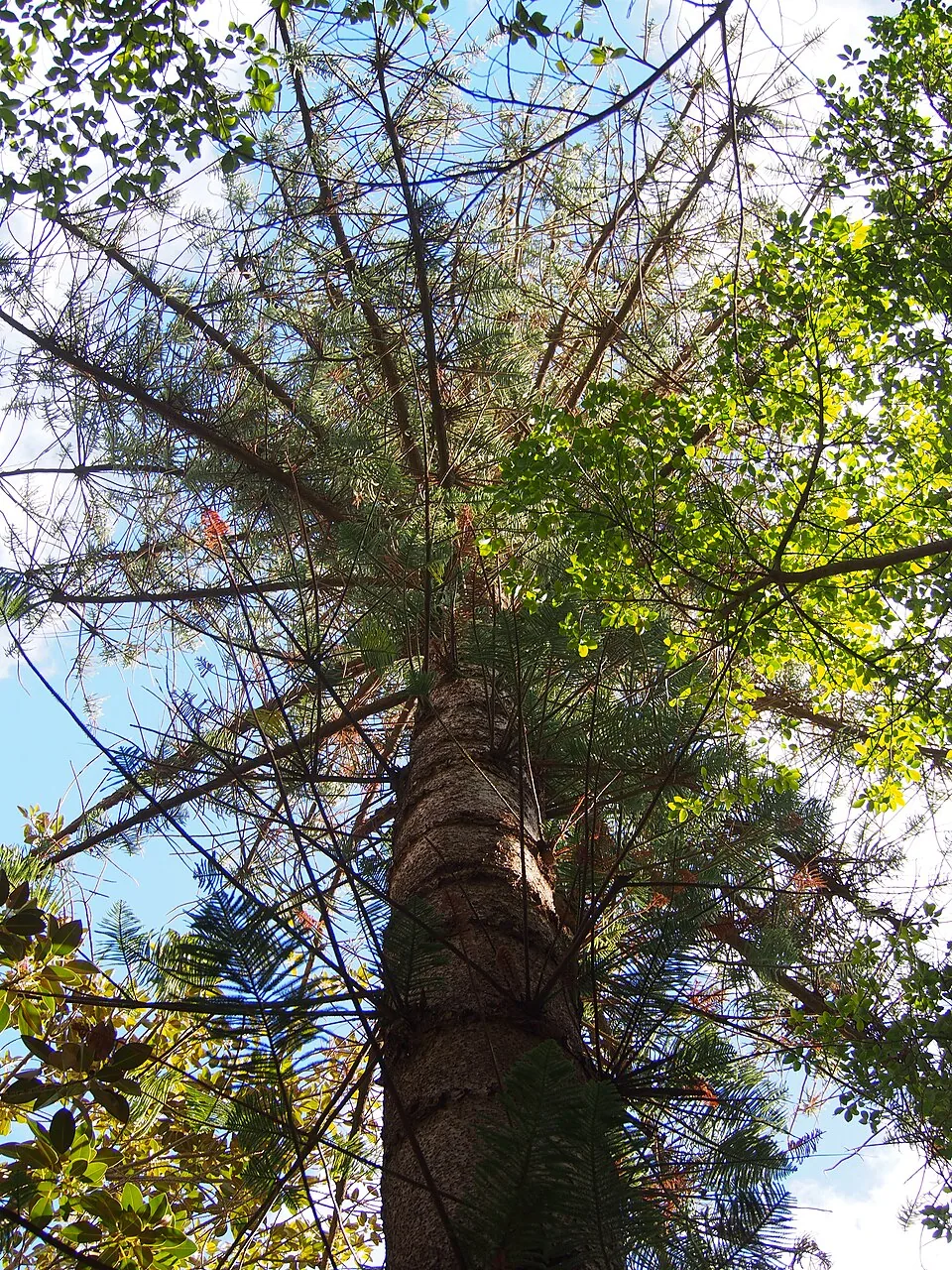
Photo : Agnieszka Kwiecień, Nova — CC BY-SA 4.0 — source

🌱 Growing conditions
☀️ Light
Bright indirect light; gentle sun possible.
💧 Watering
Water when the top 2–4 cm of mix have dried, then let excess water drain away. Do not leave the root ball completely dry for long periods, but never keep it waterlogged. In winter or lower light, extend the interval between waterings.
🌡️ Temperature
12 to 24 °C
💦 Humidity
Medium to high
🪴 Potting mix
Slightly acidic, well-draining potting mix.
⭐ Difficulty
Moderate
🌱 Growth
Slow
📏 Mature size
1.5 to 2.5 m indoors
🌿 Habit
tree-like and upright
📝 About Norfolk Island pine
Description
A conifer native to Norfolk Island, Araucaria heterophylla naturally becomes a large tree with regular tiers of branches. Indoors it grows much more slowly and is valued mainly for its highly symmetrical outline. Lost lower branches are rarely replaced, so severe drought and prolonged low light should be avoided.
Care
Place in bright indirect light, with some gentle sun after acclimation. Keep away from radiators, hot drafts and abrupt temperature changes. Rotate the pot by a quarter turn occasionally to keep growth even, without constantly relocating the plant.
Repotting
Repot only when roots occupy the container well, using a stable pot only slightly larger. Choose a slightly acidic, airy, free-draining mix. Do not bury the trunk deeper and avoid breaking up the root ball unnecessarily.
Propagation
Seed is the most reliable way to obtain a normally shaped plant. Cuttings taken from lateral branches tend to retain lateral growth and often produce misshapen specimens; vegetative propagation therefore requires suitable apical material.
🐱 Toxicity
Listed by the ASPCA as non-toxic to dogs and cats. Eating large amounts of plant material is still best avoided.
🩺 Common problems
Yellow leaves
Branches yellowing while the mix stays constantly wet point to overwatering or oxygen-starved roots. General yellowing with stretched growth can also indicate insufficient light. A single lower branch declining slowly may simply be ageing.
Brown leaves
Dry tips often result from very dry air, prolonged thirst or salt build-up. Whole branches that brown after severe drought rarely recover. If browning occurs while the root ball remains wet, inspect the roots instead.
Diseases
Root rot is the main disease risk in persistently saturated mix. A plant that becomes unstable, suddenly loses branches or has dark, soft roots should be unpotted, rotten tissue removed and the plant reset in a more airy medium.
Pests
Watch for mealybugs, scale insects and spider mites, especially on young shoots and beneath the scale-like leaves. Spider mites are favoured by hot, dry air. Isolate affected plants and keep checking for several weeks after the first clean-up.