Plant profile
Christmas berry
Ardisia crenata
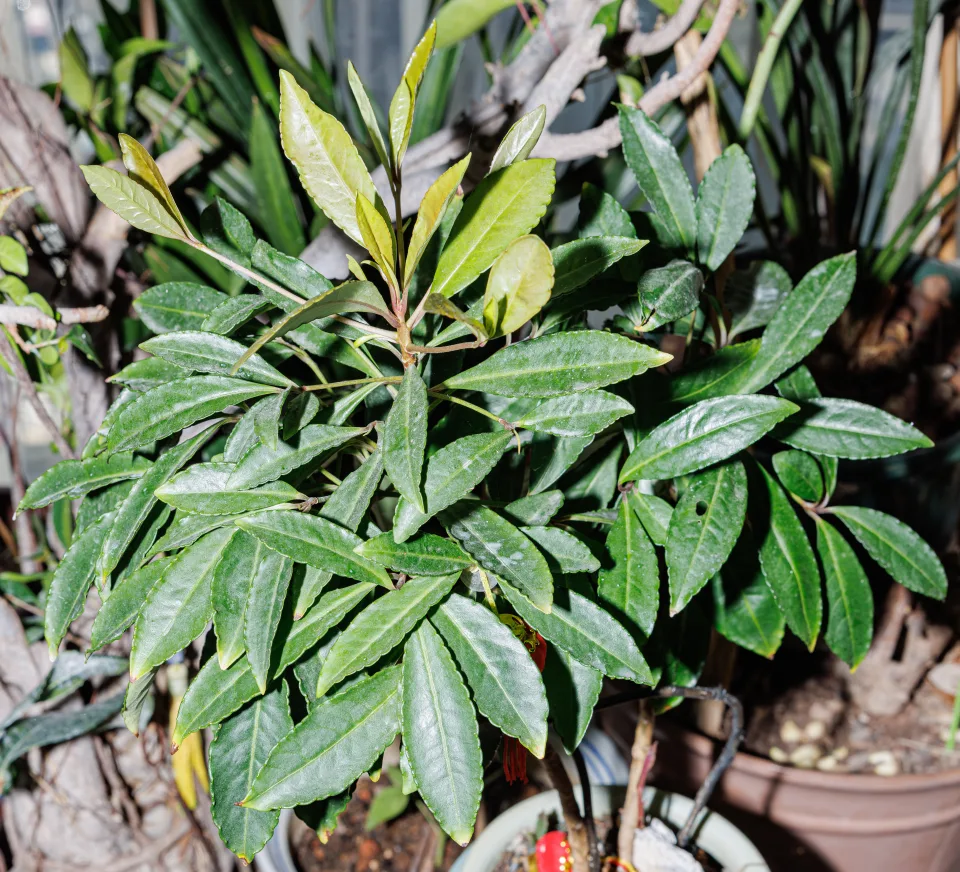
Photo : Dinkun Chen — CC BY-SA 4.0 — source

🌱 Growing conditions
☀️ Light
Bright indirect to medium light; gentle sun is possible.
💧 Watering
Keep lightly moist during active growth, then allow a little more drying between waterings in cooler periods.
🌡️ Temperature
12 to 24 °C; it prefers cooler conditions in winter.
💦 Humidity
Average to high.
🪴 Potting mix
Humus-rich, slightly acidic and free-draining.
⭐ Difficulty
Moderate
🌱 Growth
Slow to moderate
📏 Mature size
60 cm to 1.2 m indoors
🌿 Habit
upright shrub
📝 About Christmas berry
Description
Ardisia crenata is an evergreen shrub with glossy leaves and clusters of red berries that may remain decorative for months. It was once very common as a conservatory or cool-room houseplant.
It likes good light and, especially, moderate temperatures. A hot dry room in winter encourages leaf drop and spider mites.
Care
Place it close to a bright window, ideally in a room that does not remain above 22–24 °C all winter. Keep the mix lightly fresh but never waterlogged.
After fruiting, light pruning helps maintain a compact shape. Feed moderately in spring and summer.
Repotting
Repot in spring every two or three years, or when the roots are cramped. A humus-rich slightly acidic mix is suitable.
Propagation
Propagate from fresh seed or young stem cuttings kept warm. Seed is slow but usually simpler.
🐱 Toxicity
Berries and other plant parts should not be eaten. Ingestion may cause digestive upset; keep away from children and pets.
🩺 Common problems
Yellow leaves
Overwatering, insufficient light or excessive winter heat. Distinguish one older lower leaf yellowing slowly from yellowing spreading across several leaves. In the latter case, first check an overly wet root ball, insufficient light and excessive winter warmth.
Brown leaves
Dry air, lack of water or salt build-up. Leaf edges may also scorch in strong sun behind glass.
Diseases
Root rot in saturated soil and leaf spots in stagnant conditions.
Pests
Spider mites, scale insects, mealybugs and aphids.