Plant profile
Asparagus fern
Asparagus setaceus
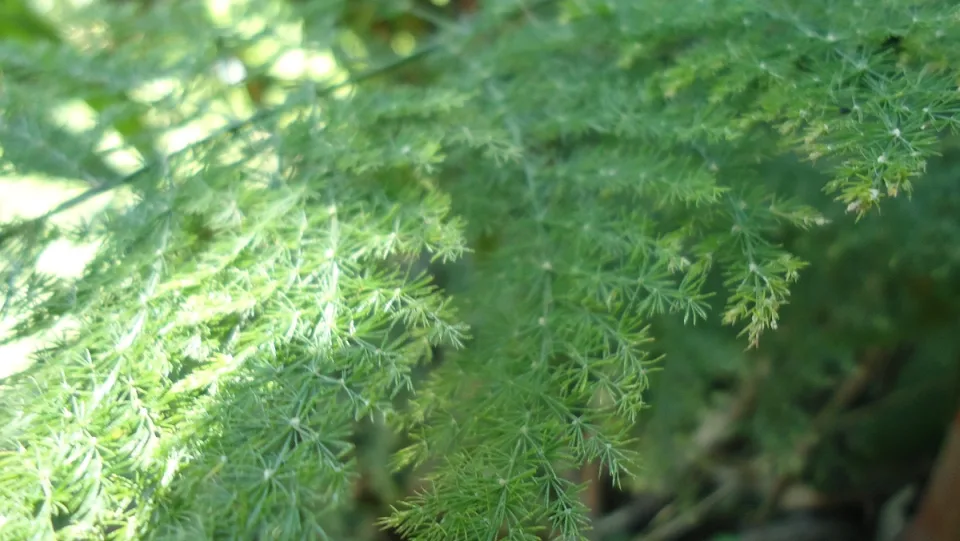
Photo : Obsidian Soul — CC0 — source

🌱 Growing conditions
☀️ Light
Bright indirect light to bright partial shade; avoid scorching sun through glass
💧 Watering
Keep the mix lightly moist during active growth; allow the surface to dry slightly between waterings
🌡️ Temperature
16 to 26 °C; avoid prolonged temperatures below 10–12 °C
💦 Humidity
Medium to high
🪴 Potting mix
Light, humus-rich and well-draining, with houseplant mix plus perlite or pumice
⭐ Difficulty
Easy to moderate
🌱 Growth
Fast
📏 Mature size
50 cm to 1.5 m depending on training
🌿 Habit
bushy, flexible and trailing
📝 About Asparagus fern
Description
Asparagus setaceus is not a fern despite its very fine, feathery appearance. It belongs to the genus Asparagus and produces long, flexible stems covered with tiny cladodes that create an airy, plume-like effect. With age, the stems can lengthen considerably and become trailing or lightly climbing.
It works well on a bright shelf or in a hanging pot, provided the root ball is not allowed to dry out completely for long periods. A sudden drought often causes yellowing followed by heavy shedding of dry cladodes.
The plant has a robust root system with storage organs. It can regrow after a hard cutback if the roots are healthy, but repeated swings between waterlogged soil and complete dryness are stressful for it.
Care
Place it in bright filtered light. It tolerates lower light than many tropical plants, but a spot that is too dark produces long, sparse and fragile stems.
Water as soon as the surface begins to dry, especially in spring and summer. Always empty the saucer. In winter, water a little less often if growth slows, without allowing the entire root ball to dry out completely.
Reasonable ambient humidity helps prevent dry tips. An occasional shower also removes dust and possible spider mites. Cut yellow or excessively long stems back to the base: new shoots can emerge from the crown.
A diluted liquid fertilizer every 4 to 6 weeks during active growth is sufficient.
Repotting
Repot when the roots have filled the container, water no longer moves through the mix properly, or the plant starts lifting itself out of the pot. The roots can become very dense and may distort a flexible container.
Choose a pot with drainage holes only a few centimeters wider. Tease the roots apart gently; on an old plant the root mass can be reduced slightly, but severe root pruning will slow recovery.
A rich but airy mix is preferable to a compact potting soil that remains saturated.
Propagation
The easiest method is division during repotting. Separate a section carrying several stems and a substantial root system, then pot it immediately into fresh mix.
Seed propagation is possible from ripe berries, but it is much slower and requires more patience. Simple stem cuttings root poorly or not at all.
🐱 Toxicity
The berries are toxic if swallowed and may cause digestive upset. The stems can also irritate sensitive skin; keep away from young children and pets that chew plants.
🩺 Common problems
Yellow leaves
General yellowing followed by loss of the small cladodes often occurs after a severe lack of water, but overwatering can look similar if the roots have begun to rot.
Check the moisture level before watering. A plant kept too dark may also yellow gradually and lose density.
Brown leaves
Dry tips are common when the air is very dry, the plant repeatedly runs short of water, or it receives intense direct sun. Entire stems that turn brown may simply be old or may have suffered a severe drought.
Cut completely brown stems back at the base rather than trying to keep dead sections.
Diseases
Root rot is the main disease risk when the pot remains waterlogged. Poor air movement combined with constantly wet foliage can also encourage fungal spotting.
Pests
Spider mites are the main pest in warm, dry air, but mealybugs and sometimes aphids can also attack young growth.