Plant profile
Cast iron plant
Aspidistra elatior
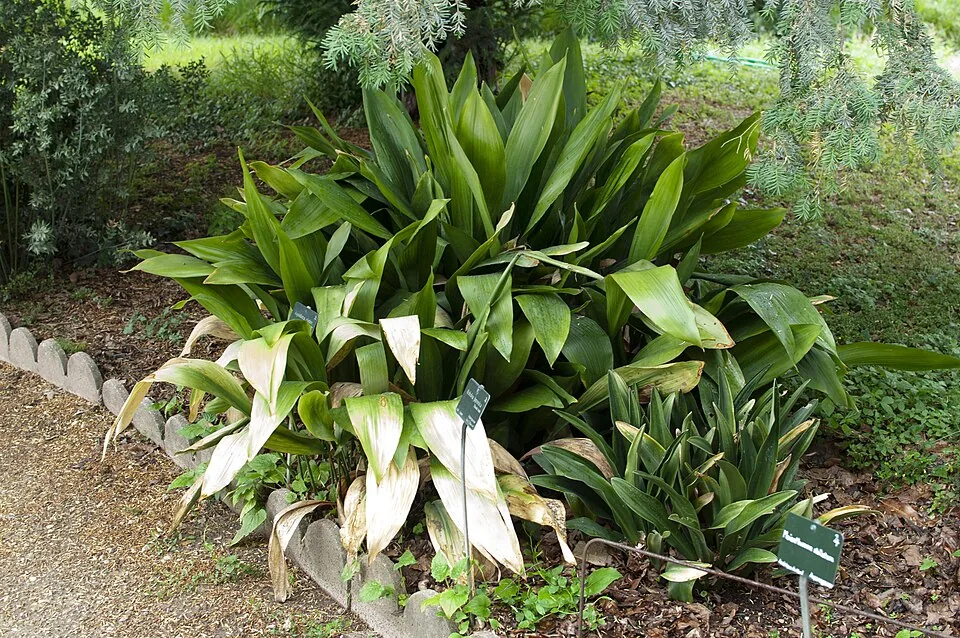
Photo : This illustration was made by Citron You must credit this : Citron / CC-BY-SA-3.0 — CC BY-SA 3.0 — source

🌱 Growing conditions
☀️ Light
Light shade to indirect light
💧 Watering
Allow the mix to dry partially between waterings
🌡️ Temperature
10 to 24 °C
💦 Humidity
Medium
🪴 Potting mix
Well-draining potting mix
⭐ Difficulty
Very easy
🌱 Growth
Slow
📏 Mature size
50 to 80 cm
🌿 Habit
clumping and upright
📝 About Cast iron plant
Description
Hardy plant with long dark-green leaves; Aspidistra elatior tolerates low light and missed waterings better than many houseplants.
Care
Allow part of the mix to dry before watering and avoid intense direct sun. Wipe the leaves occasionally and do not keep the pot constantly wet.
Repotting
Repot infrequently, only when the rhizomes are truly crowded. Spring is ideal; use a stable pot and well-draining mix.
Propagation
Divide rhizomes in spring, keeping several leaves and roots on each division.
🐱 Toxicity
Generally considered of low concern in household use; nevertheless avoid deliberate ingestion.
🩺 Common problems
Yellow leaves
Overwatering is a classic cause; isolated yellowing of an old leaf may be natural.
Brown leaves
Direct sun, prolonged drought or salt buildup can mark the leaves.
Diseases
Root rot can occur in constantly wet potting mix. If several leaves yellow or soften while the mix remains wet, check roots and crown. Remove black or mushy tissue, improve drainage and resume watering only after the mix starts to dry.
Pests
Inspect leaf undersides, nodes and new growth regularly. If insects, cottony masses, stippling or distortion appear, isolate the plant and identify the pest before treating.