Plant profile
Crispy Wave fern
Asplenium nidus 'Crispy Wave'
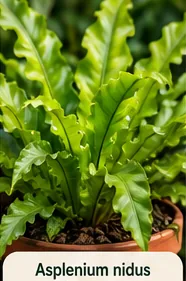
Photo : PlantMinute — Image générée
🌱 Growing conditions
☀️ Light
Medium to bright indirect light; no harsh direct sun.
💧 Watering
Keep the mix lightly moist but airy. Water around the root ball without leaving water sitting in the centre of the rosette.
🌡️ Temperature
18 to 26 °C; avoid temperatures below 15 °C.
💦 Humidity
Preferably high, without stagnant air.
🪴 Potting mix
Humus-rich, light and free-draining; organic but never compact.
⭐ Difficulty
Moderate
🌱 Growth
Slow to moderate
📏 Mature size
30 to 60 cm
🌿 Habit
upright rosette
📝 About Crispy Wave fern
Description
‘Crispy Wave’ produces long glossy green fronds with strongly rippled edges. All fronds emerge from a central crown, giving the plant a graphic bird’s-nest shape.
It prefers steady moisture and filtered light. The key is to protect its crown: water left sitting in the centre can encourage rot.
Care
Grow it in a bright bathroom, kitchen or another room where the air is not too dry. Water the mix around the sides of the pot and use low-mineral water if possible.
Do not cut unfurling fronds. Remove only fully damaged fronds at the base. A very diluted feed once a month during growth is plenty.
Repotting
Repot when roots fill the pot or the mix breaks down. Keep the crown above the level of the potting mix.
Propagation
Home propagation is difficult and is done from spores; this fern is not divided like a clumping fern.
🐱 Toxicity
Asplenium nidus is generally considered non-toxic to cats and dogs.
🩺 Common problems
Yellow leaves
Overwatering, suffocating mix, cold or the natural ageing of an old frond.
Brown leaves
Dry air, hard water, direct sun or a dry root ball. Brown tips are common when humidity is too low.
Diseases
Crown or root rot if water stagnates in the rosette or the mix remains waterlogged.
Pests
Scale insects and, less often, spider mites. Avoid rubbing or excessively wetting the crown or fertile fronds. Remove individual scale insects when infestations are light and monitor tender emerging fronds.