Plant profile
Japanese laurel
Aucuba japonica
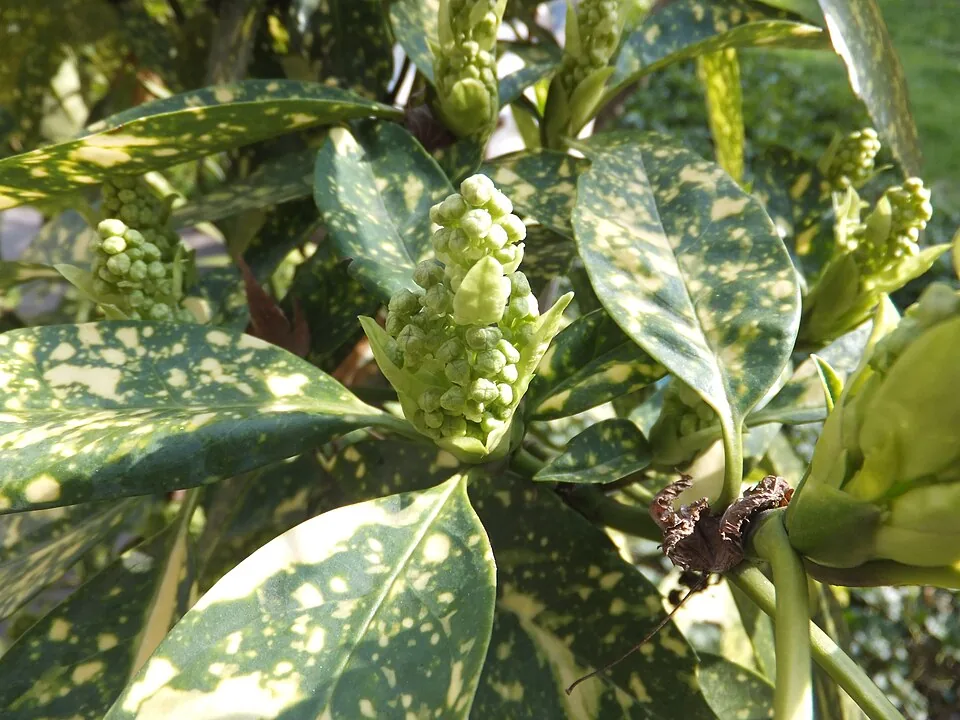
Photo : Syrio — CC BY-SA 4.0 — source

🌱 Growing conditions
☀️ Light
Medium to bright indirect light; variegated forms need more light.
💧 Watering
Water when the surface begins to dry
🌡️ Temperature
10–24 °C
💦 Humidity
Medium
🪴 Potting mix
Rich, well-draining potting mix
⭐ Difficulty
Easy
🌱 Growth
Moderate
📏 Mature size
1–2 m indoors
🌿 Habit
shrubby
📝 About Japanese laurel
Description
Evergreen shrub with large glossy leathery leaves, often yellow-splashed in variegated cultivars; it prefers cooler conditions than many tropical houseplants.
Care
In a container, place in medium to bright light without scorching sun, ideally in a cool room. The mix must drain well: Aucuba tolerates slight dryness better than a constantly waterlogged root ball. Water when the surface dries and avoid very hot dry conditions.
Repotting
Repot in spring when roots fill the pot, using a stable container with drainage holes.
Propagation
Propagate readily from semi-ripe cuttings in late summer. Take a healthy shoot, remove lower leaves and insert into a free-draining mix kept lightly moist. Autumn seed is possible but may take many months to germinate.
🐱 Toxicity
Fruits and other parts may be toxic if ingested; keep out of reach of children and animals.
🩺 Common problems
Yellow leaves
Yellow leaves with a wet root ball mainly indicate overwatering or poor drainage. Yellow then brown patches on heavily variegated leaves may result from excessive sun. Cold combined with wet soil can also cause damage.
Brown leaves
Brown edges can result from dry air, excessively strong direct sun or a prolonged lack of water. Check the potting mix before watering more and move the plant out of scorching sun.
Diseases
Aucuba is generally disease-free. Blackening of leaves and collapsed shoot tips is often linked to overly wet roots, especially in cold conditions. Correct drainage and watering before considering treatment.
Pests
This species is generally pest-free. Under cover, still inspect for scale insects and aphids, especially on young shoots. Sticky foliage or small brown plaques on stems should prompt a close check.