Plant profile
Eyelash begonia
Begonia bowerae
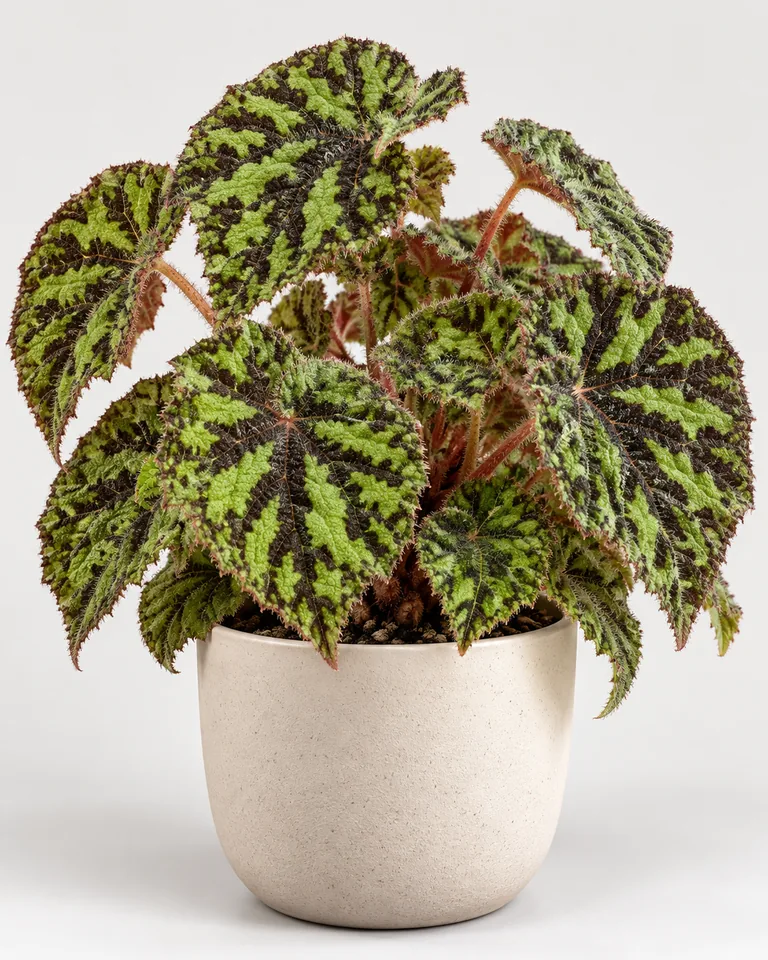
Photo : PlantMinute — Image générée
🌱 Growing conditions
☀️ Light
Medium to bright indirect light.
💧 Watering
Water when the surface begins to dry, then let excess water drain away. The rhizome should not remain constantly wet. In winter or lower light, allow slightly more drying; also avoid prolonged drought, which quickly stresses the fine roots.
🌡️ Temperature
18 to 26 °C.
💦 Humidity
Medium to high.
🪴 Potting mix
Humus-rich, light and very free-draining mix.
⭐ Difficulty
Easy to moderate
🌱 Growth
Moderate
📏 Mature size
15 to 30 cm
🌿 Habit
rhizomatous and compact
📝 About Eyelash begonia
Description
Begonia bowerae is a small rhizomatous begonia with asymmetric green to brown-green leaves, often marked with darker zones. Fine hairs line the petioles and leaf edges, explaining its English name “eyelash begonia”.
It stays compact and fits small shelves well, provided it receives filtered light and an airy mix.
Care
Provide medium to bright indirect light and good air circulation. Moderate to high humidity is helpful, but never compensates for waterlogged mix. Remove dead leaves at the petiole, keep standing water away from the rhizome and rotate the pot for balanced growth.
Repotting
Use a wide, fairly shallow pot suited to the horizontal rhizome. Repot when the rhizome reaches the pot edge or the mix becomes compacted. Keep the rhizome at or just below the surface; burying it deeply increases the risk of rot.
Propagation
Propagate by leaf cuttings, rhizome sections or division. For division, each piece should retain roots or a growth point. Leaf cuttings root best in warmth, filtered light and a light medium kept only slightly moist.
🐱 Toxicity
Begonias contain soluble oxalates and can be toxic if ingested, especially to pets.
🩺 Common problems
Yellow leaves
Yellow leaves with wet mix often indicate excess water or poorly aerated roots. Low light can also weaken and pale the foliage. If only the oldest leaves decline slowly while new growth continues, this may simply be normal renewal.
Brown leaves
Dry edges can reflect low humidity or irregular watering; bleached areas that later brown on the window-facing side suggest sun scorch. Soft or water-soaked brown spots instead call for checking excess moisture, wet foliage and ventilation.
Diseases
Rhizome rot and botrytis are encouraged by overly wet mix, wet leaves and stagnant air. Remove soft or affected tissue promptly, improve airflow and let the surface dry more before watering again.
Pests
Watch for thrips, spider mites and mealybugs. Thrips can distort young leaves and leave silvery patches; spider mites cause fine stippling, especially in dry air. Inspect leaf undersides and the centre of the plant.