Plant profile
Beefsteak begonia
Begonia erythrophylla
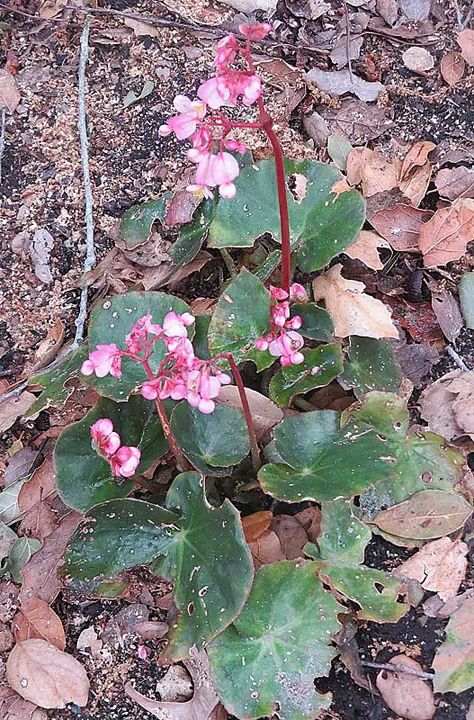
Photo : Dick Culbert from Gibsons, B.C., Canada — CC BY 2.0 — source

🌱 Growing conditions
☀️ Light
Bright indirect light; protect from direct midday sun.
💧 Watering
Water when the surface of the potting mix has begun to dry, without keeping the roots waterlogged.
🌡️ Temperature
18 to 26 °C
💦 Humidity
Medium
🪴 Potting mix
Light, organic and well-draining potting mix.
⭐ Difficulty
Easy to moderate
🌱 Growth
Moderate
📏 Mature size
20 to 40 cm
🌿 Habit
rhizomatous and spreading
📝 About Beefsteak begonia
Description
Begonia erythrophylla, often called the “Beefsteak begonia”, forms a rhizomatous clump of rounded, thick, glossy leaves that are often reddish underneath. The leaves arise from a creeping rhizome close to the surface. Its low spreading habit needs more pot width than depth.
Care
Bright indirect light; protect from direct midday sun. Water when the surface begins to dry, without keeping roots waterlogged. Avoid abrupt changes and check the root ball before watering again.
The rhizome of Begonia erythrophylla should remain visible at the surface; remove old leaves at their base without gradually burying the rhizome under potting mix.
Repotting
Repot when roots truly fill the container or the mix has degraded. Choose a pot with drainage holes only slightly larger and use a light, organic, well-draining mix. An unnecessarily large pot keeps moisture around the roots for longer.
Choose a wide, fairly shallow pot for Begonia erythrophylla; the rhizome spreads horizontally and gains little from a large volume of compost beneath it.
Propagation
Stem or leaf cuttings are often possible; division also suits well-developed clumps.
To divide Begonia erythrophylla, cut the rhizome between growth points and keep at least one healthy bud or well-formed rosette on each section.
🐱 Toxicity
Toxic to dogs and cats if ingested. Begonias contain soluble oxalates; underground parts have the highest concentration. Keep away from animals that chew plants.
🩺 Common problems
Yellow leaves
If several leaves of Begonia erythrophylla turn yellow together, first check potting-mix moisture, then light and temperature. A single old leaf may simply be reaching the end of its cycle.
Brown leaves
On Begonia erythrophylla, distinguish a dry tip from a soft area: the first often accompanies drying or overly strong sun, while the second points more toward excess moisture.
Diseases
Root problems in Begonia erythrophylla become more likely in constantly wet, poorly aerated potting mix. Rapid loss of vigor or a soft base justifies checking the roots.
Pests
Inspect leaf undersides, nodes and young shoots of Begonia erythrophylla. If you see stippling, distortion, cottony masses or visible insects, isolate the plant before treating.