Plant profile
Wightii polka dot begonia
Begonia maculata 'Wightii'
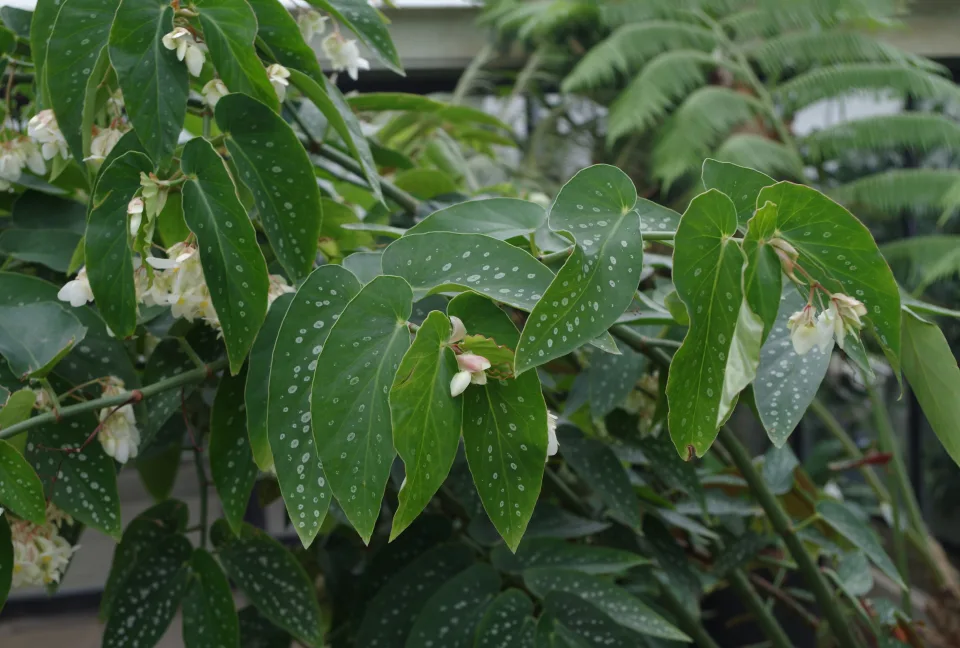
Photo : Dinkum — CC BY-SA 3.0 — source

🌱 Growing conditions
☀️ Light
Bright indirect light; gentle morning sun is possible
💧 Watering
Keep lightly moist but allow the surface to dry between waterings
🌡️ Temperature
18 to 26 °C
💦 Humidity
Medium to high with good ventilation
🪴 Potting mix
Light, humus-rich and well-draining
⭐ Difficulty
Moderate
🌱 Growth
Fast
📏 Mature size
60 cm to 1.2 m
🌿 Habit
upright, cane-forming
📝 About Wightii polka dot begonia
Description
Begonia maculata ‘Wightii’ is the famous polka-dot begonia: elongated olive-green leaves carry large silver spots, while the undersides are burgundy red. Upright cane-like stems can exceed one meter indoors.
The plant can flower with clusters of small white or pale pink blooms. It is highly decorative but needs careful moisture management: it likes fairly humid air but does not tolerate constantly wet leaves or waterlogged soil.
Regular pruning prevents long bare canes and encourages a more branched shape.
Care
Place ‘Wightii’ in bright filtered light. Insufficient light stretches the canes and reduces density; strong sun burns the leaves.
Water when the surface has dried slightly. Do not let the pot become completely dry for long, but never leave water in the saucer.
Raise ambient humidity without constantly misting the leaves. A room humidifier is preferable to repeatedly wetting the leaves, especially late in the day.
Pinch or cut canes just above a node to encourage branching. Stake stems if they become top-heavy.
Repotting
Repot in spring when roots fill the pot. Begonias often prefer relatively snug containers.
Use a fine but airy mix of light potting soil, perlite or pumice and, optionally, a little coir. Do not compact the mix around the base of the canes.
Propagation
Stem cuttings are very easy. Take a section carrying several nodes and root it in water or a light mix.
Cuttings are also useful for rejuvenating a tall, bare plant: cut the canes, root the tips and allow the old base to produce new shoots.
🐱 Toxicity
Toxic if swallowed, especially the underground parts; can cause irritation and digestive upset in pets.
🩺 Common problems
Yellow leaves
Overwatering or a cool, wet mix is common. Low light can also promote yellowing and loss of lower leaves.
A single old leaf may naturally yellow before falling.
Brown leaves
Dry margins often come from dry air or a root ball that has become too dry. Brown spots in the middle of the leaf can follow strong sun exposure or water sitting on the foliage for too long.
Diseases
Powdery mildew, Botrytis and crown rot can develop in high humidity with poor ventilation; avoid foliage remaining wet for long periods.
Pests
Scale insects, thrips, spider mites and sometimes whiteflies. Check young leaves, petioles and leaf undersides. Silvery scarring and distorted new growth suggest thrips, fine stippling suggests spider mites, and cottony clusters indicate mealybugs.