Plant profile
Sun-changing begonia
Begonia soli-mutata
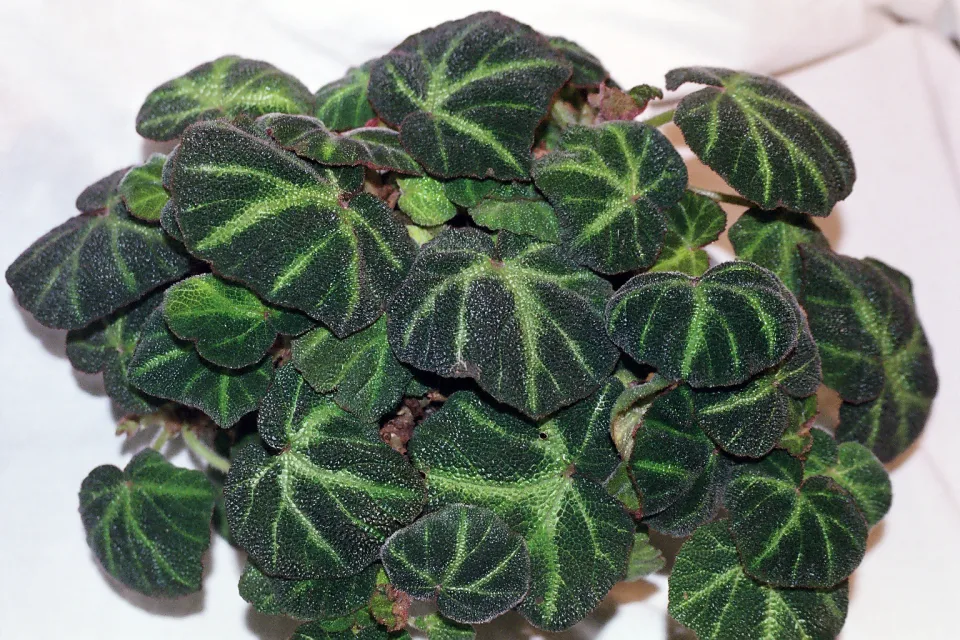
Photo : Kor!An (Корзун Андрей) — CC BY-SA 3.0 — source

🌱 Growing conditions
☀️ Light
Medium to bright indirect light; avoid strong direct sun.
💧 Watering
Keep lightly moist, allowing the surface to dry between waterings.
🌡️ Temperature
18 to 27 °C.
💦 Humidity
Preferably high.
🪴 Potting mix
Humus-rich, light and very airy.
⭐ Difficulty
Moderate to difficult
🌱 Growth
Moderate
📏 Mature size
20 to 35 cm
🌿 Habit
compact and rhizomatous
📝 About Sun-changing begonia
Description
Begonia soli-mutata is a rhizomatous begonia with quilted leaves whose colour shifts with light, from green to bronze or reddish brown. Paler veins and a textured blade give each leaf an almost metallic appearance.
It prefers warm, humid conditions, but the rhizome must stay well aerated. The challenge is to provide enough moisture without leaving the mix waterlogged.
Care
Give it fairly strong diffuse light. Water when the surface begins to dry and favour stable ambient humidity instead of frequent misting directly onto the leaves.
Remove damaged leaves at the base and ensure some air movement, especially in a terrarium or cabinet.
Repotting
Use a wide shallow pot. Keep the rhizome near the surface and use a very light mix rich in organic matter.
Propagation
Propagate from leaf cuttings, rhizome pieces or by dividing a mature plant.
🐱 Toxicity
Like other Begonia, it contains soluble oxalates and can be toxic if eaten. Keep away from children and pets.
🩺 Common problems
Yellow leaves
Overwatering, weakened rhizome or insufficient light.
Brown leaves
Low humidity, direct sun or a dry mix. Dry edges may also follow salt accumulation.
Diseases
Rhizome rot, botrytis and leaf spots in overly enclosed conditions.
Pests
Thrips, spider mites and mealybugs. Watch young leaves and their undersides especially: silvery scarring and distortion suggest thrips, fine stippling mites, and cottony clusters mealybugs.