Plant profile
Queen's tears
Billbergia nutans
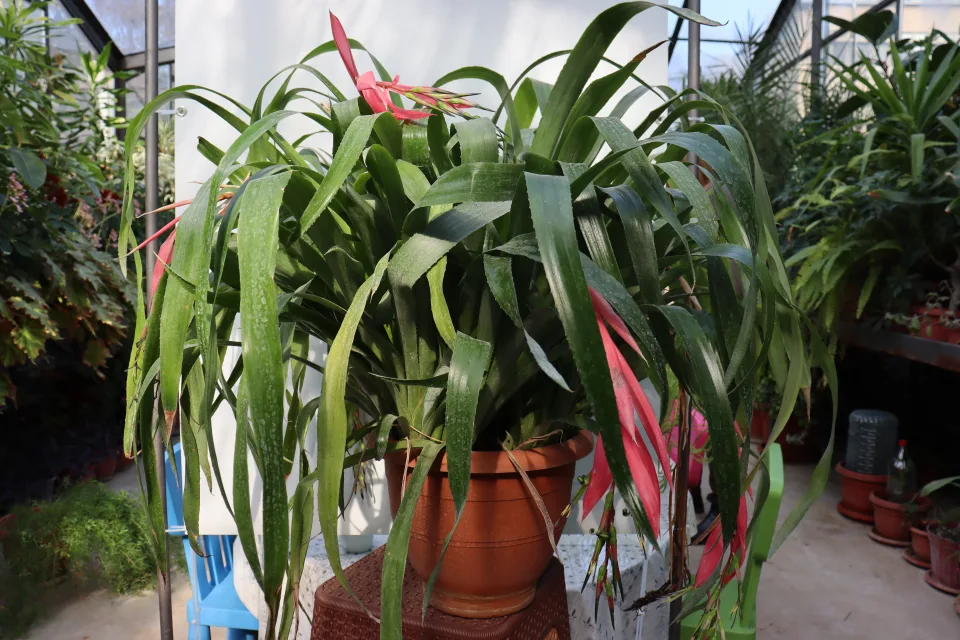
Photo : Dandarmkd — CC BY-SA 4.0 — source

🌱 Growing conditions
☀️ Light
Bright indirect light; tolerates some gentle sun.
💧 Watering
Water the mix moderately and keep a little clean water in the rosette in warm weather, renewing it regularly.
🌡️ Temperature
12 to 27 °C; tolerates cool conditions better than many bromeliads.
💦 Humidity
Average.
🪴 Potting mix
Very free-draining and airy, rich in bark or coarse fibre.
⭐ Difficulty
Easy
🌱 Growth
Moderate
📏 Mature size
40 to 60 cm
🌿 Habit
clumping rosettes
📝 About Queen's tears
Description
Billbergia nutans is an old-fashioned house and conservatory plant, known as “Queen’s tears” for its pendulous inflorescences mixing pink, green, blue and violet. A mature rosette flowers only once, then produces offsets that gradually take over.
It is robust, undemanding and more tolerant of temperature variation than many tropical bromeliads.
Care
Give it bright light to encourage flowering. In warm weather, keep a little water in the central rosette but replace it regularly so it does not become stagnant.
After flowering, do not remove the mother rosette immediately; let it feed the offsets until they are well developed.
Repotting
Repot rarely. A fairly heavy, shallow pot suits mature clumps. Use a very airy mix that does not stay wet around the roots.
Propagation
Separate offsets when they reach about one-third to one-half the size of the mother rosette and begin to make their own roots.
🐱 Toxicity
Billbergia are generally considered non-toxic to cats and dogs, although the leaf edges can be sharp.
🩺 Common problems
Yellow leaves
Excess water at the roots, low light or the natural ageing of a rosette that has already flowered.
Brown leaves
Very dry air, mineral-rich water or sudden strong sun. Dry tips may be mainly cosmetic.
Diseases
Heart or root rot can develop when water stagnates in cool conditions. Empty stale water, improve airflow and reduce watering if the centre smells sour or tissues soften.
Pests
Watch for mealybugs and scale insects, especially deep between leaf sheaths and near the base of the rosette. Early removal prevents colonies from becoming established.