Plant profile
Calathea orbifolia
Calathea orbifolia
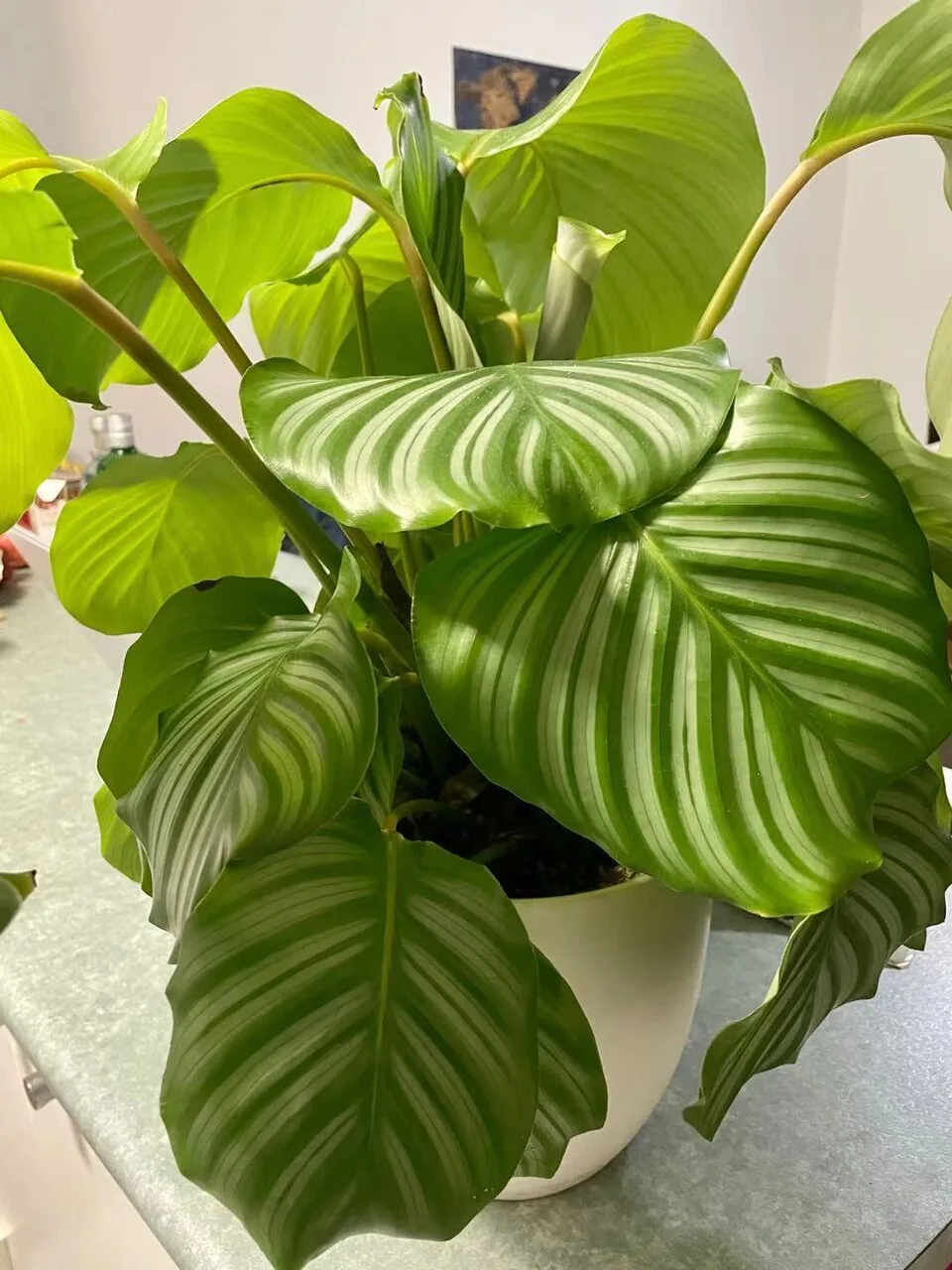
Photo : Supsoph — CC BY-SA 4.0 — source

🌱 Growing conditions
☀️ Light
Bright to medium indirect light; no direct sun
💧 Watering
Water regularly, keeping the potting mix slightly moist but never waterlogged
🌡️ Temperature
18–27 °C
💦 Humidity
High
🪴 Potting mix
Rich, light, airy and well-draining
⭐ Difficulty
Intermediate
🌱 Growth
Moderate
📏 Mature size
60 to 100 cm
🌿 Habit
clumping
📝 About Calathea orbifolia
Description
Calathea orbifolia is a striking tropical plant with large, nearly round leaves marked by broad pale-green and silvery-green bands. Its graphic foliage can form an impressive clump and is its main ornamental feature.
Native to Bolivia, it grows in tropical environments with warmth, humidity and filtered light. Indoors it therefore prefers bright indirect light and should be protected from strong direct sun, which can mark the leaves.
More demanding than some houseplants, it reacts fairly quickly to unsuitable conditions. Adequate atmospheric humidity, stable temperatures and regular watering help keep its large leaves in good condition.
Care
Place it in bright indirect light, away from direct sun and cold drafts. Keep the potting mix slightly moist during active growth, but never constantly soaked. Let the surface begin to dry before watering again. It appreciates high humidity and fairly stable temperatures. Keep it away from radiators and other sources of hot, dry air. Gently wipe the large leaves when dust accumulates.
Repotting
Repot preferably in spring when the roots fill the pot or the mix becomes compacted. Choose a pot with drainage holes only slightly larger than the previous one. Use a rich but airy, well-draining mix that retains some moisture without becoming saturated. Handle the roots gently and avoid unnecessary frequent repotting.
Propagation
Propagate mainly by dividing a sufficiently mature plant. At repotting time, carefully separate a section with several leaves and its own roots. Pot each division in suitable mix, keep it warm and maintain good humidity while it establishes. Leaf cuttings alone are not suitable for this plant.
🐱 Toxicity
Generally considered non-toxic to cats and dogs
🩺 Common problems
Yellow leaves
An occasional older yellow leaf can be natural. If several leaves yellow, check watering and drainage first. Constantly wet mix can damage roots, while severe drying can also cause stress. Cold, drafts and abrupt changes in conditions may also cause yellowing.
Brown leaves
Brown edges and tips are common. They may be caused by dry air, irregular watering or mineral-salt buildup in the potting mix. Very mineral-rich water can also mark the leaves. Pale areas that later dry can indicate too much direct sun.
Diseases
The main cultivation-related disease is root rot caused by constantly waterlogged or poorly drained mix. Affected plants may show widespread yellowing, loss of vigor and brown or soft roots. Reduce watering, remove badly damaged parts and repot into fresh, airy mix when necessary.
Pests
Spider mites can attack Calathea orbifolia, especially in warm, dry air. Thrips and scale insects may also occur. Inspect leaf undersides and new growth regularly. Fine discoloration, pale specks or tiny webs can reveal mites. Isolate an infested plant quickly to prevent spread.