Plant profile
String of hearts
Ceropegia woodii
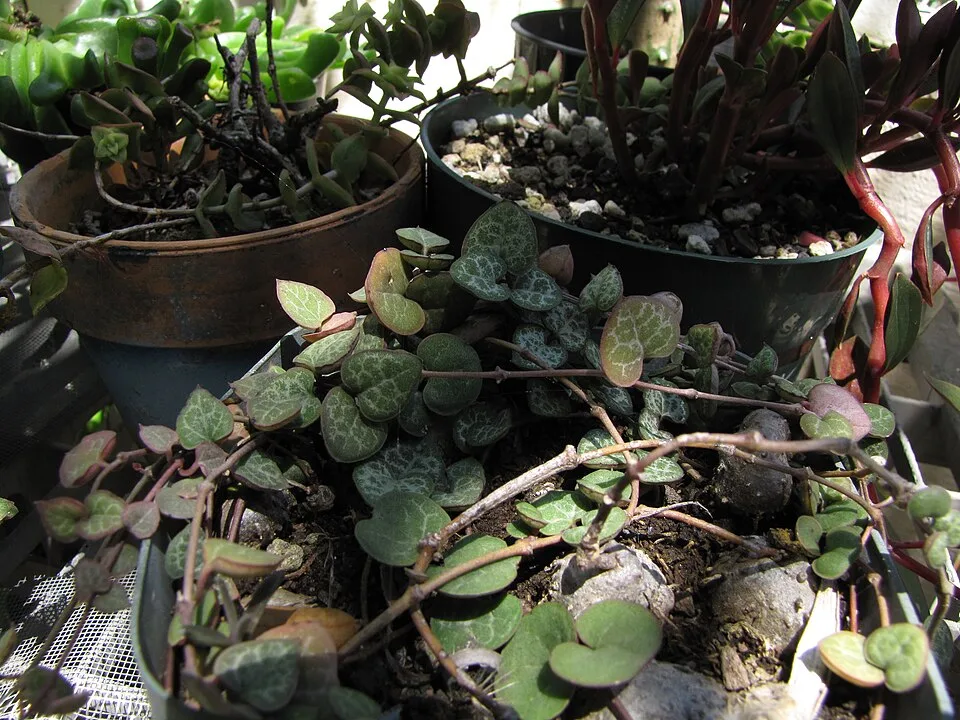
Photo : Forest & Kim Starr — CC BY 3.0 US — source

🌱 Growing conditions
☀️ Light
Bright indirect light; some gentle direct sun is acceptable
💧 Watering
Moderate; allow a good portion of the potting mix to dry between waterings
🌡️ Temperature
15–27 °C
💦 Humidity
Normal
🪴 Potting mix
Very light and well-draining, similar to a succulent mix
⭐ Difficulty
Easy
🌱 Growth
Moderate to fast in good conditions
📏 Mature size
trailing stems 1 to 2 m long
🌿 Habit
trailing
📝 About String of hearts
Description
Ceropegia woodii, commonly called string of hearts, is a small tuberous plant prized for its long trailing stems bearing fleshy heart-shaped leaves. Their upper surface is usually patterned with silver on green, while the undersides may show purplish tones.
Native to southern Africa, it naturally produces thin stems that can become very long. It forms underground tubers and may also produce small aerial tubers along the stems. Its trailing habit makes it especially suitable for hanging pots or high shelves.
It may also produce unusual small tubular flowers typical of the genus Ceropegia. Despite its delicate appearance, string of hearts is fairly resilient when given good light and, above all, sufficiently well-drained soil.
Care
Give it a very bright position. Insufficient light can produce more widely spaced stems and sparser foliage. Water moderately, then allow a good part of the mix to dry before watering again. Its fleshy leaves and tubers tolerate short dry spells much better than excess water. Reduce watering markedly when growth slows. Normal indoor humidity is suitable and there is usually no need to raise humidity artificially.
Repotting
It does not need frequent repotting. Repot when the pot is genuinely too small or when the mix has become old and compacted. Choose a container with drainage holes only slightly larger than the previous one. Use a very free-draining mix similar to one for succulents. Handle the long stems carefully to avoid breaking or tangling them.
Propagation
It propagates easily from stem cuttings. Take a section with several nodes and place it in a light, free-draining mix. Small tubers that form along the stems are also excellent for propagation: place them in contact with the potting mix until they root. Long stems can also be laid over the soil surface and separated from the mother plant once rooted.
🐱 Toxicity
Toxicity varies among species. Check specific precautions before ingestion or placing it within reach of pets and young children.
🩺 Common problems
Yellow leaves
Numerous yellow leaves often indicate that the potting mix stays wet too long. Make sure the pot drains properly and allow the mix to dry more between waterings. Insufficient light can also weaken the plant and lead to less compact growth. Occasional loss of older leaves is normal.
Brown leaves
Dry, brown or curled leaves can appear when the plant remains without water for too long, especially during active growth. Sudden intense direct sun can also mark the foliage. Check the potting mix before watering: damaged leaves together with still-moist soil may instead point to a root problem.
Diseases
The main risk is rot of roots, tubers or stem bases when the potting mix stays wet too long. Affected parts become soft and may turn brown or black. Remove badly damaged tissue, let the plant dry if necessary and place it in fresh, very well-draining mix. Moderate watering is the best prevention.
Pests
Mealybugs, aphids and scale insects may attack. Inspect nodes, young shoots and leaf undersides, where pests can remain hidden. If infested, isolate the plant and act promptly to prevent spread.