Plant profile
Cat palm
Chamaedorea cataractarum
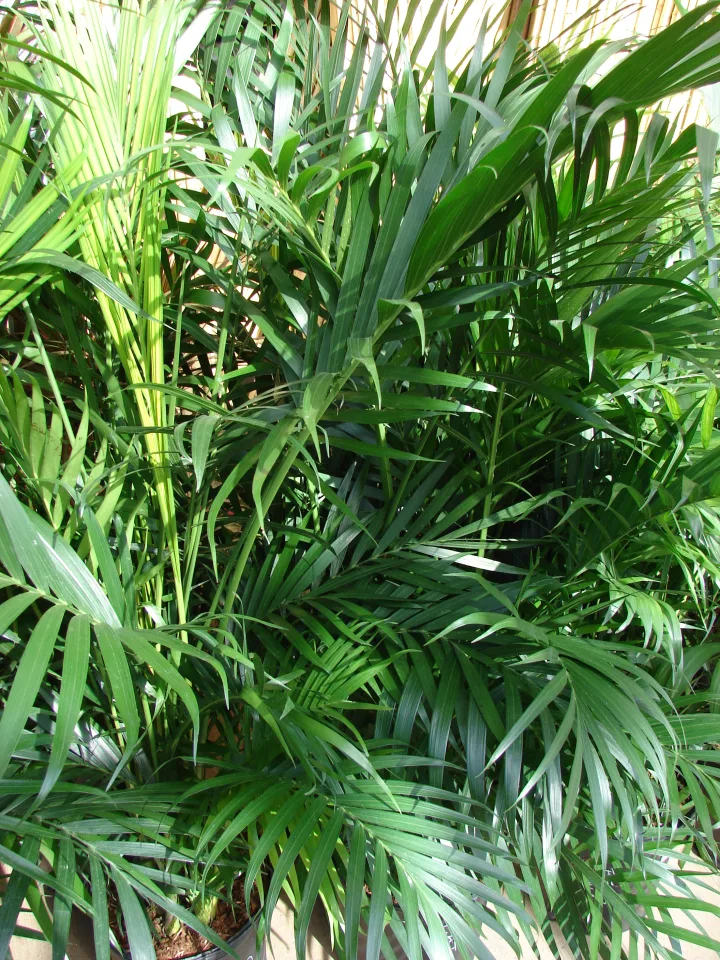
Photo : Forest & Kim Starr — CC BY 3.0 — source

🌱 Growing conditions
☀️ Light
Medium to bright indirect light.
💧 Watering
Keep the mix lightly moist; this species tolerates drought less well than many palms.
🌡️ Temperature
18–27 °C
💦 Humidity
Average to high
🪴 Potting mix
Rich, humus-rich and well-drained.
⭐ Difficulty
Moderate
🌱 Growth
Moderate
📏 Mature size
1–2 m indoors
🌿 Habit
Clumping and arching
📝 About Cat palm
Description
A dense clumping Chamaedorea with numerous arching fronds. Unlike palms from drier habitats, it prefers a root zone that does not remain completely dry for long, yet still needs excellent drainage.
These palms are relatively well suited to indoor conditions because they tolerate filtered light better than many sun-loving palms. Their growth is slow, so deterioration of one old frond should be distinguished from a problem affecting several fronds at once. Well-established plants can remain decorative for many years in a stable position.
Care
Keep it in bright filtered light and water when the surface begins to dry. Do not leave the pot standing in water. Moderate to high humidity helps keep the leaflets in good condition.
Water thoroughly, then allow the upper layer to dry slightly; never leave the root ball standing in water. Mineral-rich water and excessive fertilizer can accumulate salts and contribute to brown tips. Keep the foliage clean and remove only fronds that are fully dead, not merely marked at the tips.
Repotting
Repot when the root ball becomes very dense, using a stable container and a rich but free-draining mix. Disturb the roots as little as possible.
Palm roots dislike repeated disturbance. Repot only when the root ball is genuinely crowded, keeping it as intact as possible and choosing a stable pot only a little larger. A rich but freely draining mix is preferable to dense compost that stays wet.
Propagation
Well-established clumps can sometimes be divided if each section retains several stems and sufficient roots; seed is another option.
Where the species produces rooted offsets, division is possible only if each section keeps a substantial root system. Species that remain solitary are normally propagated from seed, a much slower process.
🐱 Toxicity
Generally considered non-toxic to cats and dogs.
🩺 Common problems
Yellow leaves
Persistently wet roots can yellow fronds, but repeated drought can also cause yellowing followed by browning. One ageing lower frond may be normal.
Brown leaves
Dry root balls, dry air or salt build-up from water and fertiliser are common causes of brown tips.
Diseases
Root rot can develop if drainage is poor. Roots should be moist but aerated.
Pests
Spider mites are common, followed by scale insects. Inspect leaf undersides, nodes and young growth regularly. Silvery scarring, fine stippling, sticky honeydew or cottony clusters often reveal an infestation before it spreads.