Plant profile
Variegated Spider Plant
Chlorophytum comosum 'Variegatum'
🌱 Growing conditions
☀️ Light
Bright indirect light; adapt watering to actual drying of the pot.
💧 Watering
Water when the top 2–3 cm of the mix have dried; it tolerates a short missed watering better than a constantly soggy pot.
🌡️ Temperature
16–27 °C.
💦 Humidity
Average.
🪴 Potting mix
A light, well-draining houseplant potting mix.
⭐ Difficulty
Easy
🌱 Growth
Fast
📏 Mature size
30–45 cm, with runners up to 60 cm or more
🌿 Habit
upright / characteristic cultivar habit
📝 About Variegated Spider Plant
Description
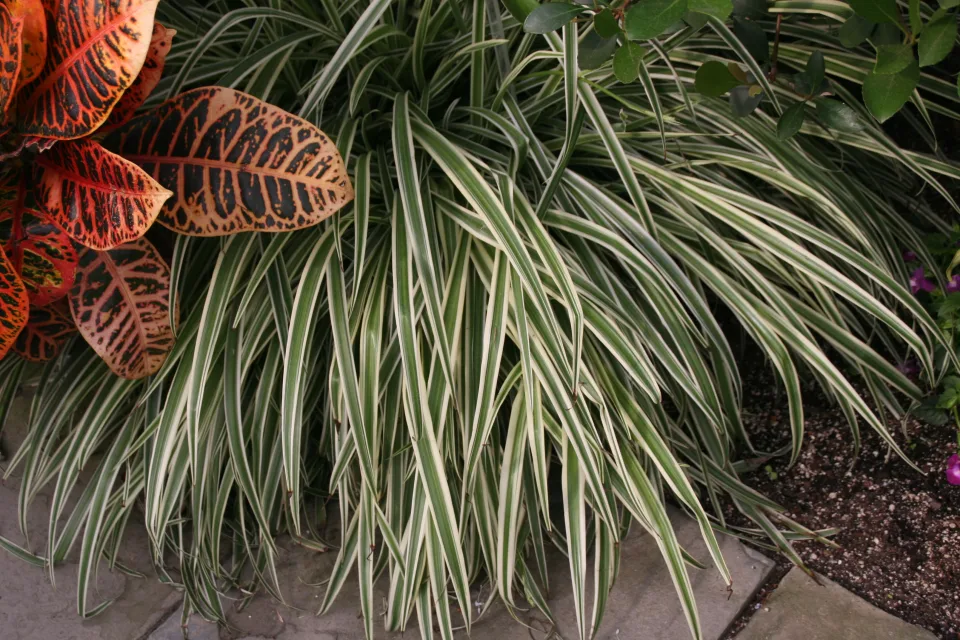
A classic houseplant, recognizable by its ribbon-like green leaves edged in creamy white and its long runners carrying plantlets.
The plant develops thick roots that can store water, which explains its good tolerance of occasional missed waterings. Runners appear mainly on mature plants receiving good light.
Brown tips are common but do not automatically mean the plant needs more water: mineral salts, hard water and irregular watering are also classic causes.
Care
Place it in medium to bright indirect light. Water when the surface has dried, then let the pot drain thoroughly. During active growth, a very dilute feed every few weeks is enough.
Trim only fully dry tips if they are visually bothersome. The plantlets can be left on the runners or removed to start new pots.
Repotting
Repot only when roots genuinely occupy the pot or the mix has compacted. Move up only slightly in container size and keep stems, rhizomes or crowns at their previous depth.
An oversized pot stays wet too long and is a common cause of root problems.
Propagation
Use the method appropriate to the plant: stem cuttings for Ficus, Syngonium and Tradescantia; plantlets or division for Chlorophytum; cane sections for Yucca and Dracaena; rhizome division for snake plants. Preserve a viable node, growth point or rooted section as required.
🐱 Toxicity
Generally considered non-toxic to dogs and cats.
🩺 Common problems
Yellow leaves
Several yellow leaves while the mix is still wet usually indicate excess water or poor root aeration. One old lower leaf may yellow naturally. Also check light when growth becomes weak or stretched.
Brown leaves
Dry tips or edges usually point to irregular watering, very dry air or mineral/salt buildup. Bleached then brown window-facing patches suggest excessive direct sun. Soft dark tissue is more concerning for rot.
Diseases
The main indoor disease risk is rot caused by a mix that stays wet too long, especially in cool conditions. Remove soft damaged tissue and improve drainage and airflow when needed.
Pests
Occasional scale insects and spider mites. Inspect the bases of the leaves and the young plantlets on the runners.