Plant profile
Spider plant
Chlorophytum comosum
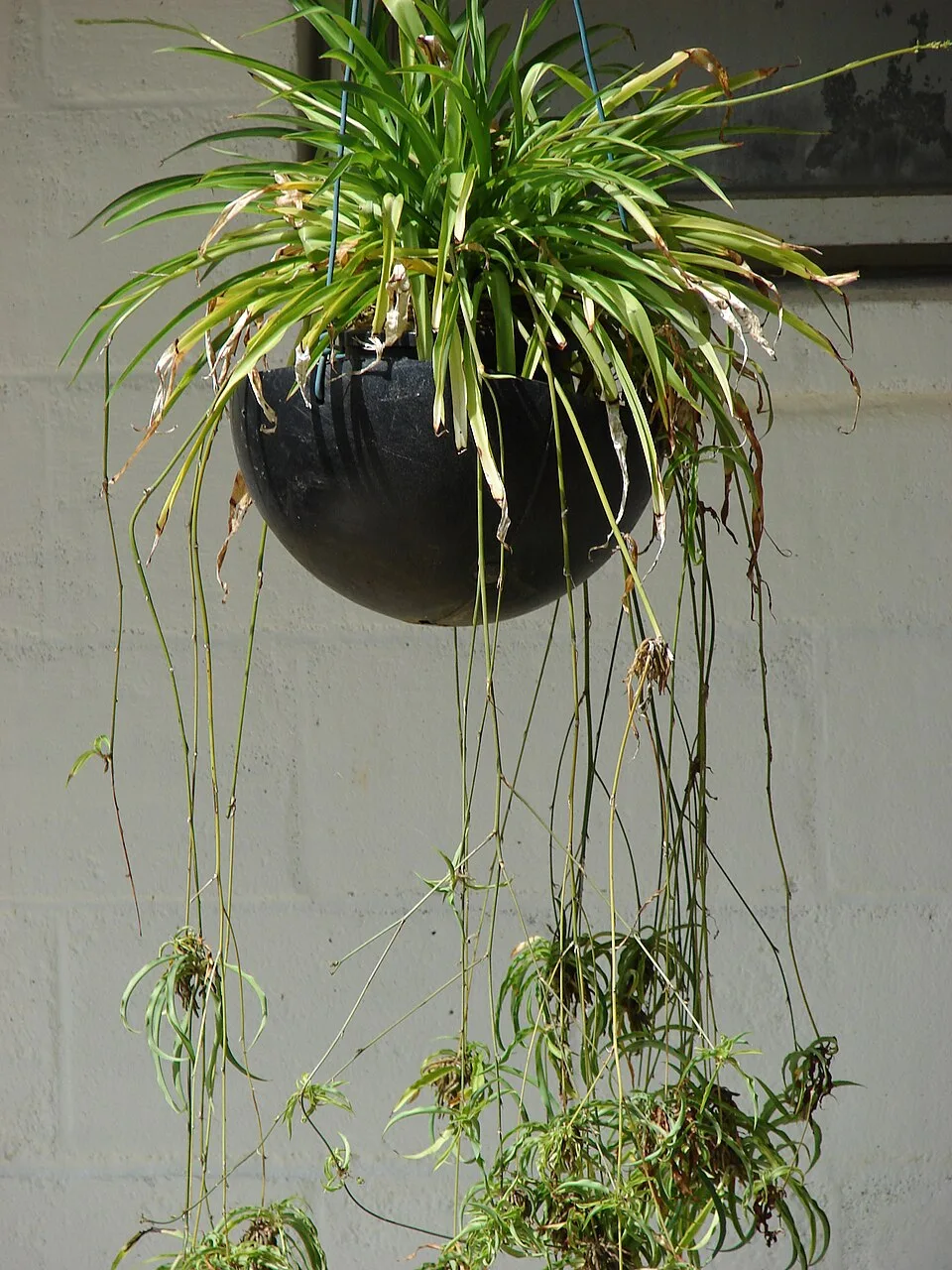
Photo : Forest & Kim Starr — CC BY 3.0 — source

🌱 Growing conditions
☀️ Light
Medium indirect light. Tolerates shade, but avoid intense direct sun.
💧 Watering
Water when the surface begins to dry. Reduce watering in winter and avoid standing water.
🌡️ Temperature
Above about 7 °C; ideally 16 to 27 °C
💦 Humidity
Medium
🪴 Potting mix
Loose, well-draining potting mix.
⭐ Difficulty
Very easy
🌱 Growth
Fast
📏 Mature size
30 to 60 cm; flower stalks can be longer
🌿 Habit
trailing
📝 About Spider plant
Description
Spider plant forms a rosette of long arching leaves and sends out slender stems that carry white flowers and then plantlets able to root as soon as they touch a moist surface. Its thick fleshy roots store water, which is one reason it tolerates a missed watering better than constantly waterlogged compost.
It tolerates fairly low light, but usually produces more plantlets and stronger foliage in medium to bright indirect light.
Care
Water when the top few centimetres begin to dry, then let the pot drain well. Its storage roots allow some drying, so there is no need to keep the mix permanently moist. In winter or low light, water less often.
Brown tips do not automatically mean thirst: water high in salts, chlorine or fluoride, fertiliser build-up, dry air and irregular watering can all produce the same symptom. If the problem persists, alternate with low-mineral water and occasionally flush the pot thoroughly.
Repotting
Repot when the thick fleshy roots have genuinely filled the pot, begin lifting the plant or distort the container. Move up only one pot size: a large volume of compost around a small root ball stays wet too long. A loose, free-draining mix is better than heavy compost.
Propagation
Plantlets are ready to separate when they have several leaves and begin to form small roots. You can pin them onto a small pot while still attached to the mother plant, then cut the runner once rooted; they can also be detached and rooted directly in water or a light mix. Large clumps can also be divided.
🐱 Toxicity
Generally considered non-toxic to people and pets.
🩺 Common problems
Yellow leaves
One isolated lower leaf may simply be ageing. General yellowing with wet compost points more towards overwatering or poor drainage. If leaves become pale and elongated without turning soft, light may be too low. A severely root-bound plant may also slow down and yellow despite correct watering.
Brown leaves
Dry tips are typical of salt build-up, water rich in chlorine or fluoride, dry air or irregular watering. Trimming only the dry tissue improves appearance but does not fix the cause. A larger bleached patch that later turns brown on the exposed side is more suggestive of sun scorch.
Diseases
Spider plant is robust. The main problem is root decline when the mix remains wet for too long: growth stalls, leaves yellow and roots become brownish or soft. Remove damaged roots and repot into an appropriately sized container with a more airy mix.
Pests
Spider mites, aphids, scale insects and sometimes whiteflies can occur. Spider mites cause fine stippling; aphids often gather on young runners and plantlets; scale insects hide near leaf bases. Check runners especially when they carry many tightly clustered plantlets.