Plant profile
Mandarin plant
Chlorophytum orchidastrum
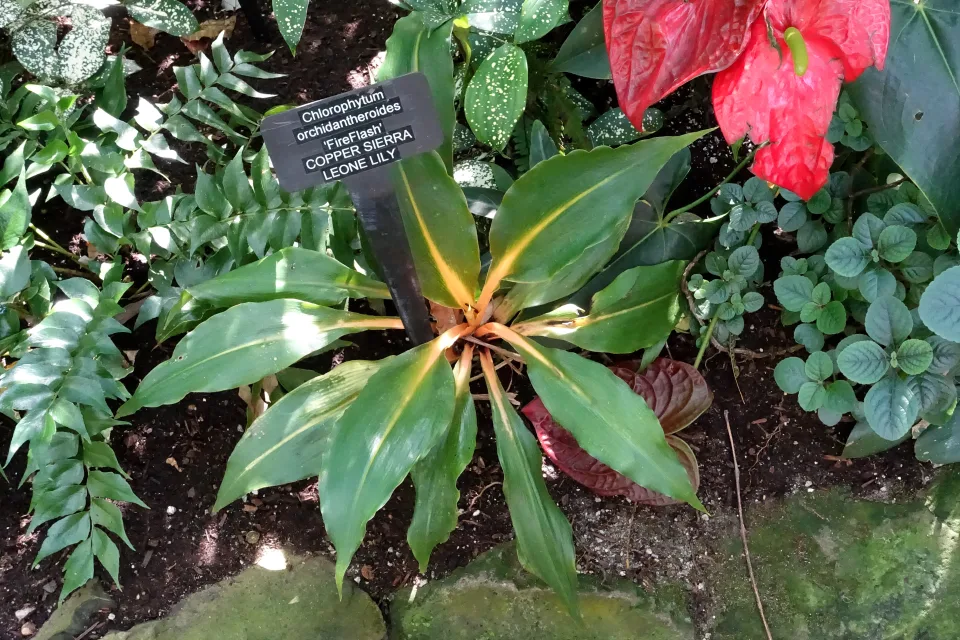
Photo : Daderot — CC0 — source

🌱 Growing conditions
☀️ Light
Bright indirect to medium light; protect from scorching sun.
💧 Watering
Water when the surface starts to dry, then let the pot drain. Reduce watering in winter.
🌡️ Temperature
18 to 28 °C; avoid cold draughts.
💦 Humidity
Average to high, with good air circulation.
🪴 Potting mix
Rich, humus-based and free-draining, with perlite or pumice.
⭐ Difficulty
Easy to moderate
🌱 Growth
Moderate
📏 Mature size
30 to 50 cm
🌿 Habit
clumping rosette
📝 About Mandarin plant
Description
This Chlorophytum looks very different from the common spider plant: its broad green leaves rise from vivid orange petioles. That orange colour is its main ornamental feature and is strongest in generous indirect light.
It forms a compact rosette instead of long stolons. It likes a more evenly moist mix than many succulents, while still disliking stagnant water around the roots.
Care
Keep it in a warm, bright room away from strong direct sun. Water when the top layer dries and avoid leaving the whole root ball bone dry for long periods.
Do not bury the orange petiole bases when top-dressing. Wipe leaves gently and use a lightly diluted balanced fertiliser during active growth.
Repotting
Repot in spring when the roots clearly fill the pot. Use a container with drainage holes and keep the crown at the same level.
Propagation
Divide a mature clump during repotting. Each division should retain several leaves and a healthy portion of roots.
🐱 Toxicity
No major toxicity is commonly reported, but eating ornamental plants should still be discouraged.
🩺 Common problems
Yellow leaves
Excess water, cold or compacted mix. One old outer leaf yellowing on its own may simply be ageing.
Brown leaves
Dry air, highly mineralised water, irregular watering or overly strong direct sun.
Diseases
Root or crown rot when water remains trapped in the pot.
Pests
Scale insects, spider mites and sometimes thrips. Check the center of the clump and leaf undersides, where pests can remain hidden. Fine stippling and gradual fading suggest mites; fixed scales or white clusters indicate scale insects.