Plant profile
Arabian wax cissus
Cissus rotundifolia
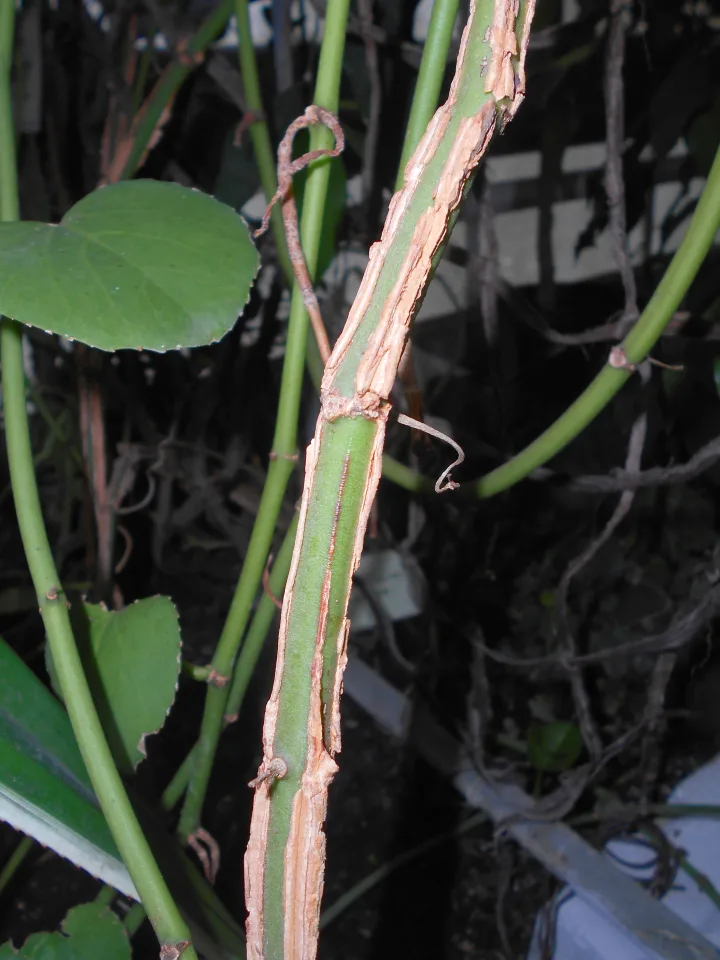
Photo : Salicyna — CC BY-SA 4.0 — source

🌱 Growing conditions
☀️ Light
Bright indirect light; a little gentle morning or evening sun is fine after acclimation.
💧 Watering
Water when the top few centimetres of the mix are dry. Let excess water drain fully and reduce watering clearly in winter.
🌡️ Temperature
16 to 28 °C; avoid prolonged temperatures below 12 °C.
💦 Humidity
Average; it tolerates normal household air better than many tropical vines.
🪴 Potting mix
Light and very free-draining: houseplant mix with perlite or pumice and some bark.
⭐ Difficulty
Easy to moderate
🌱 Growth
Moderate to fast in good light
📏 Mature size
1 to 3 m of stems indoors
🌿 Habit
climbing or trailing
📝 About Arabian wax cissus
Description
Cissus rotundifolia is a decorative vine with thick, almost round, fresh-green leaves. Its slightly succulent foliage gives it a sturdier look than many other Cissus. It can climb a small trellis or pole, or trail from a shelf.
It likes good light but adapts well to ordinary indoor air. Its main weakness is overwatering: roots and stems prefer a thorough watering followed by a clear drying phase.
Care
Place it close to a bright window without harsh midday sun. Turn the pot occasionally for even growth.
Water thoroughly, then wait until the surface layer has dried. During active growth, a balanced diluted feed every 3–4 weeks is enough. Prune long stems just above a node to encourage branching.
Repotting
Repot in spring when roots fill the pot or the mix has compacted. Choose a pot with drainage holes only slightly larger than the previous one.
Propagation
Take stem cuttings with two or three nodes. Remove the lower leaves and root in water or in a warm, lightly moist and airy mix.
🐱 Toxicity
Toxicity in the home is poorly documented. As a precaution, avoid ingestion and keep it away from young children and pets that chew plants.
🩺 Common problems
Yellow leaves
Usually caused by excess water, poor drainage or insufficient light. Check that the root ball is not staying wet for many days.
Brown leaves
Prolonged dryness, strong sun or very dry air can brown the edges. Soft brown patches suggest excess moisture instead.
Diseases
Root and stem rot in waterlogged mix. Remove soft tissue and correct drainage and watering frequency.
Pests
Scale insects, spider mites and sometimes aphids on young growth. Watch young shoots and leaf undersides. Sticky leaves or distorted growth suggest aphids, while fine stippling and very fine webbing point to spider mites.