Plant profile
Bleeding-heart vine
Clerodendrum thomsoniae
🌱 Growing conditions
☀️ Light
Plenty of light; some mild sun is possible. Avoid a window that is too dark.
💧 Watering
Water regularly during growth without soaking the mix; reduce when growth slows.
🌡️ Temperature
18–27°C during growth, a little cooler in winter but frost-free.
💦 Humidity
Moderate to high; stable humidity helps new leaves unfold.
🪴 Potting mix
Rich, airy, free-draining potting mix; provide a trellis or stake.
⭐ Difficulty
Moderate
🌱 Growth
Fast with support
📏 Mature size
1–2 m depending on training
🌿 Habit
Climbing, twining
📝 About Bleeding-heart vine
Description
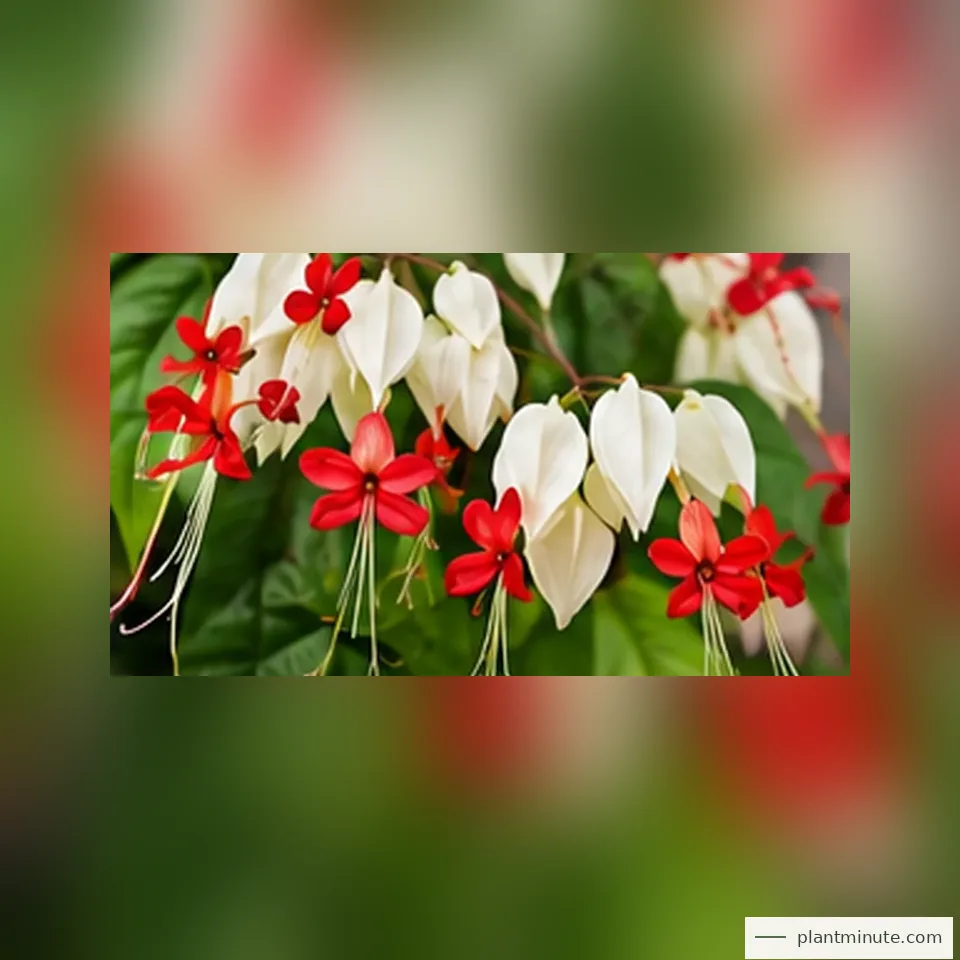
A climbing plant with red flowers framed by long-lasting white calyces. Flowering depends on strong light and trained growth on a support.
This climber is striking for its red flowers surrounded by persistent white calyces. It needs light and vigorous shoots to bloom; a lack of flowers is not always a fertiliser problem.
Care
Balanced fertilizer in spring and summer, following recommended amounts. No blooms: check light, pruning carried out too late, or excess nitrogen. Limp leaves: test root-ball moisture. Prune after flowering or when growth resumes to control its size.
Provide a trellis or support early and guide new stems gently. Keep the mix consistently moist during active growth, then reduce water as daylight and growth decline.
Repotting
Repot in spring if roots are cramped.
Repot in spring when roots are crowded, using a rich but airy mix. Keep the root ball mostly intact and install the support without injuring large roots.
Propagation
Take warm-season cuttings from non-flowering shoot tips with several nodes. Remove lower leaves and keep the medium lightly moist until roots develop.
🐱 Toxicity
Prevent children and pets from eating it; evidence on this species' precise toxicity is too limited to call it harmless.
🩺 Common problems
Yellow leaves
Some yellowing in autumn can accompany slowing growth. In active growth, check light, waterlogged compost and pests if leaves yellow.
Brown leaves
Dry brown margins: check drought, dry air and sun scorch. Black, soft leaves may instead indicate cold stress or excess water.
Diseases
Roots can rot in saturated compost; use a draining pot and lighter medium. Fewer flowers are not a disease: assess light and pruning.
Pests
Whiteflies, scale insects and mites may occur under leaves; watch for sticky honeydew and early discoloration.