Plant profile
Bush lily
Clivia miniata
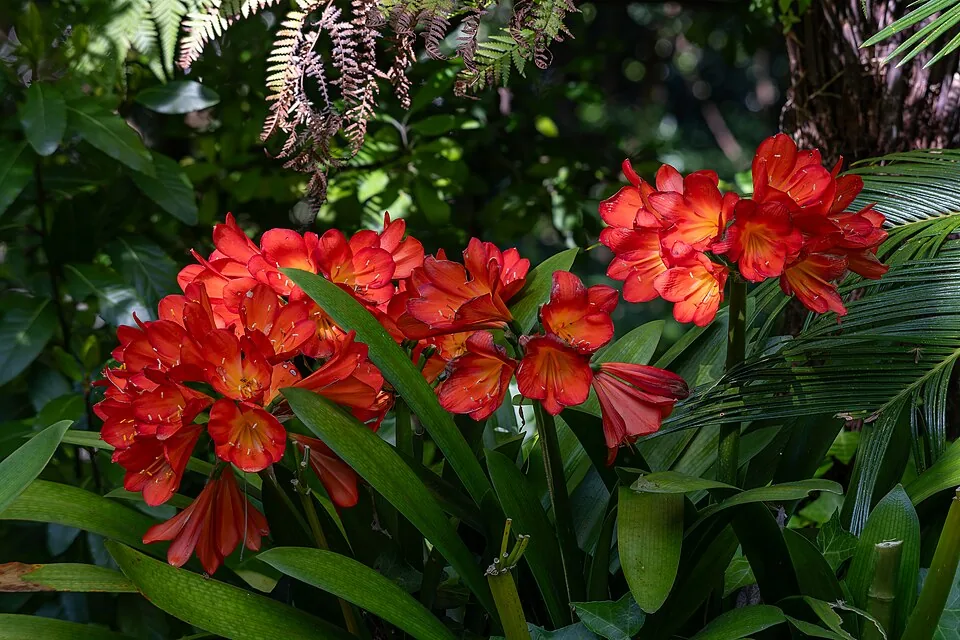
Photo : Jules Verne Times Two — CC BY-SA 4.0 — source

🌱 Growing conditions
☀️ Light
Bright to medium indirect light
💧 Watering
Water moderately during growth; reduce markedly during rest.
🌡️ Temperature
10 to 25 °C
💦 Humidity
Medium
🪴 Potting mix
Rich but well-draining potting mix
⭐ Difficulty
Easy to moderate
🌱 Growth
Slow
📏 Mature size
40 to 70 cm, up to about 90 cm in flower
🌿 Habit
clumping in a fan
📝 About Bush lily
Description
An evergreen perennial forming a fan of long, thick, dark-green leaves. Mature plants carry umbels of orange to orange-red flowers above the foliage. Flowering depends strongly on a cooler, drier winter rest.
Care
Grow in bright filtered light, protected from scorching sun. To encourage flowering, provide a cooler winter rest around 10 °C if possible, with little water and no feeding. Increase watering and feeding gradually as the flower stalk develops.
Repotting
Repot only when the fleshy roots strongly fill the pot: Clivia often flowers better slightly pot-bound and dislikes frequent root disturbance. Keep the neck at the same depth as before.
Propagation
Divide well-rooted offsets in late winter or early spring once they have several leaves and their own roots. Seed is possible but seedlings usually take several years to flower.
🐱 Toxicity
Toxic if ingested, especially the underground parts; keep out of reach of children and animals.
🩺 Common problems
Yellow leaves
Several yellow leaves with wet mix often indicate overwatering or stressed roots. Older lower leaves naturally yellow. Yellowing after sudden strong sun may precede scorch.
Brown leaves
Pale patches that later brown on the exposed side suggest sun scorch. Dry tips may result from prolonged thirst or salts. If leaf bases turn brown and soft with wet mix, inspect crown and roots.
Diseases
Clivia miniata is generally disease-resistant when well grown. The main risk is root or crown rot in constantly wet mix. Remove rotten tissue and correct watering and drainage.
Pests
Mealybugs are the most frequent pest, sometimes with scale insects. Inspect between overlapping leaf bases and around the crown.