Plant profile
Mammy croton
Codiaeum variegatum 'Mammy'
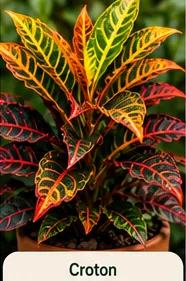
Photo : PlantMinute — Image générée
🌱 Growing conditions
☀️ Light
Very bright indirect light; gentle sun is possible after acclimation.
💧 Watering
Water when the top 2–3 cm are dry. Keep watering more regular in warm weather, without waterlogging.
🌡️ Temperature
18 to 28 °C; avoid temperatures below 15 °C.
💦 Humidity
Average to high.
🪴 Potting mix
Rich but airy and free-draining, with perlite and possibly fine bark.
⭐ Difficulty
Moderate
🌱 Growth
Moderate
📏 Mature size
60 cm to 1.2 m indoors
🌿 Habit
upright and shrubby
📝 About Mammy croton
Description
Croton ‘Mammy’ has relatively narrow, wavy and twisted leaves mixing green, yellow, orange, red and sometimes deep purple. Its colour depends directly on light: in a dim room, new leaves become greener.
Like other crotons, it loves warmth and dislikes sudden changes. Moving it, exposing it to a cold draught or allowing it to dry badly can trigger dramatic leaf drop.
Care
Choose a very bright, stable position and avoid moving the plant frequently. Water once the top few centimetres have dried and empty the saucer after each watering.
Keep temperatures steady and inspect leaf undersides regularly. A half-strength foliage fertiliser every 3–4 weeks in spring and summer supports growth and colour.
Repotting
Repot when roots fill the pot, usually in spring. Use a container only slightly larger and wear gloves because of the sap.
Propagation
Use tip or semi-ripe stem cuttings kept warm and humid. Allow sap to stop flowing and wear gloves during handling.
🐱 Toxicity
The milky sap is irritating and the plant is toxic if swallowed. Wear gloves when pruning and keep away from children and pets.
🩺 Common problems
Yellow leaves
Yellowing can result from overwatering, low light or cold; one older lower leaf may also yellow naturally. If several leaves turn yellow together, check root-zone moisture and temperature first.
Brown leaves
Brown edges may come from very dry air, lack of water, abrupt exposure to strong sun or cold damage. Check which factor changed before increasing watering.
Diseases
Root rot in saturated soil and leaf spots when foliage stays wet with poor air circulation.
Pests
Spider mites, scale insects and thrips; crotons are especially prone to spider mites in dry air.