Plant profile
Petra croton
Codiaeum variegatum 'Petra'
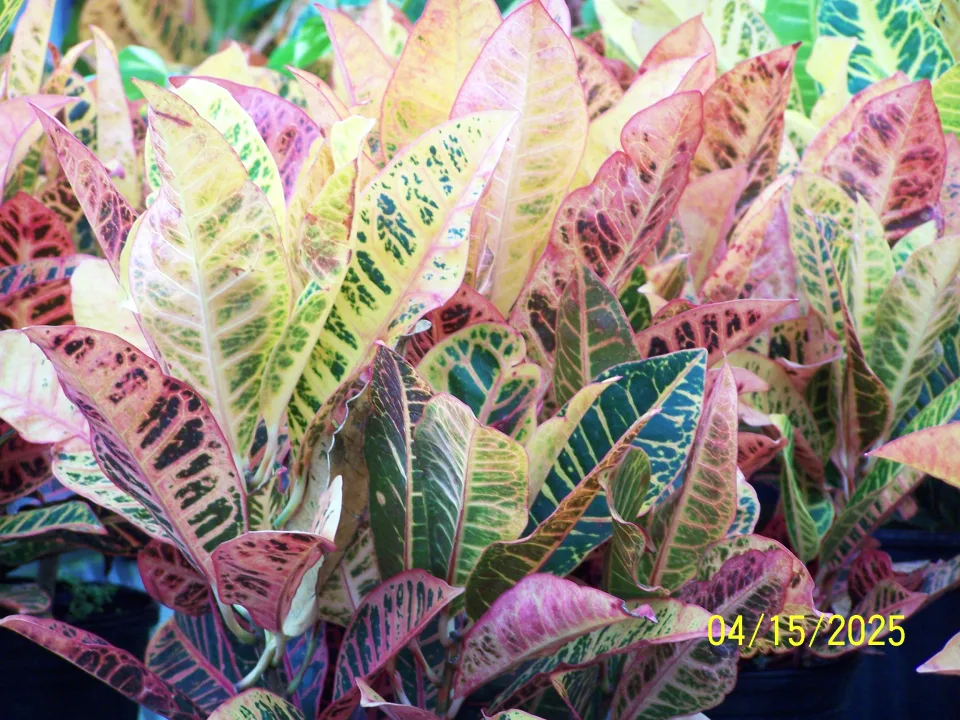
Photo : Satin66Flower — CC BY-SA 4.0 — source

🌱 Growing conditions
☀️ Light
Very bright indirect light; a few hours of gentle sun are beneficial after acclimation
💧 Watering
Water when the top 2 to 4 cm of mix have dried; avoid both prolonged drought and standing water
🌡️ Temperature
18 to 28 °C; sensitive to cold below 15 °C
💦 Humidity
Medium to high
🪴 Potting mix
Rich in organic matter yet well-draining
⭐ Difficulty
Moderate
🌱 Growth
Moderate
📏 Mature size
80 cm to 1.5 m indoors
🌿 Habit
upright and shrubby
📝 About Petra croton
Description
Croton ‘Petra’ is one of the most common cultivars of Codiaeum variegatum. Its large leathery leaves show yellow, orange or red veins over a green background that often darkens with age. Color intensity depends heavily on the amount of light the plant receives.
It gradually forms a compact upright shrub. Despite its reputation as a “fussy” plant, it performs well when three things stay stable: strong light, steady warmth and careful watering without waterlogging.
It reacts poorly to abrupt moves, cold drafts and sudden temperature changes. After purchase, the loss of a few leaves can simply be acclimation stress; the best response is usually to stabilize its position rather than repeatedly changing care.
Care
Place ‘Petra’ close to a very bright window. Too little light makes new leaves greener and reduces red and yellow tones. Very strong direct sun can still scorch the foliage if the plant has not been acclimated.
Water when the top few centimeters have dried. Thoroughly wet the entire root ball and then allow it to drain. Avoid frequent tiny surface waterings that only moisten the top of the pot.
Keep temperatures stable and move the plant away from cold doors, air-conditioning vents and radiators. Wipe the leaves with a damp cloth: the broad surfaces collect dust and can also hide spider mites.
Feed lightly every 4 to 6 weeks in spring and summer.
Repotting
Repot in spring when the roots have filled the container. Move up to a pot with drainage holes only 2 to 4 cm wider so that an unnecessarily large mass of wet soil does not remain around the roots.
Use a houseplant potting mix improved with perlite, pumice or fine bark. Keep the plant at the same depth and do not pack the mix firmly around the roots.
Propagation
Take 10 to 15 cm tip cuttings in spring or summer. Wear gloves because of the latex and allow the sap flow to slow before placing the cutting into a light rooting medium.
Warmth and a humid atmosphere speed rooting. Air layering also works well on a stem that has become long or bare.
🐱 Toxicity
The latex is irritating to the skin and mucous membranes. Ingestion can cause digestive upset; keep out of reach of children and pets.
🩺 Common problems
Yellow leaves
Several yellow leaves at once can indicate overwatering, low light or chilling. If the pot has stayed wet for several days, check the roots before adding more water.
The loss of green or yellow leaves after the plant is moved is often an acclimation response.
Brown leaves
Dry margins can result from very dry air or watering intervals that are too long. Pale patches that later turn brown on the window side can be sunburn.
Dark, soft brown areas together with a softened stem or a sour or rotting smell from the potting mix point more toward a root problem.
Diseases
Root rot in saturated potting mix; bacterial or fungal leaf spots can develop when foliage remains wet without good air circulation.
Pests
Spider mites are very common in dry air, along with scale insects, mealybugs and thrips.