Plant profile
Elephant ear
Colocasia esculenta
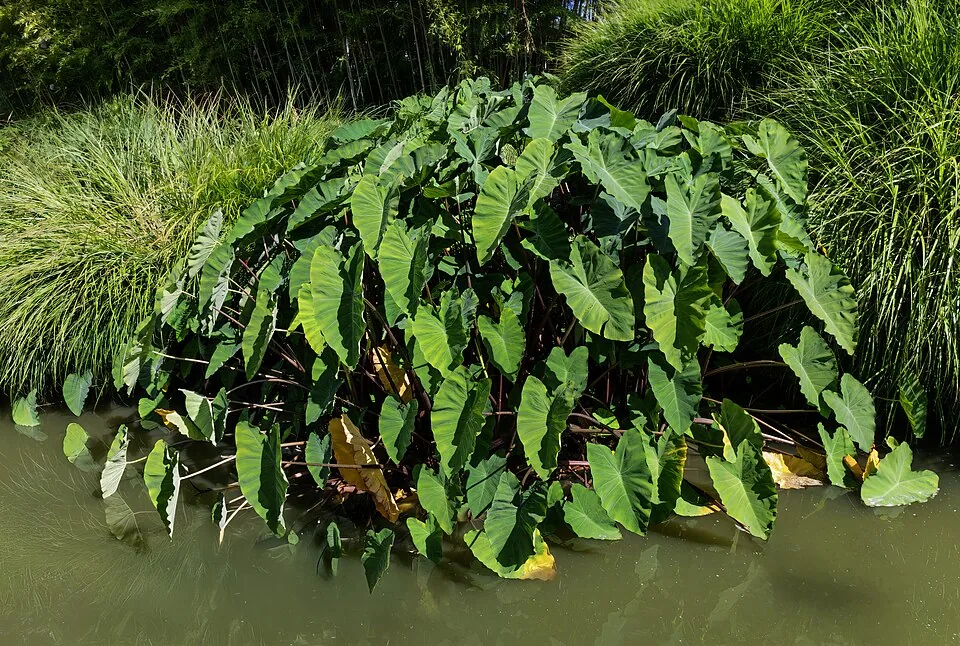
Photo : Didier Descouens — CC BY-SA 4.0
🌱 Growing conditions
☀️ Light
Bright indirect light; protect from scorching sun.
💧 Watering
Water when the first few centimeters of potting mix begin to dry, without leaving standing water.
🌡️ Temperature
18 to 27 °C
💦 Humidity
Medium to high
🪴 Potting mix
Rich, airy and well-draining.
⭐ Difficulty
Moderate
🌱 Growth
Moderate to fast
📏 Mature size
1 to 2 m indoors
🌿 Habit
clumping and upright
📝 About Elephant ear
Description
Colocasia esculenta bears very large peltate, heart- to shield-shaped leaves, often held downward, on long petioles. Unlike many indoor aroids that dislike constant moisture, this wetland species appreciates consistently moist soil during active growth, provided the roots still receive oxygen.
Care
Bright indirect light; protect from scorching sun. Water when the first few centimeters of potting mix begin to dry, without leaving standing water. Above all, avoid abrupt changes in conditions and check the root ball before watering again.
During active growth, do not let Colocasia esculenta dry as strongly as an Alocasia; its large leaves quickly lose firmness when the root ball becomes too dry.
Repotting
Repot when the roots truly fill the container or the potting mix has degraded. Choose a pot with drainage holes only slightly larger and use a rich, airy, well-draining mix. An unnecessarily large pot keeps moisture around the roots for longer.
Its root system and runners can fill the pot quickly in season; if water runs straight through a root-packed ball, a slightly wider container becomes useful.
Propagation
Propagate by separating offsets, dividing the rhizome, or using small corms formed around the mother plant.
Separate a Colocasia esculenta offset once it has roots of its own, or divide a resting clump; a very young rootless offset dehydrates easily after separation.
🐱 Toxicity
Toxic to dogs and cats if chewed or ingested. Like many aroids, this plant contains calcium oxalate crystals that irritate the mouth and digestive tract.
🩺 Common problems
Yellow leaves
Several yellow leaves on Colocasia esculenta should first prompt you to check whether the potting mix stays wet too long. Also check the light: a plant in low light uses less water and becomes more sensitive to overwatering.
Brown leaves
Brown edges on Colocasia esculenta may follow dry air, irregular watering or salt buildup. A dry patch on the window side points instead to overly intense direct sun.
Diseases
Root rot is the most serious problem when Colocasia esculenta remains in a compact, wet mix. A soft base or unusual smell justifies checking the roots and removing damaged tissue.
Pests
On Colocasia esculenta, inspect young leaves and their undersides in particular: thrips, spider mites and scale insects can settle there. Deformed or marked new growth is a useful warning sign.