Plant profile
Ti plant
Cordyline fruticosa
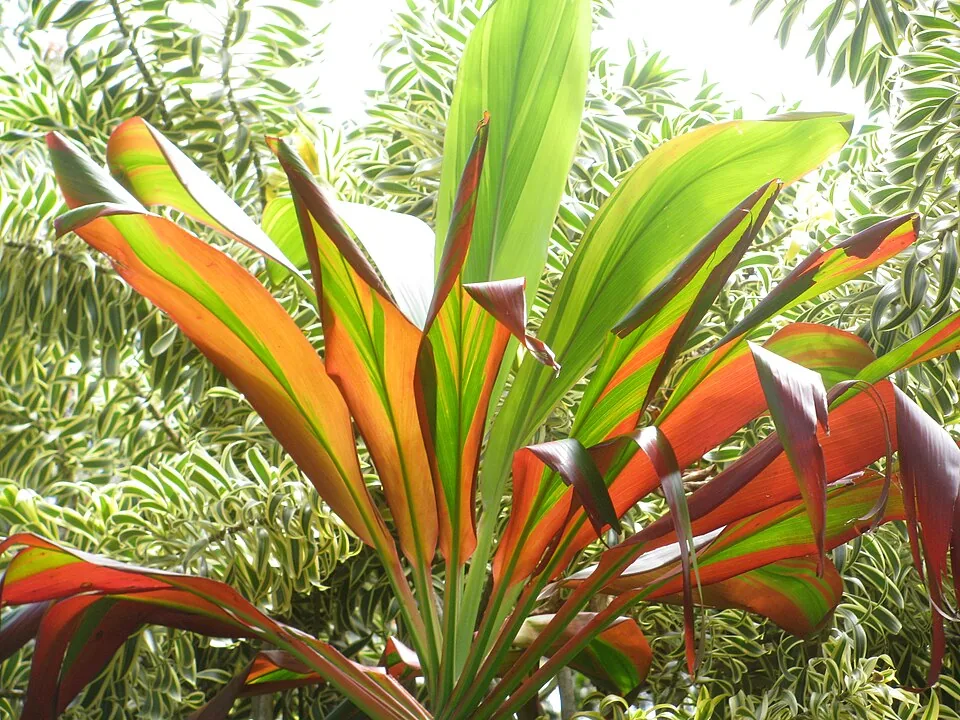
Photo : Forest and Kim Starr — CC BY 3.0 us — source

🌱 Growing conditions
☀️ Light
Bright indirect light; protect from scorching sun.
💧 Watering
Water when the first few centimeters of potting mix begin to dry, without leaving standing water.
🌡️ Temperature
18 to 27 °C
💦 Humidity
Medium to high
🪴 Potting mix
Rich, airy and well-draining.
⭐ Difficulty
Moderate
🌱 Growth
Moderate to fast
📏 Mature size
1 to 2 m indoors
🌿 Habit
shrubby and upright
📝 About Ti plant
Description
Cordyline fruticosa forms upright canes topped with rosettes of long strap-shaped leaves, green or brightly coloured depending on the cultivar. Older lower leaves naturally drop and leave a bare stem while growth continues at the top. Cutting a cane can trigger several new shoots below the cut.
Care
Bright indirect light; protect from scorching sun. Water when the first few centimeters of potting mix begin to dry, without leaving standing water. Above all, avoid abrupt changes in conditions and check the root ball before watering again.
If Cordyline fruticosa becomes too tall and bare at the base, a clean spring cut through the cane can trigger several buds below the cut; keep the top as a cutting.
Repotting
Repot when roots truly fill the container or the potting mix has degraded. Choose a pot with drainage holes only slightly larger and use a rich, airy, well-draining mix. An unnecessarily large pot retains moisture around the roots for longer.
As the plant becomes tall, choose a pot heavy enough to prevent tipping, but do not greatly increase the volume of compost around the roots.
Propagation
Stem or shoot cuttings, using a method suited to how woody the shoots are.
Stem sections of Cordyline fruticosa can produce new buds; place them vertically or horizontally in a warm, lightly moist medium, keeping track of the original top and bottom.
🐱 Toxicity
Toxic to dogs and cats if ingested. Ti-type Cordyline contain saponins and may cause vomiting, drooling and loss of appetite.
🩺 Common problems
Yellow leaves
On Cordyline fruticosa, several yellow leaves can indicate overly wet potting mix, especially if growth slows. The oldest lower leaves can nevertheless yellow naturally before falling.
Brown leaves
Brown tips on Cordyline fruticosa may appear with dry air, irregular watering or salt buildup. Check the root ball before increasing watering frequency.
Diseases
Cordyline fruticosa is especially vulnerable to root and basal deterioration if the pot stays constantly wet. Let the potting mix aerate according to the needs given in the profile.
Pests
On Cordyline fruticosa, look for scale insects and spider mites at leaf bases and along the stems. Regular inspection allows intervention before new growth is affected.