Plant profile
Watch chain
Crassula muscosa
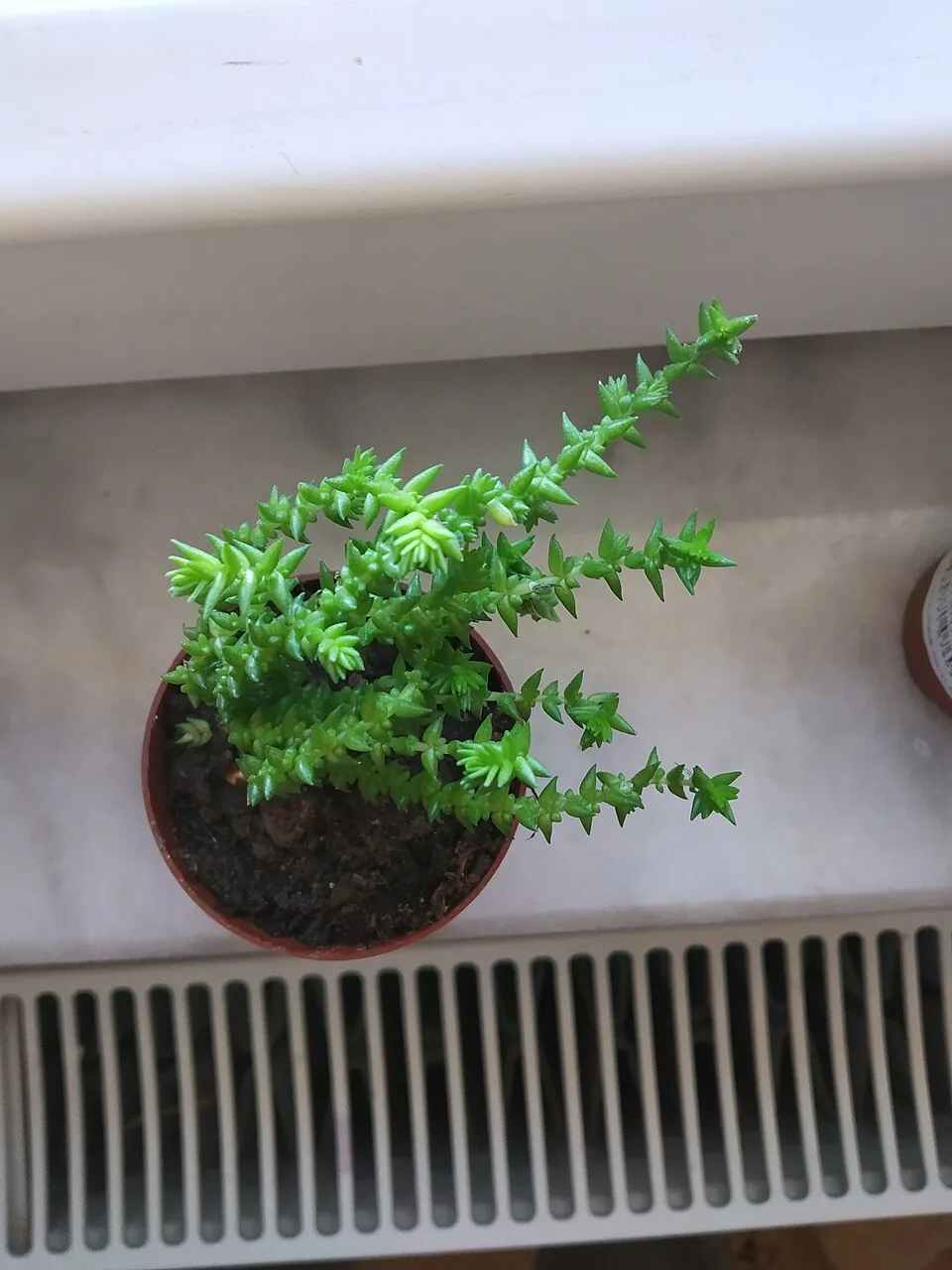
Photo : Satirdan kahraman — CC0 — source

🌱 Growing conditions
☀️ Light
Very bright light
💧 Watering
Let the substrate dry substantially between waterings
🌡️ Temperature
12–27 °C
💦 Humidity
Low
🪴 Potting mix
Very well-draining succulent mix
⭐ Difficulty
Easy
🌱 Growth
Moderate
📏 Mature size
15–30 cm
🌿 Habit
upright then trailing
📝 About Watch chain
Description
A southern African succulent with slender stems that start upright and may later trail, densely covered in tiny overlapping leaves. It forms a compact clump and can produce minute yellow-green flowers.
Care
Provide abundant light, with gentle sun after acclimation. Insufficient light stretches the internodes and weakens the stems. Use a very free-draining mix, feed lightly only during active growth and pinch long stems if a compact clump is desired.
Repotting
Repot only when roots fill the pot or the mix has broken down, into a container with drainage holes only slightly larger. Oversized pots stay wet too long and increase the risk of rot.
Propagation
Take healthy stem cuttings in spring or summer. Let the cut dry for several hours to a day, then insert into a very free-draining mix kept only slightly moist. Avoid waterlogging before rooting.
🐱 Toxicity
Ingestion of Crassula is discouraged, especially for pets.
🩺 Common problems
Yellow leaves
Yellowing with soft stems and wet mix often indicates overwatering or early rot. If the plant becomes pale and stretched without softness, check for insufficient light instead.
Brown leaves
Dry tips with very dry mix mainly indicate prolonged drought. Pale brown patches after sudden sun exposure suggest scorch. Dark brown, soft stems with wet soil point toward rot.
Diseases
Crassula muscosa is generally disease-resistant in free-draining mix. The main problem is root and stem rot from excess water. Remove soft tissue and, if necessary, restart from healthy cuttings.
Pests
Watch mainly for mealybugs and aphids; vine weevil can also affect container plants. Inspect stem junctions and the plant base.