Plant profile
Fishbone prayer plant
Ctenanthe burle-marxii
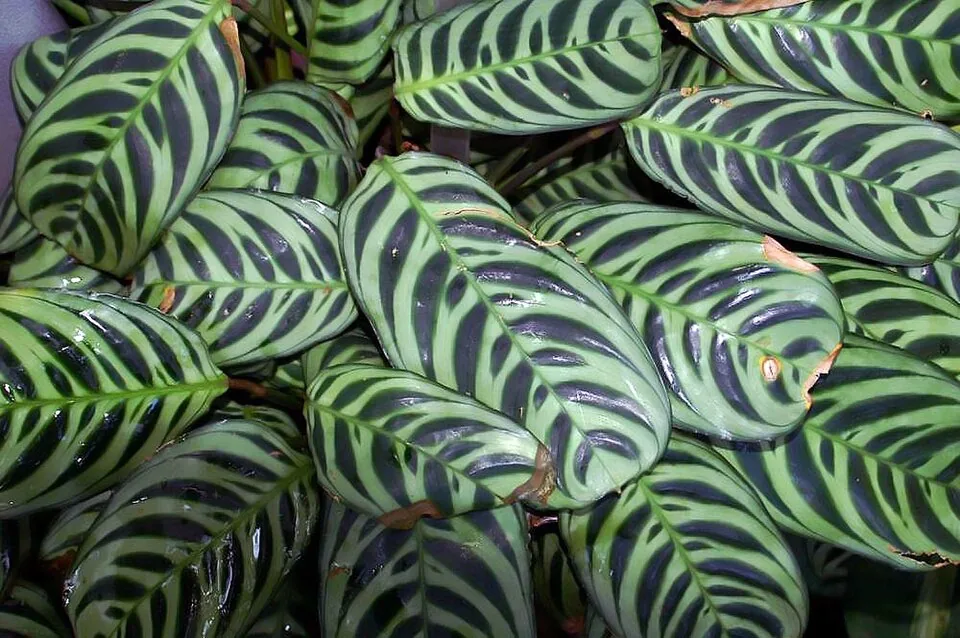
Photo : Photo by David J. Stang — CC BY-SA 4.0 — source

🌱 Growing conditions
☀️ Light
Medium to bright indirect light. Avoid direct sun, which fades and scorches the leaves; very low light makes the plant less dense.
💧 Watering
Keep the mix slightly moist and water when the top 1–2 cm dry. Use low-mineral water if possible and reduce watering in winter.
🌡️ Temperature
16 to 24 °C
💦 Humidity
High
🪴 Potting mix
Airy, humus-rich and well-draining
⭐ Difficulty
Moderate
🌱 Growth
Moderate
📏 Mature size
30 to 60 cm
🌿 Habit
clumping
📝 About Fishbone prayer plant
Description
Compact Brazilian prayer-plant relative with oval leaves marked by a fishbone pattern. It is grown mainly for its mobile, contrasting foliage.
Care
Maintain gentle warmth, fairly high humidity and stable conditions. Avoid cold drafts, standing water and abrupt changes of position.
Repotting
Repot in spring when the clump becomes dense. Use a humus-rich, airy mix; the rhizomes can be divided at the same time.
Propagation
Divide the clump or rhizomes, ideally in spring.
🐱 Toxicity
Generally considered non-toxic to pets.
🩺 Common problems
Yellow leaves
May result from excess water, cold or insufficient drainage.
Brown leaves
Brown tips usually mean dry air, hard water or irregular watering. Large dry patches suggest direct sun; soft leaves with a dark base suggest excess water.
Diseases
Generally robust; root rot is possible if the mix stays saturated.
Pests
Mealybugs and spider mites may occur. Inspect leaf undersides and young shoots in particular; fine stippling, dull leaves or cottony clusters often reveal an infestation before it spreads.