Plant profile
Never-never plant
Ctenanthe oppenheimiana
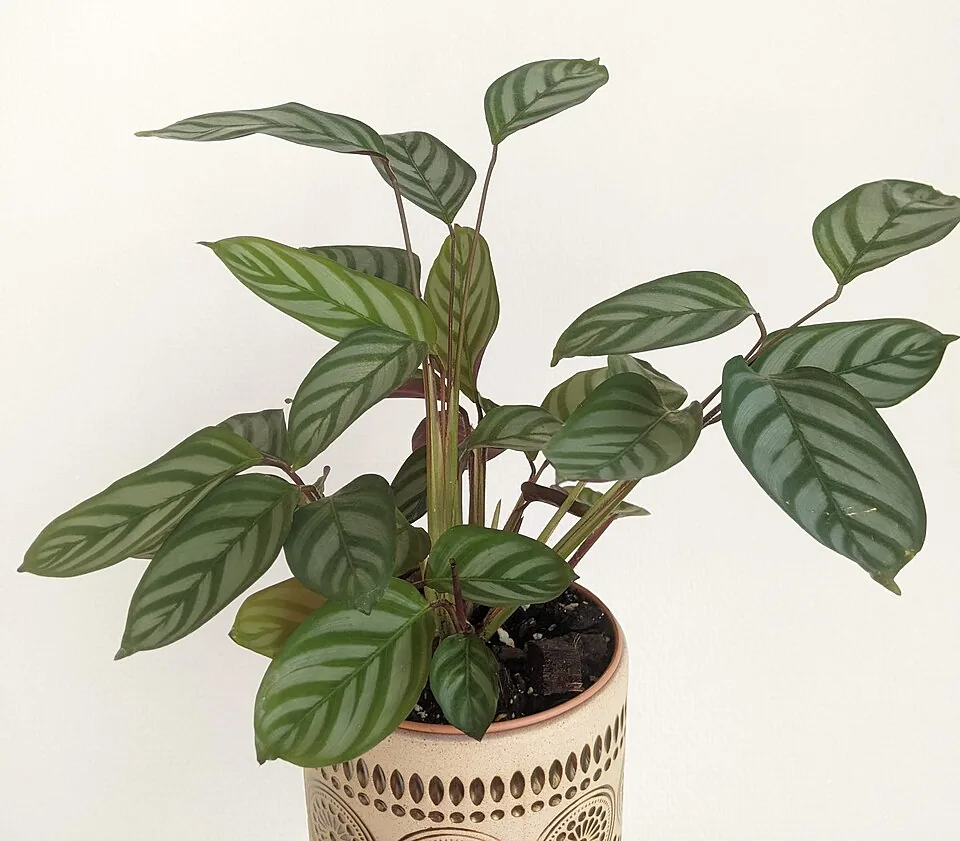
Photo : Alexanderameye — CC BY-SA 4.0 — source

🌱 Growing conditions
☀️ Light
Medium to bright light, always indirect.
💧 Watering
Keep the potting mix slightly moist without waterlogging; low-mineral water is preferable.
🌡️ Temperature
18 to 27 °C
💦 Humidity
High
🪴 Potting mix
Humus-rich, loose and well-draining.
⭐ Difficulty
Moderate to demanding
🌱 Growth
Moderate
📏 Mature size
80 to 150 cm
🌿 Habit
clumping
📝 About Never-never plant
Description
Ctenanthe oppenheimiana forms a clump of long oval to lance-shaped leaves patterned with dark and light green bands, often with purple undersides. Like other members of the prayer-plant family, the leaves change position slightly through the day. Dryness, mineral-rich water or dry air quickly show as damaged tips and margins.
Care
Medium to bright light, always indirect. Keep the potting mix slightly moist without waterlogging; low-mineral water is preferable. Above all, avoid abrupt changes in conditions and check the root ball before watering again.
If the tips brown despite correct watering, try lower-mineral water before raising humidity further; Ctenanthe oppenheimiana often reacts to salt accumulation.
Repotting
Repot when roots truly fill the container or the mix has degraded. Choose a pot with drainage holes only slightly larger and use a humus-rich, loose, well-draining mix. An unnecessarily large pot keeps moisture around the roots for longer.
Divide the clump only when needed; slight root crowding does not trouble Ctenanthe oppenheimiana, whereas an oversized pot dries slowly and increases the risk of oxygen-starved roots.
Propagation
Propagate Ctenanthe oppenheimiana by division when repotting, following the natural sections of the rhizome. Each division should retain several leaves or shoots and a good bundle of active roots.
Avoid very small divisions, which recover slowly. An isolated leaf cannot regenerate the plant.
🐱 Toxicity
Marantaceae in this group are generally considered non-toxic to dogs and cats. Ingesting large amounts of plant material is nevertheless discouraged.
🩺 Common problems
Yellow leaves
In Ctenanthe oppenheimiana, generalized yellowing may come from excess water, a cold shock or stressed roots. One old leaf turning yellow is not necessarily worrying.
Brown leaves
Brown tips on Ctenanthe oppenheimiana are often linked to overly dry air, irregular watering or highly mineralized water. Dry marks facing the window may also indicate too much direct sun.
Diseases
Ctenanthe oppenheimiana can suffer root rot if the mix stays waterlogged. Leaf spots may also progress when foliage remains wet without air circulation.
Pests
Spider mites deserve particular attention on Ctenanthe oppenheimiana, especially in dry air. Look for fine stippling, dull foliage or small webs; scale insects are also possible.