Plant profile
Florist's cyclamen
Cyclamen persicum
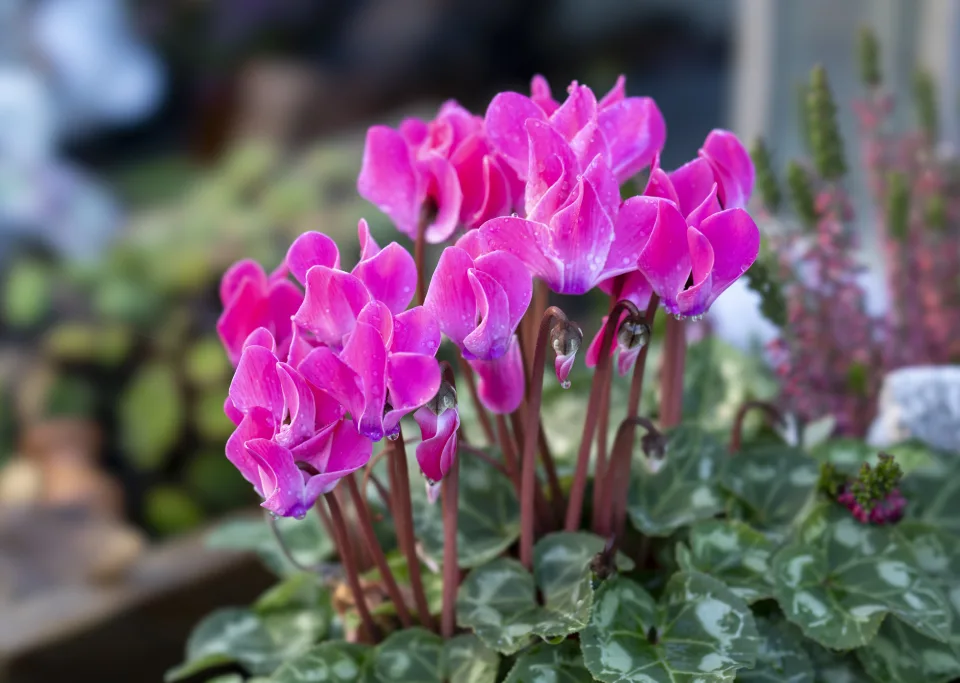
Photo : Roman Eisele — CC BY-SA 4.0 — source

🌱 Growing conditions
☀️ Light
Bright indirect light; gentle winter sun is possible.
💧 Watering
Water when the surface dries slightly, preferably around the edge of the pot or by capillary watering, without soaking the tuber.
🌡️ Temperature
10 to 20 °C; it prefers cool conditions while flowering.
💦 Humidity
Average.
🪴 Potting mix
Humus-rich, light and very free-draining.
⭐ Difficulty
Moderate
🌱 Growth
Seasonal
📏 Mature size
20 to 35 cm
🌿 Habit
tuberous rosette
📝 About Florist's cyclamen
Description
Florist’s cyclamen is a classic winter windowsill and cool-room plant. Its flowers rise above leaves patterned with silver, and flowering can last for many weeks if the plant is not kept too warm.
The key is to understand its seasonal rhythm: it grows and flowers in cool months and may enter dormancy as temperatures rise.
Care
Keep it in the brightest, coolest suitable place, away from radiators. Water when the mix begins to dry, without pouring water into the centre of the tuber.
Remove faded flowers by twisting their stems gently from the base. After flowering, reduce watering gradually if the foliage yellows naturally.
Repotting
Repot at the end of dormancy before growth resumes. Keep the top of the tuber partly visible rather than burying it deeply.
Propagation
Propagate from fresh seed. Dividing the tuber is risky and encourages rot, so it is not recommended for routine home propagation.
🐱 Toxicity
Toxic if ingested, especially the tuber, which contains saponins. Keep away from children, cats and dogs.
🩺 Common problems
Yellow leaves
Excessive heat, overwatering or a natural move into dormancy after flowering.
Brown leaves
Hot dry air, lack of water or overly strong sun behind glass.
Diseases
Tuber rot and botrytis if the crown stays wet in a warm poorly ventilated room.
Pests
Cyclamen mites, aphids and thrips. Tight distortion of young leaves and buds can reveal cyclamen mites, which are often too small to see. Isolate the plant at the first symptoms and inspect flowers and the center of the rosette as well.