Plant profile
Japanese holly fern
Cyrtomium falcatum
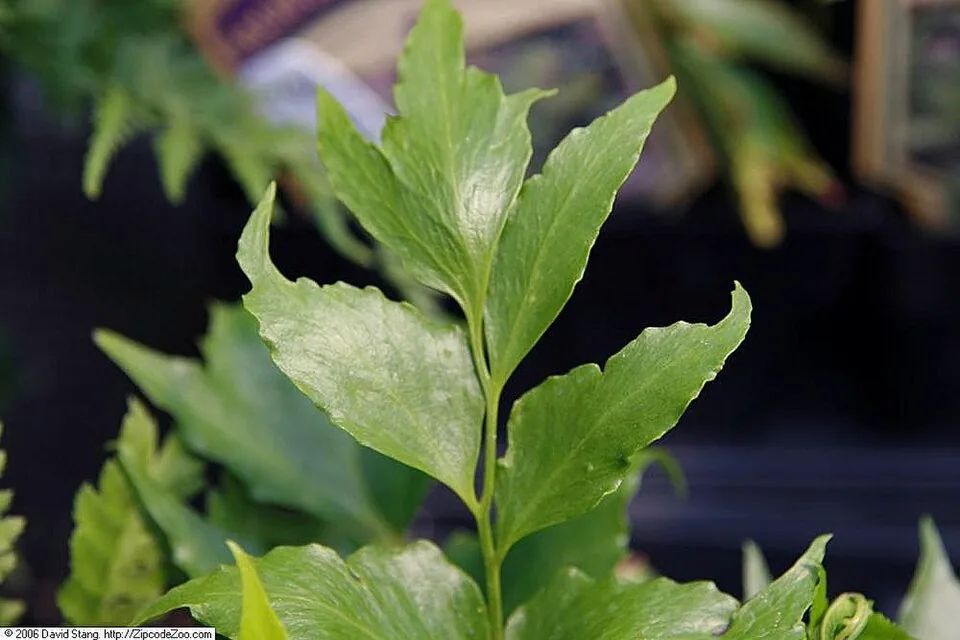
Photo : Photo by David J. Stang — CC BY-SA 4.0
🌱 Growing conditions
☀️ Light
Indirect light to partial shade
💧 Watering
Keep evenly fresh but not waterlogged
🌡️ Temperature
12–24 °C
💦 Humidity
Medium to high
🪴 Potting mix
Humus-rich, airy and well-draining mix
⭐ Difficulty
Easy to moderate
🌱 Growth
Moderate
📏 Mature size
40–70 cm
🌿 Habit
clumping and arching
📝 About Japanese holly fern
Description
Robust fern with arching fronds made of thick, glossy, slightly toothed leaflets resembling holly leaves; it tolerates cooler and moderately dry air better than many tropical ferns.
Care
Place in filtered light or partial shade in a cool to temperate room. Keep the mix lightly moist but well drained, allowing the surface to aerate between waterings. This fern tolerates average indoor humidity better than many tropical ferns, but not hot air from a radiator.
Repotting
Repot in spring when roots and rhizomes fill the container.
Propagation
Home propagation is mainly by spores, sown in late summer on a fine, clean, moist medium at about 16 °C. Older clumps can sometimes be divided if they have clearly separate growing points, but avoid damaging the crown.
🐱 Toxicity
Ingestion of ornamental plants is discouraged.
🩺 Common problems
Yellow leaves
Many fronds yellowing with a wet root ball mainly indicate overwatering or poor root aeration. If the root ball is dry, check for prolonged drought instead. A few old fronds may yellow naturally before replacement.
Brown leaves
Brown tips or patches commonly come from dry air, prolonged thirst or overly strong direct sun.
Diseases
Cyrtomium falcatum is generally disease-resistant. In containers, the main risk is root or crown rot where drainage is poor. Remove dead fronds, reduce watering and check that the crown remains firm.
Pests
This fern is generally pest-resistant. Indoors, however, watch for scale insects and occasionally mealybugs, especially on petioles and leaflet undersides. Isolate the plant if an infestation occurs.